
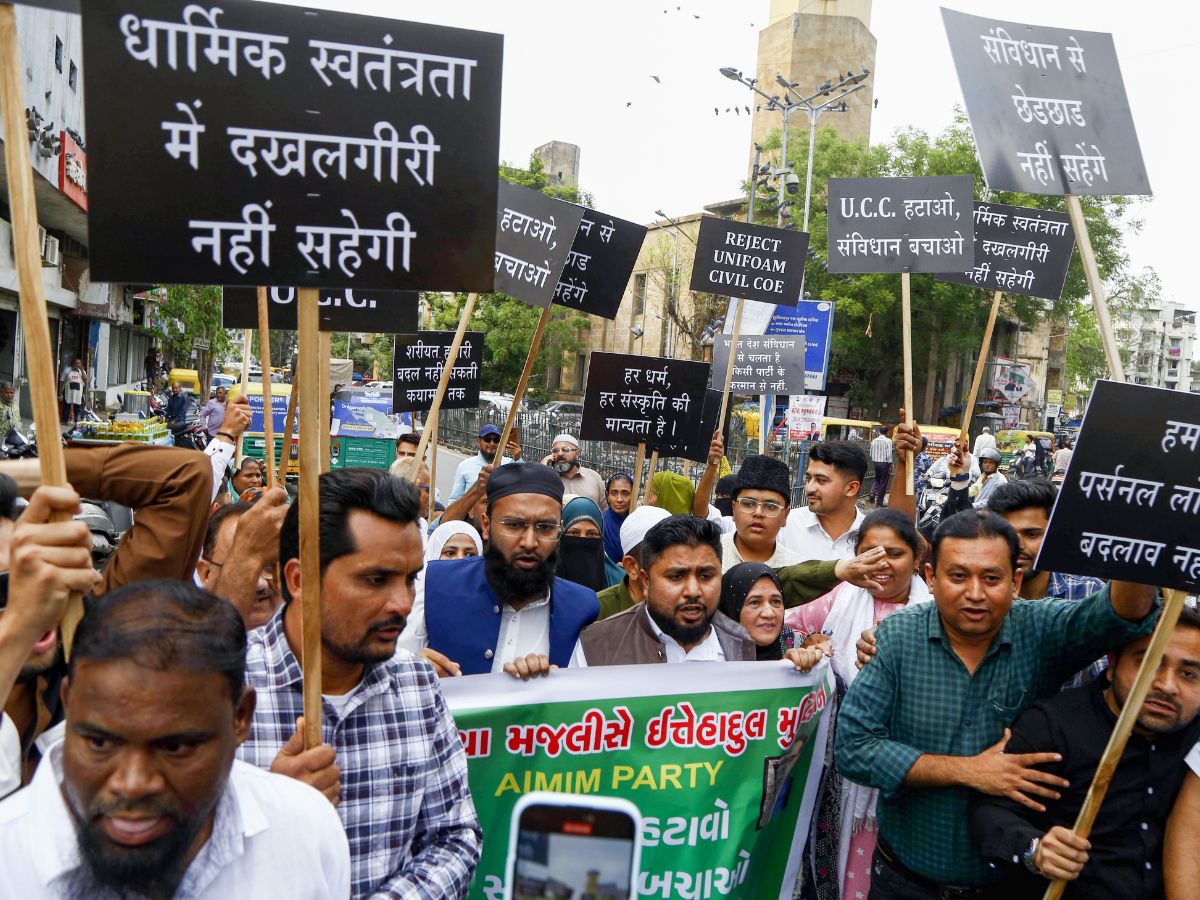

The Gujarat government has taken a further step towards creating a Uniform Civil Code with respect to a proposed new Bill which alters personal laws significantly as the registration of live-in relationships becomes compulsory. The Bill would apply equally to all communities throughout the State and is intended to provide a single legal framework covering matters such as marriage, divorce, inheritance and live-in partnerships.
In terms of live-in couples, one of the most controversial provisions of the Bill is the requirement for all live-in couples to register their union with the local registrar. Under the provisions of the Bill, all couples in a live-in relationship in Gujarat will be required to complete and submit a statement to the registrar.
Protections For Women And Children
The registrar will then undertake verification of the information provided to ensure that the relationship does not include any minors; does not include any person who is already married, living in a relationship between parties who are both married to others, and do not fall within one of the prohibited degrees of blood relationship.
Finally, the Bill states that if a couple does not register their live-in relationship with the registrar within one month of the commencement of the provisions of this Bill, they will be liable to face legal penalties of a maximum of 3 months in prison and/or a fine not to exceed Rs 10000.
In parallel, legislation offers specific protections for individuals affected by these issues. For example, women abandoned in a cohabitating relationship have recourse to file a maintenance claim in court. Further, any children born to those in cohabitating relationships will be treated as legitimate under the law.
New Marriage Rules Introduced
Additionally, the Act introduces significant modifications to current marriage legislation. One such amendment establishes registration as a requirement for marriages to be recorded within sixty days of them having taken place. Marriages shall only be deemed valid where both individuals do not presently have a spouse and both individuals provide valid consent, as well as satisfy the minimum age requirements: males must be above 21 and females 18 years of age.
In addition to changes made in relation to cohabitating relationships and marriage registration, the Act also provides for the legal recognition of all forms of religious or customary marriage; provided that they are registered. A significant modification to existing divorce laws is that all divorces must follow formal legal procedures. As such, both husband and wife must petition the court for a divorce and follow proper divorce procedures identified by law.
Furthermore, the legal framework created by this Act will be applicable throughout the State, including those persons living outside of Gujarat, with the exception of certain groups of people like Scheduled Tribes.
Khalid Qasid is a media enthusiast with a strong interest in documentary filmmaking. He holds a Master’s degree in Convergent Journalism from AJK MCRC. He has also written extensively on esports at Sportsdunia. Currently, he covers world and general news at NewsX Digital.




