
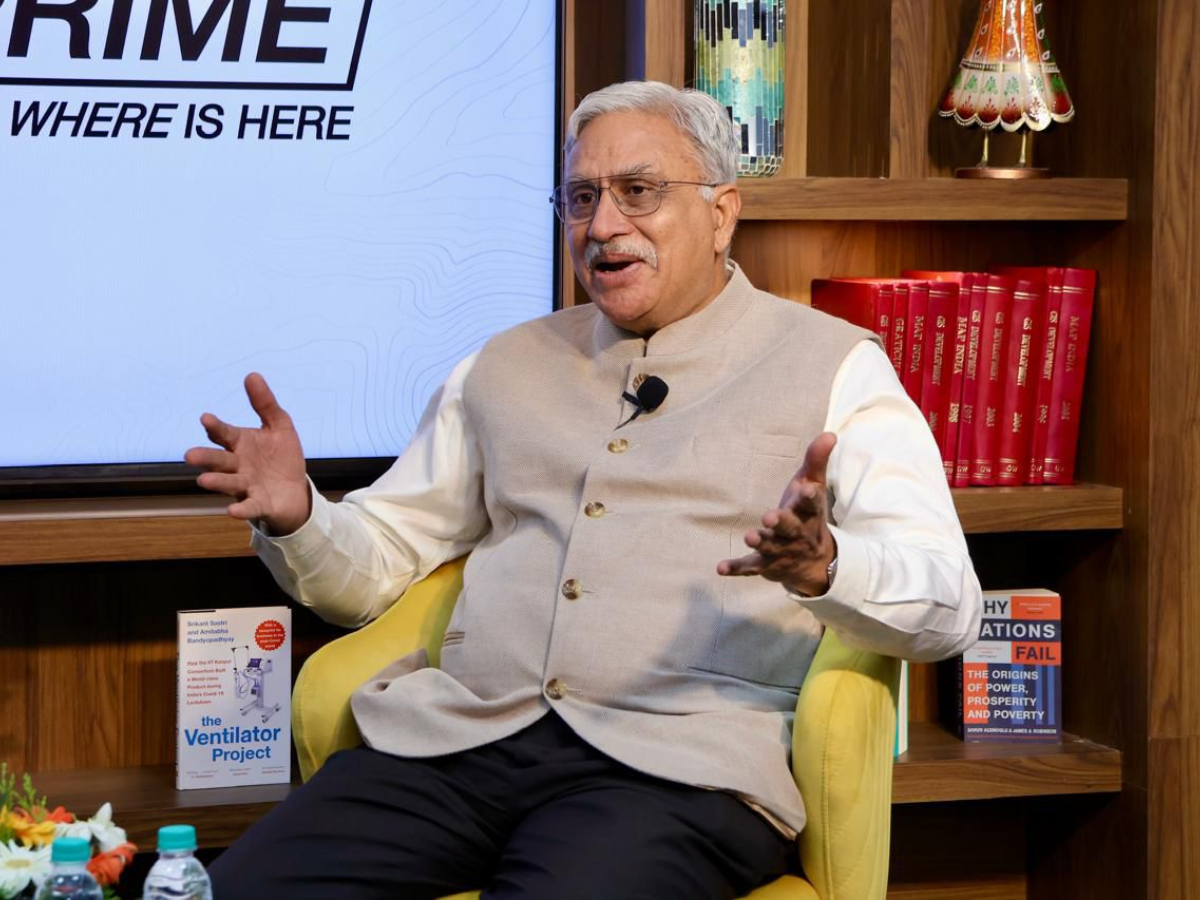

In an exclusive interview with Arzu Seth of NewsX former ISRO Chairman Dr. Shailesh Nayak expressed his happiness and pride over Group Captain Shubhanshu Shukla’s participation in the Axiom-4 mission, marking a significant milestone for India’s space industry.
Dr. Nayak told The initial step taken marks significant progress in establishing India’s expertise and presence related to space stations. India plans to develop space stations within the next 10 years and this experience will be valuable for understanding experiments, technology, logistics, and the health effects of extended space stays. This mission is seen as the beginning of increased Indian participation in space stations
Furthermore, this international collaboration and exchange of information will not only enhance India’s space program but also advance global cooperation in space exploration, ultimately benefiting humanity as a whole.
Gaganyaan Mission and Beyond Shubhanshu Shukla invaluable asset for India.
Former ISRO Chairman remarked Group Captain Shubhanshu Shukla’s experience on the Axiom Mission will undoubtedly prove invaluable for India as the country prepares for its ambitious Gaganyaan mission. This experience will provide valuable insights and opportunities for growth, ultimately contributing to the success of India’s human spaceflight program and future missions.
On taking about How important is it for India to invest in human spaceflight programs, Dr. Nayak highlighted the importance of human spaceflight programs. It is very important because at the end of the day there would be many things which human only can do, There is irreplaceable value of human cognition and manual intervention in space exploration. Human astronauts can perform complex tasks, make real-time decisions, and conduct experiments that robots cannot.
Former ISRO scientist explains the evolving global space ecosystem, emphasizing that once a space technology matures and moves to production mode, it is more efficient for industry to handle manufacturing rather than scientists. This approach allows scientists to focus on research and innovation while the industry replicates proven technology for multiple launches. This is not about commercial versus non-commercial motives but about optimizing roles. In India, this model is reflected in ISRO’s recent development of a small satellite launch vehicle, which was open-bid and awarded to a private company, recognizing the growing demand for small satellite launches.
Dr. Nayak also talked about the growing role of private players and startups in the space industry over recent years. Young, creative entrepreneurs are contributing significantly to the sector’s growth by bringing innovative ideas and benefiting from an ecosystem that provides sufficient financing to turn their concepts into reality.
As India continues to push the boundaries of space exploration, the Axiom-4 mission marks a significant milestone in the country’s journey with Group Captain Shubhanshu Shukla becoming the second Indian astronaut to venture into space, 41 years after Rakesh Sharma’s historic mission in 1984.
Swastika Sruti is a Senior Sub Editor at NewsX Digital with 5 years of experience shaping stories that matter. She loves tracking politics- national and global trends, and never misses a chance to dig deeper into policies and developments. Passionate about what’s happening around us, she brings sharp insight and clarity to every piece she works on. When not curating news, she’s busy exploring what’s next in the world of public interest. You can reach her at [swastika.newsx@gmail.com]




