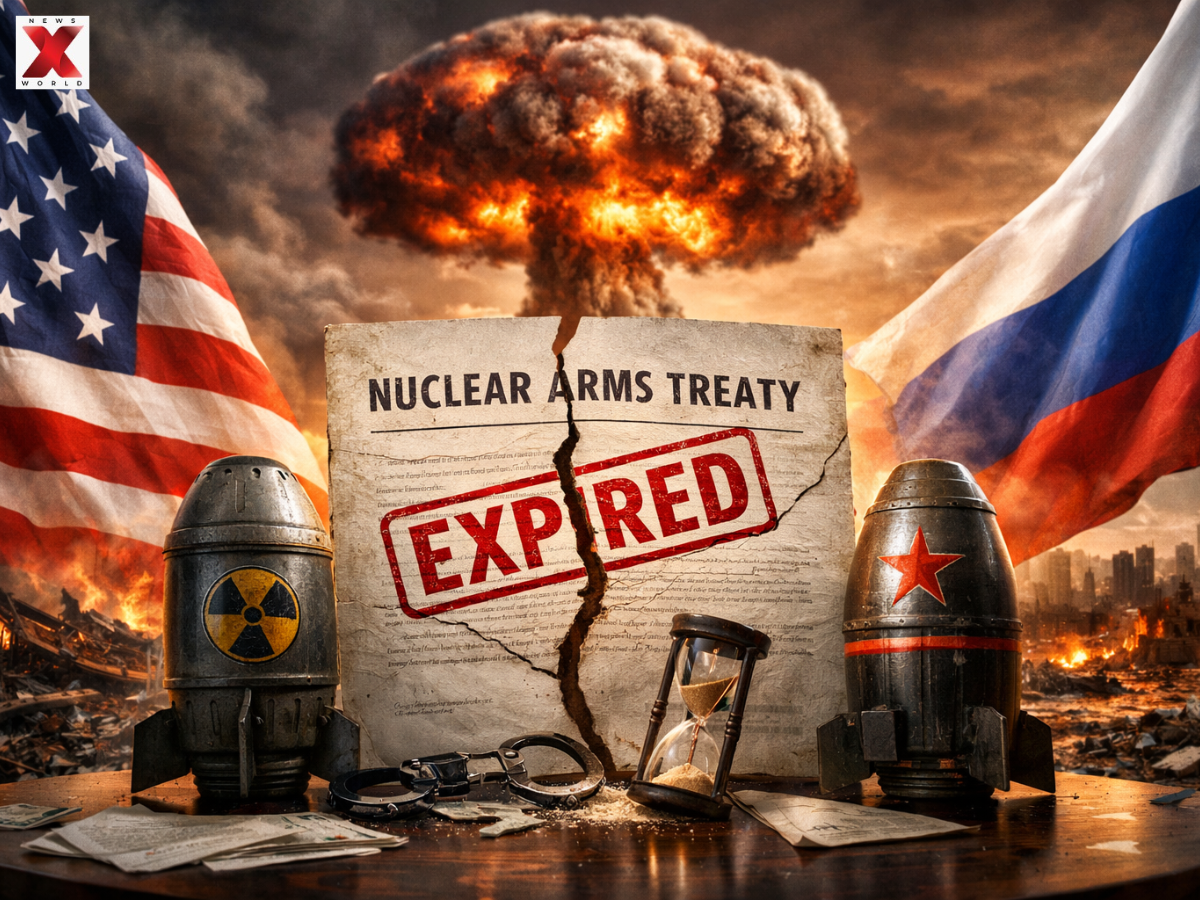

The last nuclear weapons control treaty between the US and Russia has officially expired, and people are worried it could spark a new arms race.
This treaty, called New START, was signed back in 2010. It was one of the few deals out there meant to keep the world from sliding into a nuclear disaster.
US-Russia Nuclear Deal Ends
UN Secretary General António Guterres didn’t mince words. He called the end of the treaty a serious blow to global peace and security. He urged both Russia and the US to sit down and hammer out a new agreement as soon as possible.
With the treaty gone, cooperation between Washington and Moscow on nuclear arms control, something that helped wrap up the Cold War, is over.
New START had clear rules. It limited how many deployed strategic nuclear warheads each country could have (1,550 each) and forced both sides to share information, send notifications, and allow on-site inspections.
What the End of New START Means for Global Nuclear Security
Now, without any of those rules, Guterres warned, the world faces a future with no binding limits on the world’s biggest nuclear arsenals.
He pushed both countries to reset the conversation and build a new arms control system that fits today’s reality. The risk of someone actually using a nuclear weapon hasn’t been this high in decades, he said.
Guterres pointed out that both President Trump and President Putin have said they understand the dangers of letting nuclear weapons spread unchecked. But he pressed them actually to do something about it, not just talk.
Arms Control in Crisis?
Putin tried to keep things going, he suggested the US and Russia could stick to the treaty’s main points for another year. Trump never officially answered.
Trump said he wanted a better deal, one that would also bring China to the table. But China isn’t interested; it has way fewer warheads about 600 compared to around 4,000 each for Russia and the US.
Right before the treaty expired, Russia put out a statement slamming what it called the US’s “mistaken and regrettable” approach. They said as far as Moscow’s concerned, the treaty’s dead, and both countries are free to make their own decisions now.
Russia says it’s ready to take whatever military or technical steps it needs to protect itself. At the same time, they say they’ll act responsibly and are open to talks to keep things stable. It’s a mix of tough talk and cautious optimism.
Trump didn’t say anything as the treaty ran out. The White House only said he’d decide on the next steps for nuclear arms control “on his own timeline.”
About US-RUSSIA Nuclear Treaty
The treaty under Start initially signed in 1991 by the US and the Soviet Union was a treaty that prohibited each of the two signatories to deploy over 6,000 warheads of nuclear nature.
It was followed by New Start in 2010 in Prague between the US and the successor state of the disbanded Soviet Union, Russia.
Even though Russia pulled out the treaty three years ago amidst the escalation of tension over the Ukraine war, the two countries were considered to be still in adherence to the treaty.
The treaty ensured that the accumulation of nuclear arms could not lead to the accumulation of nuclear bombs without much control and offered the two nations to have the maximum nuclear weapons with transparency rules to ensure that they did not misinterpret the intentions of each other.
Its expiry conforms to an alarming trend. Other old arms control treaties have already been discarded under the tracks.
This includes:
The Intermediate-range nuclear forces agreement, which to a significant degree removed the usage of shorter-range nuclear weapons in Europe.
The Open Skies Treaty in which signatories such as the US and Russia were permitted to conduct unarmed reconnaissance missions over each other territory to check on the military forces.
The Treaty of Conventional Armed Forces in Europe restricted the number of tanks, troops and artillery systems that Russia and Nato forces could use in Europe.
(With Inputs From Reuters)