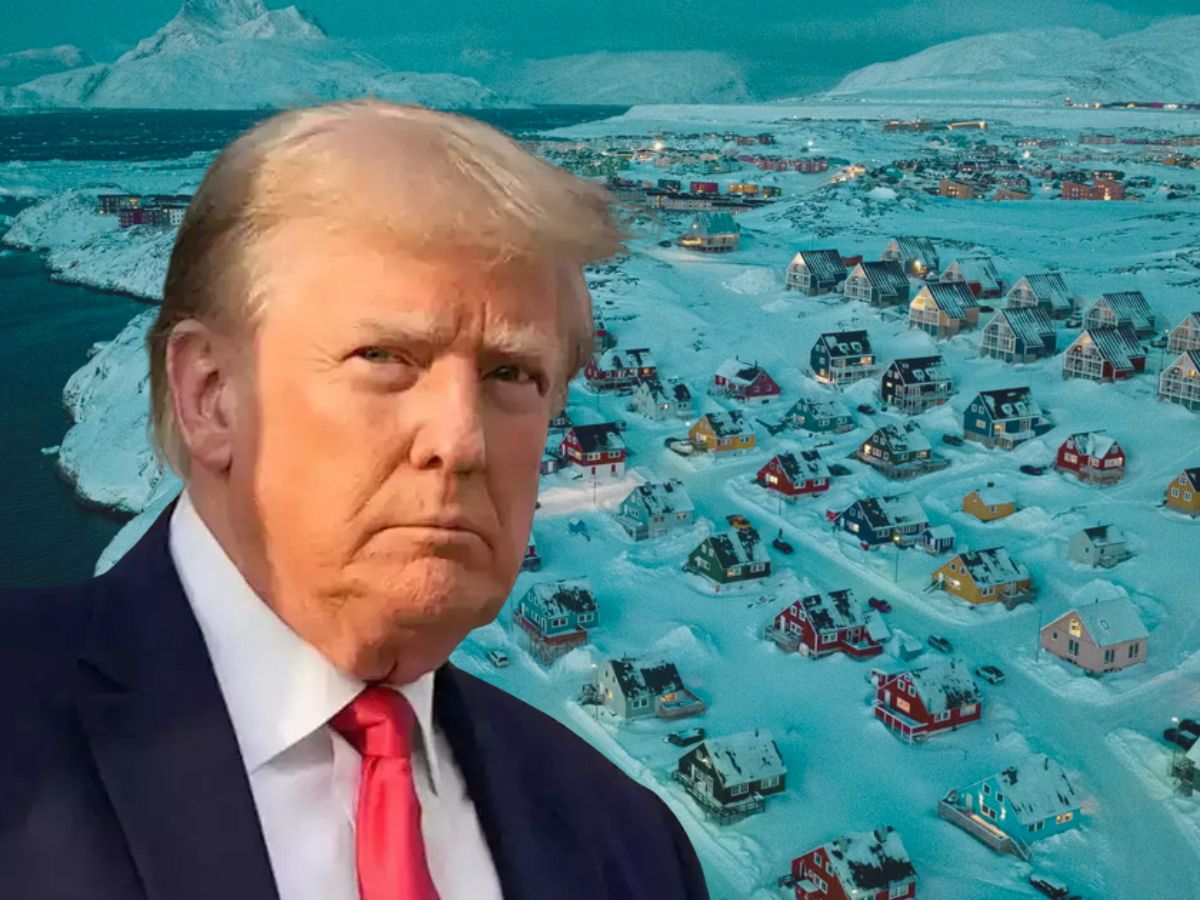

US President Donald Trump’s repeated comments about taking control of Greenland have sparked strong reactions from both Russia and China. Moscow described the move as potentially “historic,” while Beijing accused the US of pursuing its own selfish interests under the guise of security concerns.
Russia and China Push Back Against Trump’s Greenland Claims
Kremlin spokesman Dmitry Peskov said international experts believed that if Trump succeeded in acquiring Greenland, he would go down in world history. However, he refrained from commenting on whether such a move would comply with international law.
China also strongly rejected Trump’s claims linking Greenland to alleged Chinese and Russian security threats. Chinese Foreign Ministry spokesperson Guo Jiakun stated, “The United States should stop using the so-called threat from China as a pretext to pursue its own selfish interests.”
Trump Frames Greenland as a US National Security Priority
Trump has repeatedly argued that Greenland is critical to American national security. He claimed the world would be “not secure” unless the United States had “complete and total control” of the island. Trump also warned of tariffs on European countries opposing his Greenland plans, framing the island as essential to counter growing Russian and Chinese influence in the Arctic.
Europe and Greenland Reject US Pressure
European leaders have denounced Trump’s threats of tariffs as “blackmail,” with Germany and France openly criticizing the US approach. The European Union announced plans for an emergency summit to discuss the matter.
Greenland’s Prime Minister Jens-Frederik Nielsen reaffirmed the island’s autonomy, stating that Greenland would not be intimidated and has the right to make its own democratic decisions.
Arctic Strategic Importance and Resource Race
Greenland occupies a key position in the Arctic, controlling access between North America and Europe. The US operates the Pituffik Space Base on the island for missile warning and space surveillance. Greenland also oversees the GIUK (Greenland-Iceland-UK) Gap, a vital maritime route for Russian naval movements.
The island is rich in rare earth minerals such as uranium, lithium, graphite, and large deposits like Kvanefjeld and Tanbreez. China and Russia have expanded their Arctic presence, signing agreements to develop the Northern Sea Route and investing in resource projects.
While China has yet to establish a significant foothold in Greenland, its strategic partnerships and rare earth dominance provide leverage.
Experts Question US Security Claims
Security analysts note there is no evidence of Russian or Chinese warships or submarines operating near Greenland. Russia’s Arctic naval activity is concentrated near the Barents Sea, while China’s Arctic engagement is primarily through research and commercial projects.
Despite this, Trump continues to link Greenland to a so-called China and Russia threat, raising tensions among NATO allies, Europe, and Greenland itself.
Global Attention on Greenland Intensifies
The Arctic is emerging as a geopolitical hotspot, combining military, strategic, and economic interests. Trump’s repeated Greenland rhetoric has amplified international scrutiny, with Moscow and Beijing warning against the pursuit of selfish interests. Meanwhile, Greenland’s leadership remains steadfast, defending its sovereignty amid growing global attention.
Sofia Babu Chacko is a journalist with over five years of experience covering Indian politics, crime, human rights, gender issues, and stories about marginalized communities. She believes that every voice matters, and journalism has a vital role to play in amplifying those voices. Sofia is committed to creating impact and shedding light on stories that truly matter. Beyond her work in the newsroom, she is also a music enthusiast who enjoys singing.