
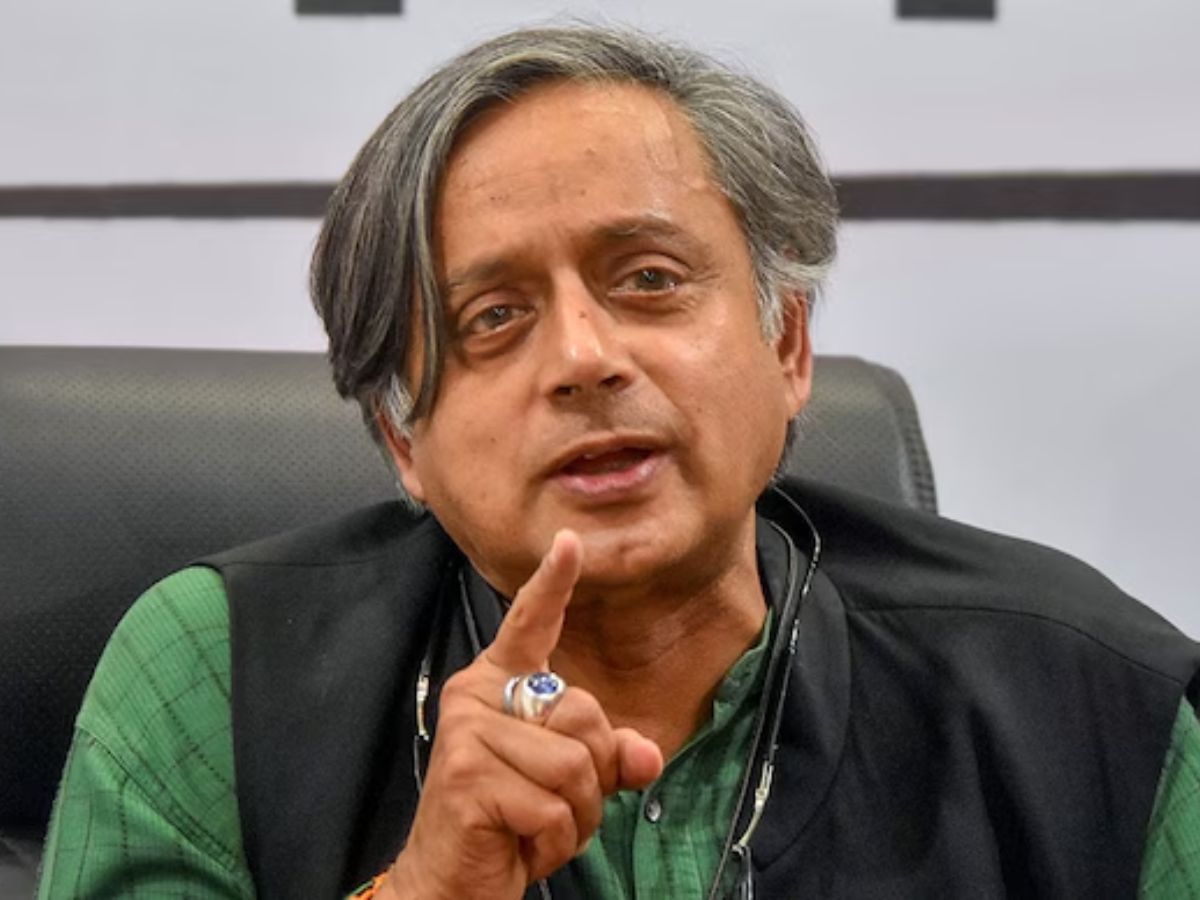

Congress MP Shashi Tharoor has spoken out strongly against former U.S. President Donald Trump’s recent lunch meeting with Pakistan Army chief General Asim Munir, calling it a dangerous move that ignores Pakistan’s past support for terrorism—including sheltering Osama bin Laden, the mastermind of the 9/11 attacks. “Some Senators and Congressmen who met the Pak delegation did… but people in the US could not have forgotten the Osama episode so quickly. Pak’s culpability in hiding this man until he was found… near an Army camp cannot be so easily forgiven by the Americans,” Tharoor said, reminding the U.S. public of how bin Laden was found living quietly near a military base in Pakistan years after the attacks that killed nearly 3,000 people in New York.
#WATCH | Thiruvananthapuram, Kerala | On US President Donald Trump’s lunch meeting with Pakistan Army Chief Asim Munir, Congress MP Shashi Tharoor says, “I hope the food was good and he gets some food for thought in the process. I hope that in these interactions, the Americans… pic.twitter.com/QJn6BHEjoY
— ANI (@ANI) June 19, 2025
A Warning About Trusting Pakistan Again
Tharoor’s comments came at a time when many in India are questioning Trump’s public engagement with Pakistan’s military, especially at such a high level.
He pointed out that Pakistan has a long history of backing terrorist groups that target India, and warned the U.S. against trusting a regime that has time and again been “duplicitous.” “I hope, while the General was being wined and dined, he got all these messages… because that would also be in America’s interest,”
the Thiruvananthapuram MP added, making it clear that India hopes the U.S. will put pressure on Pakistan to stop exporting terror.
Munir’s Outrageous Statements Before Pahalgam Attack
The meeting became even more controversial because of General Munir’s recent provocative remarks about India. Days before the terror attack in Pahalgam, which left 26 people dead, Munir had called Kashmir Pakistan’s “jugular” and referred to Pakistanis as a “superior culture” compared to Indians.
Those remarks were met with anger and disbelief in India.
External Affairs Minister S. Jaishankar, speaking to a Dutch news outlet, blamed Munir’s “extreme religious outlook” for encouraging the kind of violence and hate seen in the Pahalgam killings.
The Indian government has accused Pakistan’s deep state — its powerful military and intelligence establishment — of being behind multiple terror plots, including the latest ones in London and Moscow, according to sources who spoke with NDTV.
Trump’s Meeting Raises Eyebrows for Its Timing
The lunch meeting with Munir came just one day after Trump spoke to Prime Minister Narendra Modi over the phone. At the time, Modi was attending the G7 Summit in Canada, and while Trump extended an invitation to the White House, Modi declined.
What makes the situation even more sensitive is that during the call, PM Modi made it clear that India will never accept third-party mediation on Kashmir, which has long been a point of contention between India and Pakistan.
India’s Strong Message to Trump on Kashmir
During the phone call, PM Modi told Trump firmly that any suggestion of outside mediation on Kashmir was off the table. This came after Trump repeatedly claimed credit for brokering the ceasefire during Operation Sindoor, even though India had publicly stated that Pakistan was the one to ask for a ceasefire. “No trade deal talk or mediation offer during Pak conflict,” PM Modi reportedly told Trump, according to a previous statement.
India has also made it clear that its demand remains unchanged, “Vacate illegally occupied Kashmir.”
Trump Still Claims Credit — Despite India’s Clarifications
Despite Modi’s direct conversation and India’s repeated clarifications, Trump went on claiming credit for stopping the conflict, saying the media had ignored his role. “Love Pak, Modi Fantastic,” Trump said in a now widely circulated quote, once again portraying himself as the key peacemaker — even though Indian officials have rejected that version of events.




