
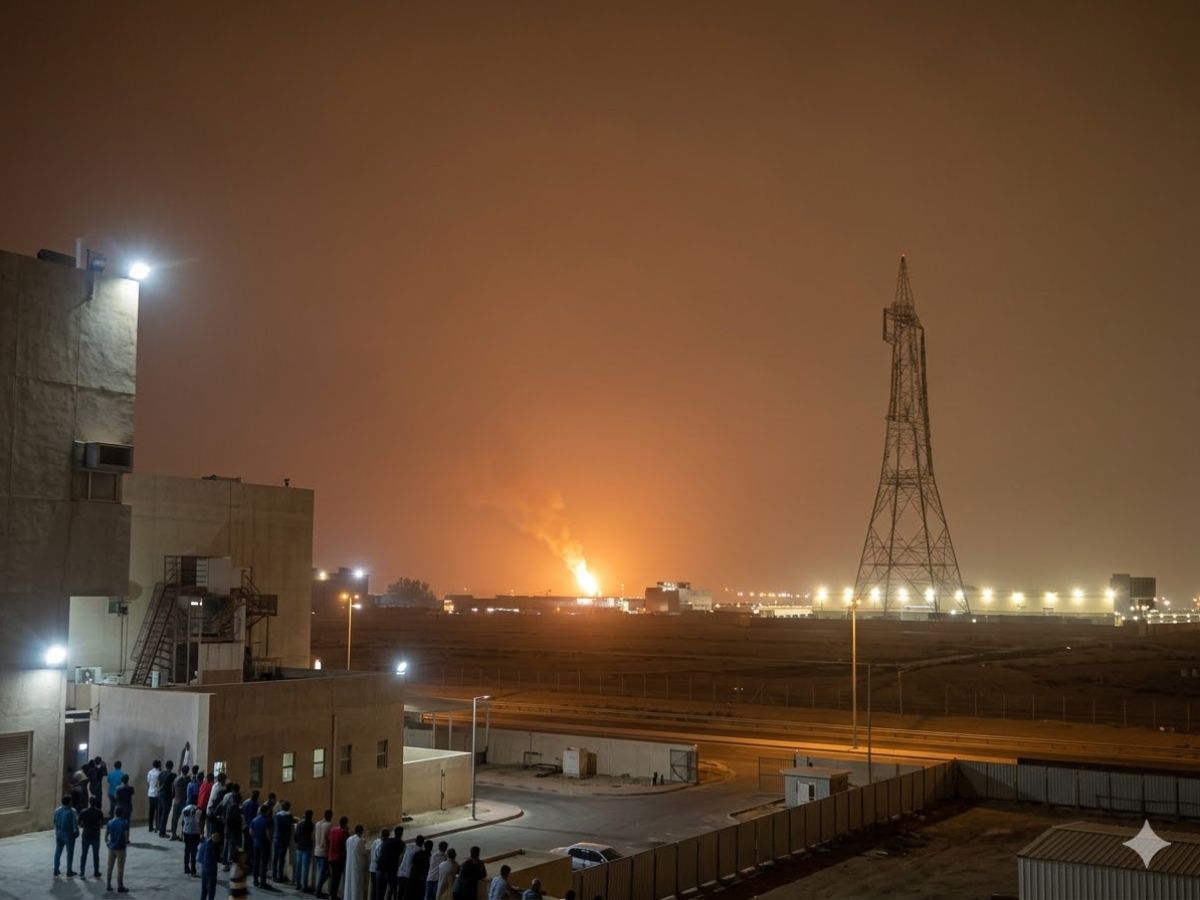

The Persian Gulf geopolitical situation has reached a critical point because Iranian forces conducted precision military strikes against the South Pars gas field, which contains the world’s largest natural gas reserve. The Islamic Revolutionary Guard Corps (IRGC) issued an alarming warning to nearby Arab countries after Tehran blamed the attack on a United States-Israel joint military operation that occurred right after the assault.
Iranian officials declared that any country that enables attacks on Iranian territory through airspace access or logistical assistance will face destruction of its energy infrastructure.
The Gulf region has progressed from local fighting to direct threats against its economic core, which has caused global energy markets to panic and crude oil prices to rise as multiple energy war battles become imminent.
Strategic Vulnerability
The ongoing conflict has revealed a major strategic weakness that affects all energy passageways that connect different parts of the Middle East. The IRGC has named Qatar’s Ras Laffan and Saudi Arabia’s Samref refinery as valid targets for retaliation because Iran’s South Pars facilities in Asaluyeh are currently offline to fight massive fires.
The “tit-for-tat” doctrine shows that the conflict now targets civilian infrastructure and economic systems throughout the region. Experts explain that the South Pars field shares its geological structure with Qatar’s North Field, which creates an environmental and industrial disaster risk that could interrupt 20 percent of worldwide liquefied natural gas (LNG) supply.
Energy Infrastructure
Unverified footage circulating online, purportedly showing explosions at energy infrastructure in Ras Laffan, has further destabilized the region’s security narrative.
The Doha reports about “second wave” missile interceptions indicate that Qatar’s main refinery now faces actual security threats. The global supply chain will experience its first-ever major disruption because Western reserves cannot handle the lost capacity from these essential processing facilities.
Tehran targets the Gulf monarchies high-density industrial areas to exploit global economic dependence on stable exports which will force diplomatic negotiations that transform the Persian Gulf into a high-stakes economic warfare zone.
A recent media graduate, Bhumi Vashisht is currently making a significant contribution as a committed content writer. She brings new ideas to the media sector and is an expert at creating strategic content and captivating tales, having working in the field from past four months.




