
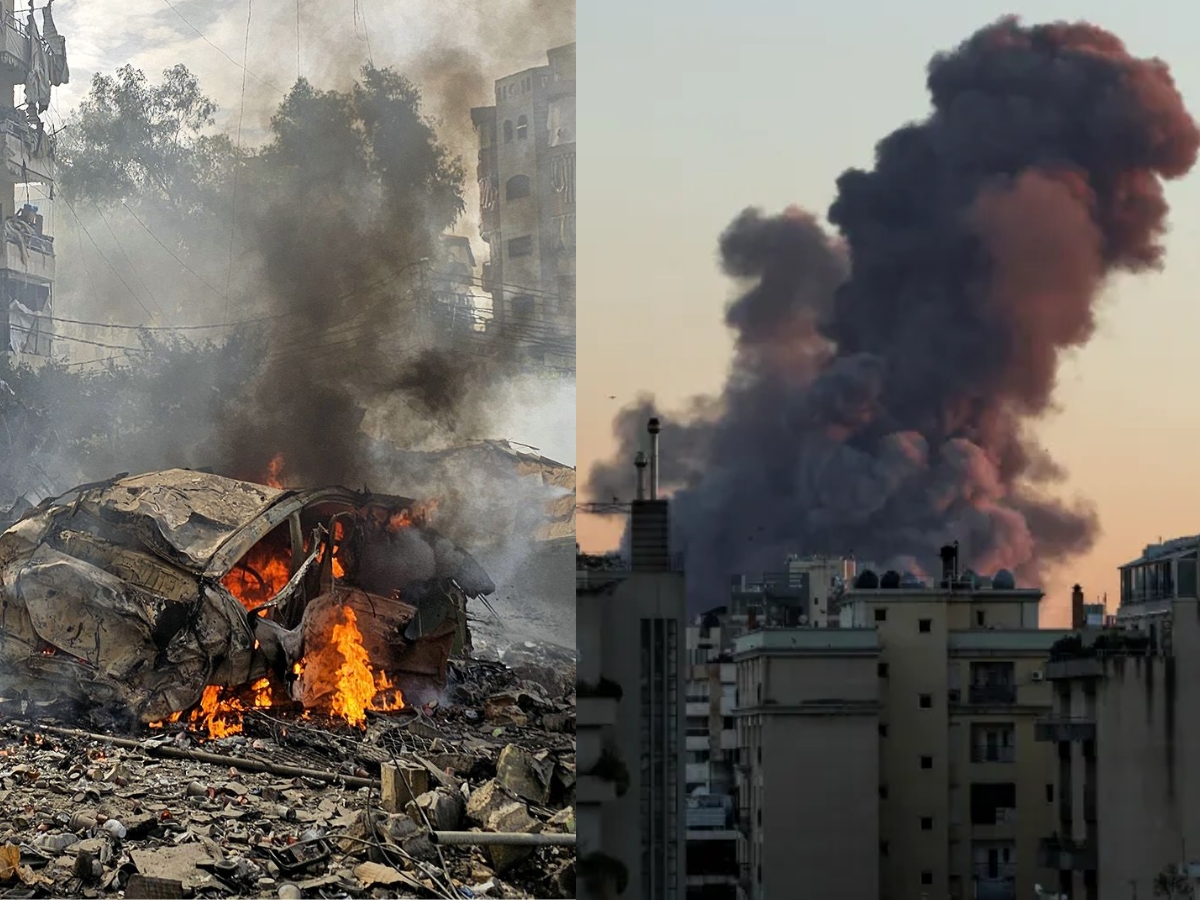

Israel carried out a fresh wave of air strikes on Beirut’s southern suburbs on Monday, shortly after Hezbollah announced it had launched rockets and drones at Israel in retaliation for the killing of Iran’s Supreme Leader, Ali Khamenei.
Lebanese state media confirmed the strikes despite an existing ceasefire between the two sides.
Israeli Strikes Hit Southern Beirut After Hezbollah Attacks Israel
“Beirut’s southern suburbs were targeted by a series of Israeli strikes,” Lebanon’s state-run National News Agency reported, according to agencies.
The attacks came hours after Hezbollah said it had carried out strikes against Israel. Israeli forces responded swiftly, expanding their aerial campaign beyond the capital’s southern suburbs.
Local news outlets reported additional Israeli air strikes in several villages in southern Lebanon, as well as in the Bekaa Valley in eastern Lebanon.
What IDF Said About Attacking Hezbollah
The Israeli military said it was “vigorously attacking Hezbollah” across the country.
“The [Israeli military] will act against Hezbollah’s decision to join the campaign, and will not allow the organisation to pose a threat to the state of Israel and harm the residents of the north,” it said in a statement.
It added: “The Hezbollah terror organisation is destroying the state of Lebanon. Responsibility for the escalation lies with it, and the [Israeli military] will respond forcefully to this harm.”
Hezbollah Claims Retaliation for Ali Khamenei’s Killing
Earlier on Monday, Hezbollah said it had fired rockets and drones at Israel in what it described as retaliation for the killing of Iran’s Supreme Leader, Ali Khamenei.
The group said the attack was carried out “in defence of Lebanon and its people” and “in response to the repeated Israeli aggressions.”
In a statement, Hezbollah said, “The resistance leadership has always affirmed that the continuation of Israeli aggression and the assassination of our leaders, youth and people gives us the right to defend ourselves and respond at the appropriate time and place.”
It further warned, “The Israeli enemy cannot continue its fifteen-month-long aggression without a warning response to halt this aggression and withdraw from the occupied Lebanese territories.”
Hezbollah-Israel Ceasefire Under Strain
Hezbollah and Israel reached a ceasefire agreement in November 2024. However, tensions have persisted, with Israel accused of violating the truce and carrying out attacks across Lebanon almost daily.
Last year, the Lebanese government issued a decree to disarm Hezbollah. The group rejected the move, arguing that its weapons are necessary to protect the country against what it calls Israeli expansionism.
Monday’s developments signal a deepening crisis, as both sides exchange fire amid rising regional tensions.
Zubair Amin is a Senior Journalist at NewsX with over seven years of experience in reporting and editorial work. He has written for leading national and international publications, including Foreign Policy Magazine, Al Jazeera, The Economic Times, The Indian Express, The Wire, Article 14, Mongabay, News9, among others. His primary focus is on international affairs, with a strong interest in US politics and policy. He also writes on West Asia, Indian polity, and constitutional issues. Zubair tweets at zubaiyr.amin




