
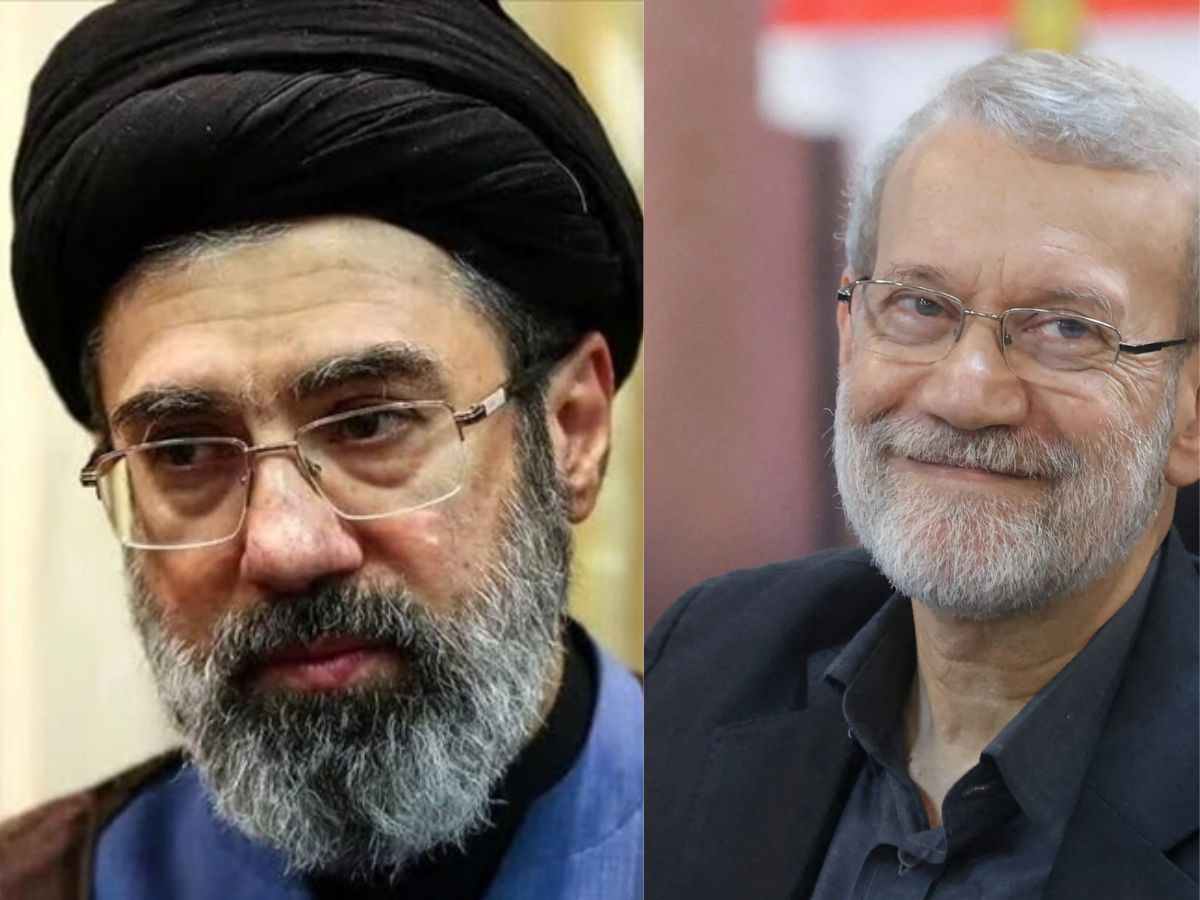

Mojtaba Khamenei, the newly appointed Supreme Leader of Iran, delivered a televised address that created shockwaves across the entire region when he announced that justice will be delivered.
The U.S.-Israeli operation destroyed a house located in the Pardis district through its strike. Mojtaba, who came from a family of powerful religious leaders, described Ali Larijani as a “learned and far-sighted” person who served as an essential support for the Islamic Republic.
His enemies killed him because they recognized his important position in the Islamic Republic, which created their extreme animosity towards him.
Regional Volatility and Strategic Retaliation
Ali Larijani’s removal from his position marked a major loss for Iran’s military leadership during its current period of maximum battlefield operations.
As the Secretary of the Supreme National Security Council, Larijani was the primary architect of Tehran’s defense and nuclear doctrines, which allowed him to connect two opposing forces through his dual role as international diplomat and ideological hardliner.
The state has entered open warfare as Mojtaba Khamenei ascends to power through his death, which the state has described as “blood for blood” warfare. The new direction indicates that Iran will stop using indirect methods to attack Western targets in the Middle East and now plans to conduct direct and asymmetric strikes.
Geopolitical Brinkmanship and Nuclear Ambiguity
The 2015 nuclear agreement which Larijani supported as a “resolvable” conflict faces serious new challenges since his board membership ended.
His uranium enrichment activities in Iran, he claimed, were for peaceful uses, but his close relationships with Moscow and Beijing helped Tehran evade Western economic restrictions. The U.S. and Israel, however, viewed him as a primary coordinator of internal repression and regional proxy warfare.
The coalition has established a “zero-tolerance” policy against Tehran’s new leadership by targeting a person who controlled both the nuclear program and security operations because this action has driven the West Asia conflict into full-scale warfare with no remaining diplomatic solutions.
A recent media graduate, Bhumi Vashisht is currently making a significant contribution as a committed content writer. She brings new ideas to the media sector and is an expert at creating strategic content and captivating tales, having working in the field from past four months.




