
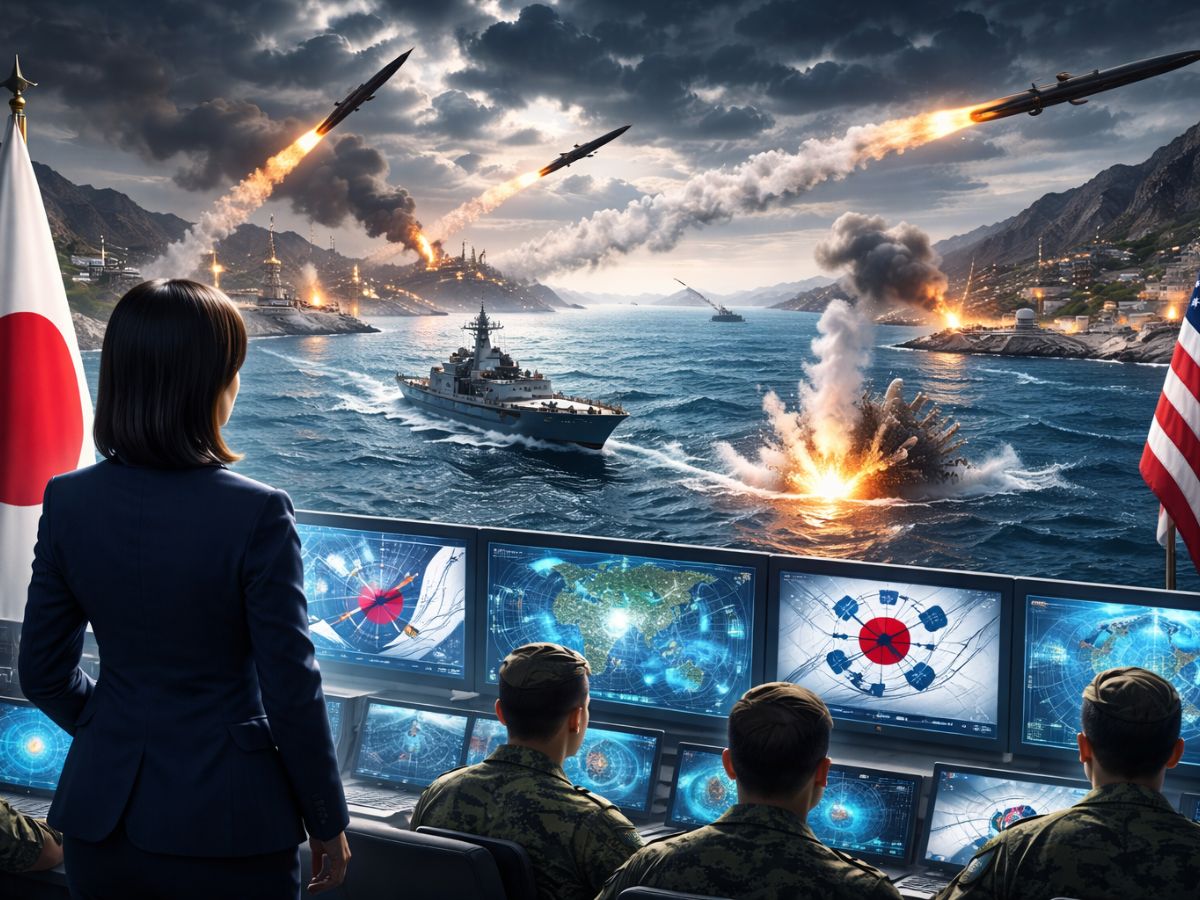

Japan has activated a crisis response team after a ballistic missile launched by North Korea landed in the sea, just outside its Exclusive Economic Zone on Saturday.
According to reports, North Korea fired over 10 ballistic missiles, with most travelling over 350 kilometres before falling in the Pacific Ocean near South Korea and Japan’s territorial waters.
Pyongyang’s missile test comes amid the ongoing US–South Korea joint drills in the region, which North Korea has been dismissing as effectively “dress rehearsals” for an armed attack by the two allies.
Missiles were fired from a location near the capital, Pyongyang, at about 1:20 p.m. local time (0430 GMT), heading toward waters off the country’s east coast, South Korea’s Joint Chiefs of Staff said in a statement.
After the alert was issued, the administration of Japanese Prime Minister Sanae Takaichi quickly put emergency protocols into effect to track the missile’s path.
Takaichi, Japan’s first female prime minister, recently secured a sweeping victory in the February 2026 general elections.
Throughout her time in office, she has consistently taken a firm position on regional security and safeguarding Japan’s territory.
For more than two decades, North Korea has conducted tests of various ballistic and cruise missiles as part of efforts to develop delivery systems for nuclear weapons, which analysts believe the country has already succeeded in producing.
The country remains under various UN sanctions for repeatedly breaking international laws. However, it has remained defiant of the sanctions and penalties and has consistently issued threats to the United States, South Korea, and Japan.
Earlier this week, South Korea and the United States began their annual large-scale military exercises in the country.
Both allies describe these drills as defensive in nature and intended to test preparedness against potential threats from North Korea.
On Saturday, hundreds of American and South Korean troops carried out river-crossing drills using tanks and armoured combat vehicles, under the supervision of the commander of their combined forces.
The United States maintains around 28,500 troops in South Korea, along with squadrons of fighter jets stationed in the country.




