
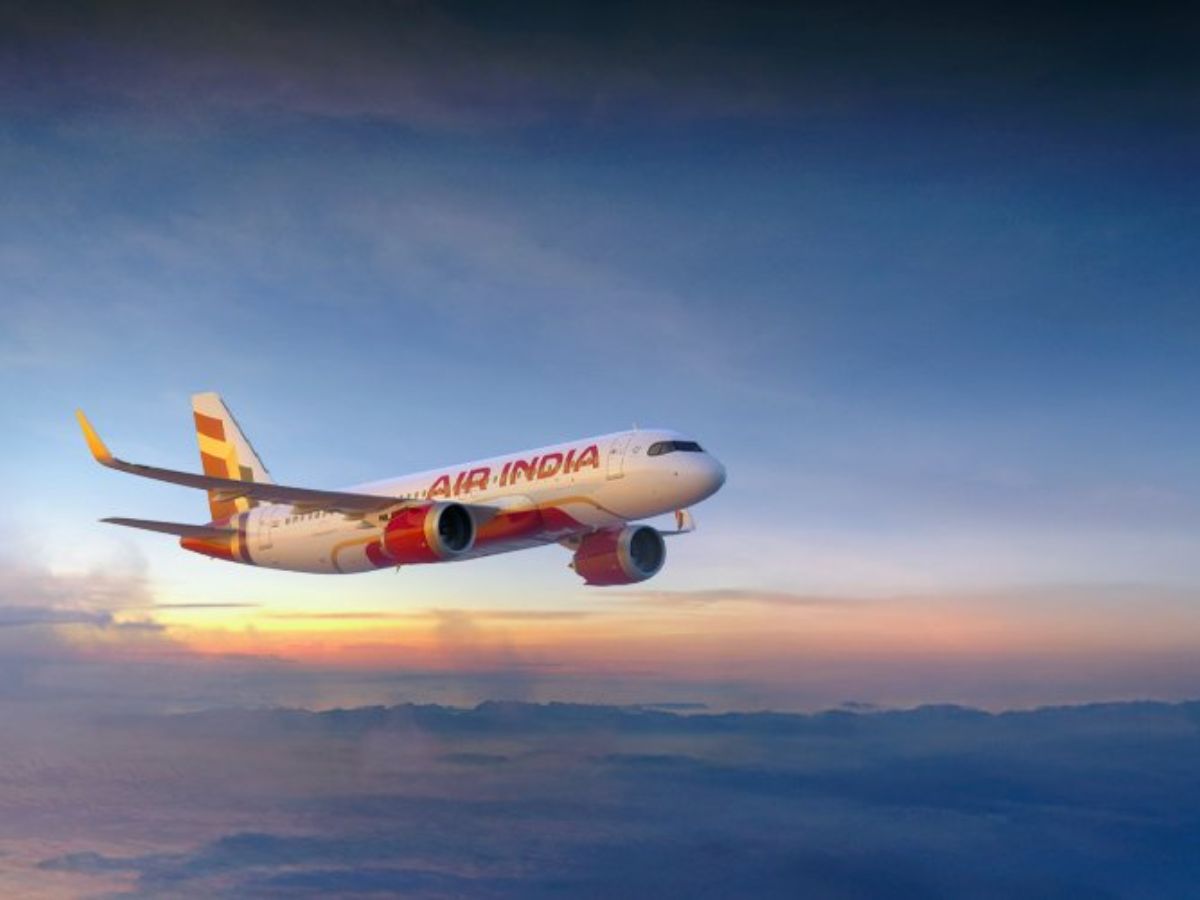

Two young engineers have designed an AI-powered system that they believe could make airplanes “crash-proof.” Their idea, however, has drawn mixed reactions online: some people find it exciting, while others call it strange and unrealistic.
The project, named REBIRTH, was created by engineers Eshel Wasim and Dharsan Srinivasan. They say the concept came after the June 2025 Air India crash in Ahmedabad, where more than 260 people died, including passengers and people on the ground when the plane struck a hostel mess. That tragedy, they explained, inspired them to think of ways to make survival possible even in the worst-case scenario.
What is Project REBIRTH?
On the project’s official page, the engineers wrote that REBIRTH was born from grief, not a laboratory. “After the crash, my mother couldn’t sleep. She kept imagining the fear of the passengers, knowing there was no escape. That helplessness haunted us. I shared this with a friend, and together we started working. REBIRTH is more than engineering—it’s a promise that survival can be planned,” the note reads.
So what exactly does REBIRTH do? According to their description, the system would automatically activate if an aircraft faces a serious failure, like an engine shutdown. In such a case, AI sensors would detect the problem and deploy a set of external airbag-like shields around the plane. These “smart airbags” would then inflate to form a protective cocoon, absorbing the impact of the crash and giving passengers a chance to survive.
Eshel Wasim and Dharsan Srinivasan: Will They Be Able to Make Air Travel Crash-Proof?
The engineers say the design includes several parts: AI crash detection, smart airbags, special seat liners, reverse thrust to slow down the plane, and automatic rescue signals. They hope these features together could turn a fatal crash into what they call a “survivable landing.”
On social media, people had mixed responses. One user wrote: “If this works, it’s amazing—let’s make it happen!” Another said: “Just build stronger planes instead of airbags.” Someone else worried: “What if it deploys by accident mid-air?” And a few joked that maybe only Elon Musk could make it real.
For now, Wasim and Srinivasan are working on building lab models of the system. They plan to test the airbags, smart seat designs, and crash-detection features step by step.
“In five years, we want REBIRTH to be tested, approved, and installed in real flights,” the engineers said. “Our dream is to make survival after a crash not a miracle—but a standard.”
Also Read: More Mystery Over Air India Flight 171 Crash as Preliminary Report Triggers Theories




