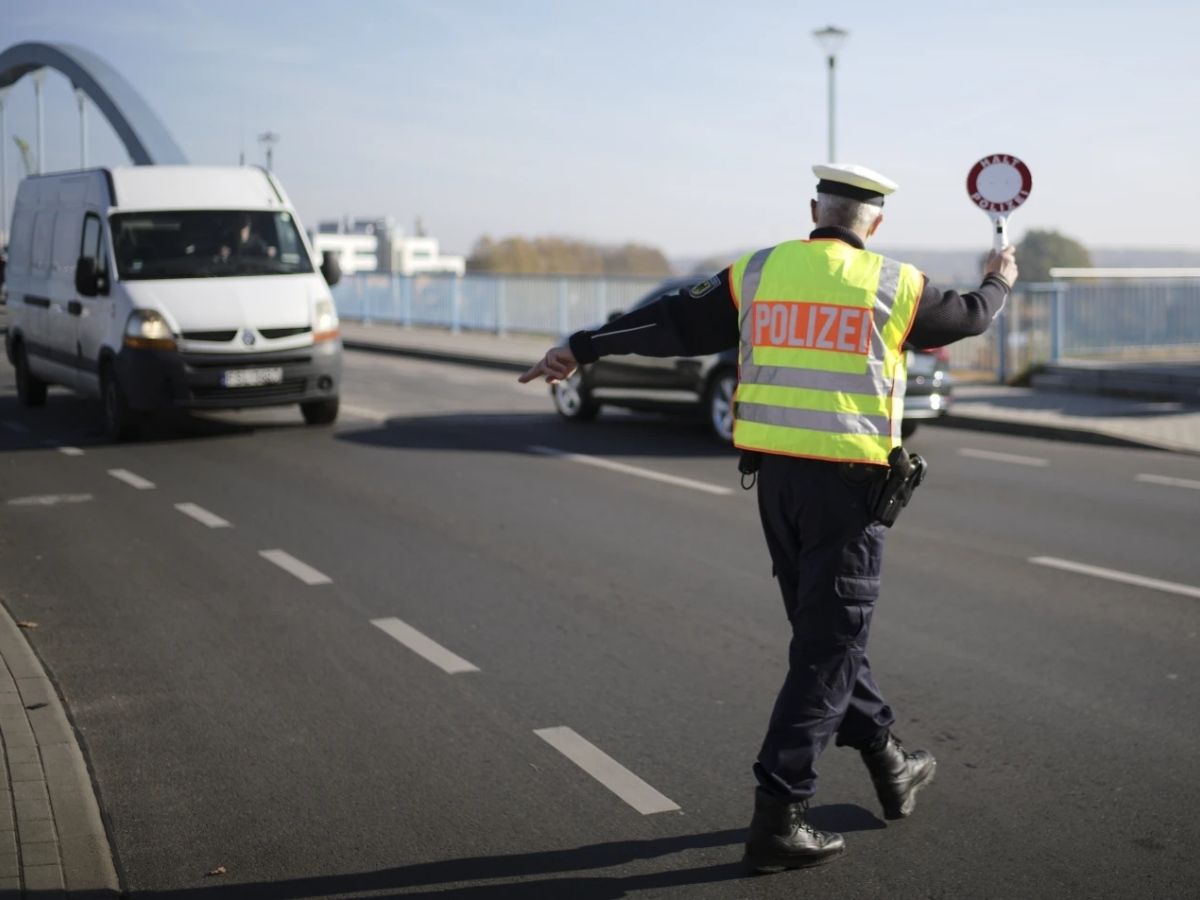

Poland announced on Tuesday that it will temporarily reinstate border controls with Germany and Lithuania, in a move that comes after Germany’s recent efforts to tighten border restrictions aimed at reducing the influx of asylum-seekers, The Associated Press reported.
Poland’s Response to Germany’s Tougher Migration Stance
Asserting that Germany won’t allow migrants to enter its territory, Polish Prime Minister Donald Tusk told state broadcaster TVP that the change in practice introduced tensions and a sense of asymmetry.
Tusk further said that he had already raised the issue with German Chancellor Friedrich Merz, warning that “the patient position of Poland is slowly being exhausted.”
Germany’s Shift in Migration Policy
Germany’s new Chancellor Friedrich Merz pushed for a crackdown on migration as a central plank of his election campaign in the spring. In May, since Merz became Chancellor, Germany stepped up police patrols on its borders and announced plans to send back some asylum-seekers attempting to enter Europe’s biggest economy.
This is not the first time, as Merz’s predecessor had already prolonged border controls last fall by six months in order to slow the stream of migrants.
ALSO READ: Paris on Red Alert as Europe Swelters Under Extreme Heatwave
Schengen and the Impact on Cross-Border Travel
Both Poland and Germany are members of the Schengen Area, which provides passport-free movement between most of the European Union, the report said. Temporary border controls are only permitted by the European Union in exceptional circumstances, like threats to internal security, and require these to be limited in scope and duration.
Tusk’s statement equates to Poland initiating temporary border checks on next Monday, the Polish news agency PAP reported.
Issues Over Regional Relations
Before Poland’s announcement, Chancellor Merz assured journalists in Berlin that his administration is in close communication with Poland to reduce disruption resulting from Germany’s border controls, as reported by the AP.
Meanwhile, Knut Abraham, Germany’s government coordinator of German-Polish relations, recognised the political urgency of the border controls but cautioned against their adverse effect.
“The German border controls are needed as a political message that German migration policy has changed,” Abraham said in an interview with the German newspaper Welt, per AP. “But we can also observe that the controls are placing a huge burden on coexistence at the border.”
Abraham added that “the solution cannot be to send migrants back and forth between Poland and Germany or to fix border controls on both sides”.
ALSO READ: Royal Train to Retire After 156 Years as King Charles III Seeks Cost Savings