

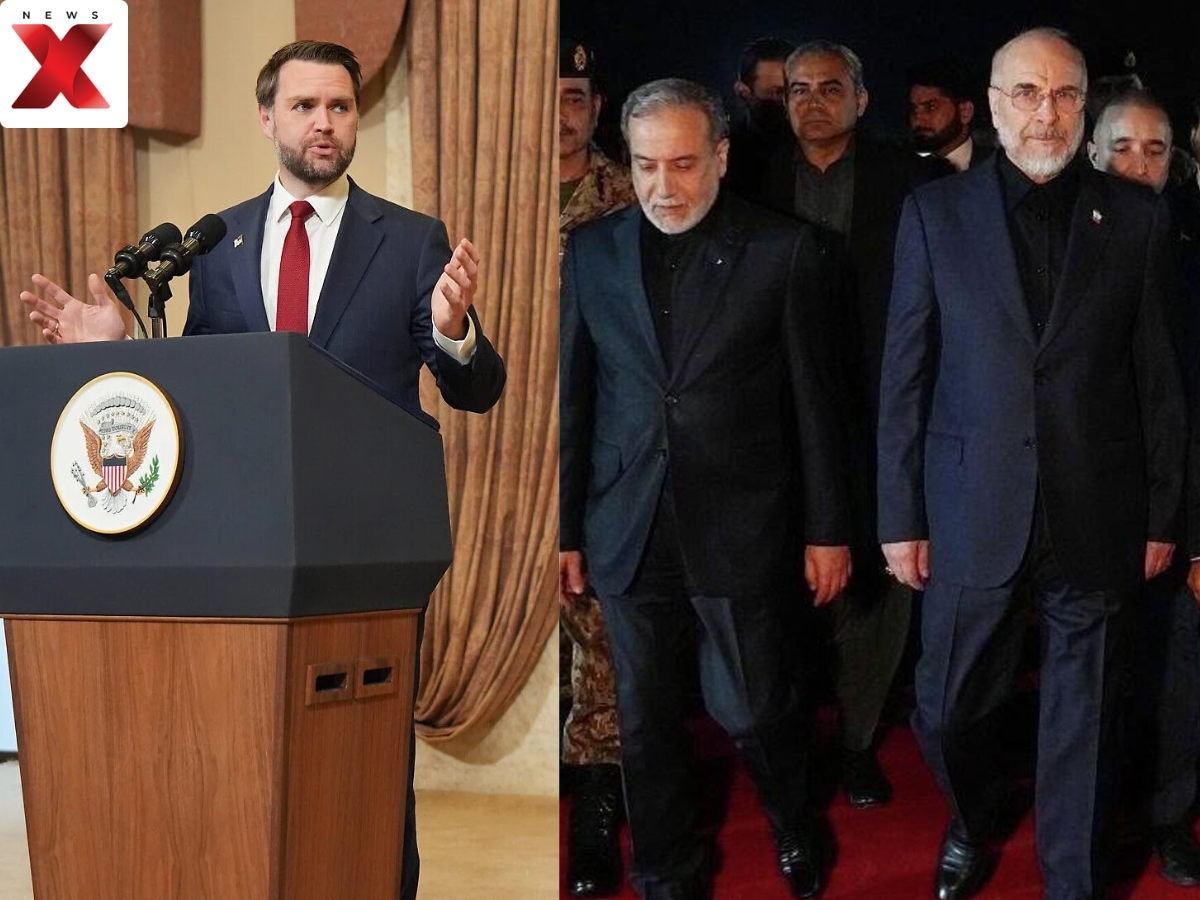
US-Iran Peace Talks: The United States and Iran may be moving toward another round of negotiations, as the clock ticks down to a looming ceasefire deadline. US President Donald Trump on Monday indicated that outreach efforts are underway, suggesting renewed diplomatic engagement from unidentified interlocutors. According to a report by CNN, officials within the Trump administration are internally deliberating the framework for a potential second, in-person meeting with Iranian representatives. The proposed talks are expected to take place before the current ceasefire expires on April 21. Reports said that Geneva and Islamabad are once again being considered as possible venues for the next round of negotiations.
“We’ve been called this morning by the right people, the appropriate people, and they want to work a deal,” Trump said at the White House, without specifying who initiated the contact.
Iran Open to Talks, Warns Against ‘Unlawful Demands’
Trump’s remarks came shortly after the United States moved to restrict vessels from transiting to and from Iranian ports and coastal areas. The decision targets a critical maritime corridor and could further escalate tensions, particularly amid an ongoing global energy crisis.
So Geneva or Islamabad. Iranian wants talks to happen due to security in Islamabad while the Americans want this elsewhere. Nevertheless, Islamabad would be moderators with Türkiye and even a Chinese envoy to administer guarantees.
— Ali K.Chishti Official (@thewirepak) April 13, 2026
Responding to the developments, Iran’s ambassador to India, Mohammad Fathali, stated that Tehran remains open to fresh negotiations with Washington, but only under specific conditions.
“If you want progress in any diplomatic process, [both] sides [should be] ready for negotiations. And they should avoid unlawful demands,” Fathali said during a media briefing at the Iranian embassy in New Delhi.
“Our high-ranking officials said we are ready for peace, we are ready for negotiations. But you should know that Iran is also ready for war.”
Iran-US Came Very Close To Agreement
“There was a strong hope in the middle of the talks that there would be a breakthrough and the two sides would reach an agreement. However, things changed within no time,” a Pakistani government source told Reuters.
Another source involved in the talks said the parties came “very close” to an agreement and were “80% there”, before running into decisions that could not be settled on the spot.
Two senior Iranian sources described the atmosphere as heavy and unfriendly, adding that while Pakistan tried to soften the mood, neither side showed any willingness to ease tensions.
How US-Iran Peace Talks Fell Apart
Nevertheless the two Iranian sources told Reuters that by early Sunday morning the atmosphere had shown some improvement, and the possibility of a one-day extension began to take shape.
However, differences persisted. A U.S. source said the Iranians did not properly understand that the core U.S. aim was to have a deal that ensured Iran would never obtain a nuclear weapon. Among Iran’s concerns was a distrust of U.S. intentions.
This account, based on sources who spoke on condition of anonymity to Reuters due to the sensitivity of the matter, offers a first account of the internal dynamics of the meeting, how the mood in the room shifted, how talks ended after signs the meeting might be extended, and how further dialogue remains on the cards.
Talks Continue Between Iran and US
A Middle East-based diplomat said conversations between mediators and the Americans have continued since Vance left Islamabad, while the source involved in the talks said Pakistan was still passing messages between Tehran and Washington.
“I want to tell you that a full effort is still on to resolve the issues,” Pakistan’s Prime Minister Shehbaz Sharif said on Monday.
Despite numerous obstacles to peace, both sides appear to have strong reasons to consider de-escalation.
The U.S. strikes appear unpopular at home and look unlikely to topple Iran’s theocratic ruling system, while Tehran’s strangling of energy supplies is hurting the global economy and pushing up inflation months before U.S. midterm elections.
Also, war damage to Iran’s ailing economy risks leaving the authorities there weaker internally just weeks after protests they were able to put down only with mass killings.
With inputs from Reuters
Zubair Amin is a Senior Journalist at NewsX with over seven years of experience in reporting and editorial work. He has written for leading national and international publications, including Foreign Policy Magazine, Al Jazeera, The Economic Times, The Indian Express, The Wire, Article 14, Mongabay, News9, among others. His primary focus is on international affairs, with a strong interest in US politics and policy. He also writes on West Asia, Indian polity, and constitutional issues. Zubair tweets at zubaiyr.amin





