
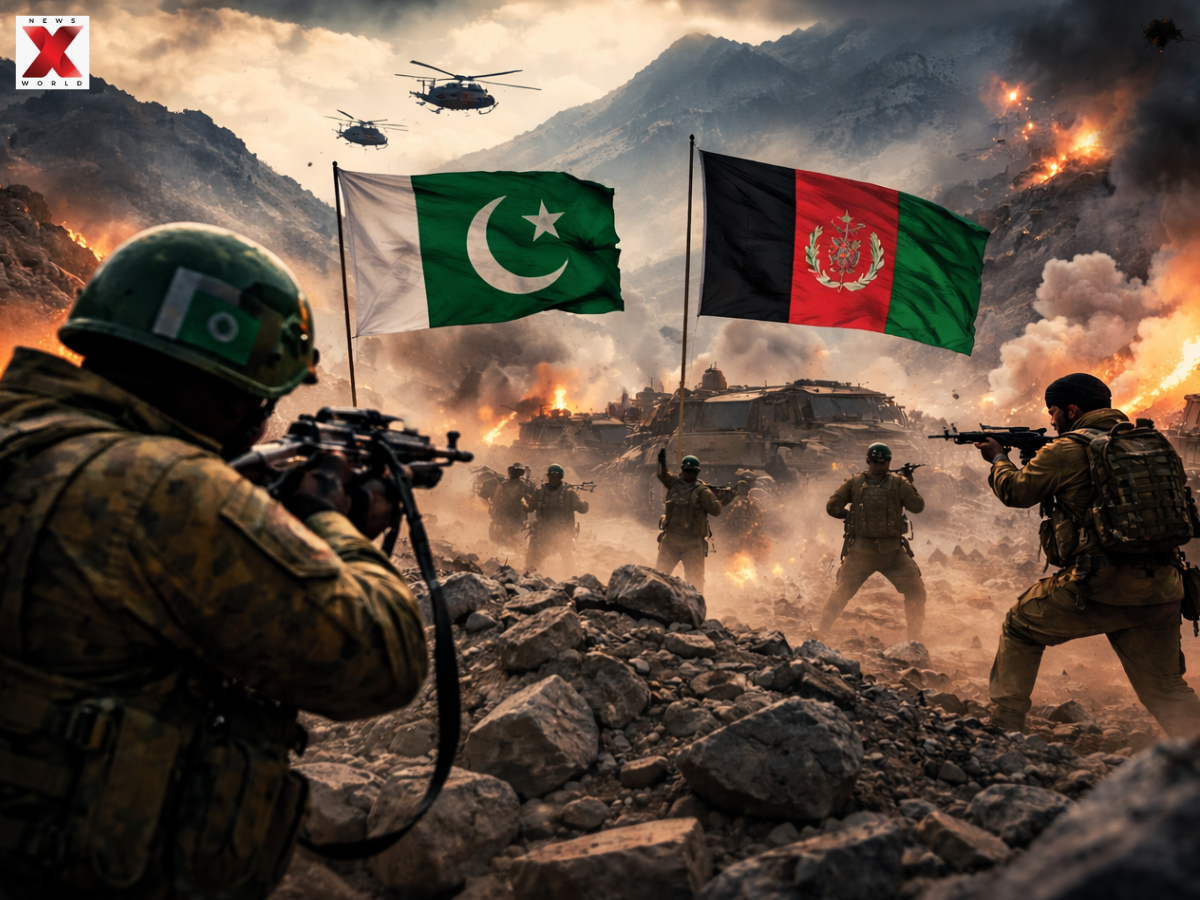

Pakistan-Afghanistan Conflict: Things are heating up fast between Afghanistan and Pakistan this Friday morning (February 27). Islamabad just launched airstrikes on major Afghan cities, including Kabul.
Pakistan’s Defence Minister Khawaja Asif didn’t hold back, posting on X, “Our patience has reached its limit. Now it is open war between us and you.”
These strikes came just hours after Afghanistan attacked across the border, ramping up already tense relations between the two neighbors.
Honestly, things have been rocky for months. Since deadly clashes in October killed more than 70 people on both sides, most land crossings have stayed closed.
Pakistan-Afghanistan Conflict
Afghanistan fired the first shot on Thursday evening, around 8 pm local time. The Taliban government struck Pakistani targets along the Durand Line, saying their attack was payback for deadly Pakistani airstrikes last Sunday (February 22) on Afghan border areas. The Taliban claim at least 18 people died in that attack, including women and children.
Afghan government spokesperson Zabihullah Mujahid put it this way on X: “In response to the repeated rebellions and insurrections of the Pakistani military, large-scale offensive operations were launched against Pakistani military bases and military installations along the Durand Line.”
Afghanistan says they killed 55 Pakistani soldiers, captured several alive, and took some bodies back with them. They claim their own losses came to eight dead and eleven wounded, and that they destroyed 19 Pakistani army posts and two bases.
Pakistan’s Information Minister Attaullah Tarar pushed back hard on those numbers. He says only two Pakistani troops died, with three wounded. According to him, 36 Afghan fighters were killed.
It’s messy, and both sides are telling very different stories.
بسم الله الرحمن الرحیم
وَإِنَّ جُندَنَا لَهُمُ الْغَالِبُونَ.
د ملي دفاع وزارت هوايي ځواکونو نن غرمه شاخوا یولس بجې د پاکستان په اسلام اباد کې فیض آباد ښار ته نیږدې نظامي کمپ، نوښار کې د پوځ کینټ، جمرود پوځي کالوني، او ایبټ آباد کې هوايي بریدونه وکړل.
دغه هوايي عملیات په… pic.twitter.com/aKbuH9bV1W— Hamdullah Fitratحمدالله فطرت (@FitratHamd) February 27, 2026
Pakistan launches Ghazab Lil Haq against Afghanistan
Pakistan air force had initiated airstrikes in vengeance against Afghanistan on the operation Ghazab Lil Haq targeting major cities, including Kabul, in retaliation of Afghanistan’s cross-border strikes.
The AFP journalists also recorded jets and several loud explosions in the Afghan capital, which was later followed by gunfire over a span of more than two hours. This was also the case in the southern city of Kandahar in Afghanistan which harbors the Supreme Leader Hibatullah Akhundzada, where jets could be seen flying overhead.
According to a report by the state broadcaster of Pakistan PTV, the Pakistani military had attacked the Afghan Taliban strategic military bases in Kabul, Kandahar and Paktia.
During that period of strikes two brigade headquarters were wiped out in Kabul and one corp headquarters was wiped out in Kandahar and one brigade headquarters was wiped out. Paktia Reported a corp headquarters was hit and an ammunition depot and a logistics base were destroyed in Kandahar.
🚨 Breaking
Afghan soldiers entered Pakistan. Pak forces retreating back.#Pakistan #operationswiftretort #PakArmy #AfghanistanAndPakistan
pic.twitter.com/zhBJtd6tWs— Dilawar Hussain (@the_dilawar09) February 26, 2026
What’s next for Pakistan–Afghanistan?
What happens next in the Pakistan–Afghanistan conflict really comes down to three main things: military moves, diplomatic pressure, and whatever’s going on inside each country’s politics.
Right now, you’re probably going to see more cross-border strikes and artillery trading along the Durand Line. Both Islamabad and the Taliban want to look tough, so they’ll likely stick to smaller, targeted operations to flex their muscles without pushing things into an all-out war. But if airstrikes start hitting big cities or either side tries deeper raids, the fight could spiral—and drag the whole region into chaos.
On the diplomatic side, outside players like China, the Gulf states, and maybe even the UN are going to push hard for everyone to calm down. Pakistan needs stability for its economy, think trade routes and keeping its borders under control.
The Taliban, on the other hand, are already boxed in economically and politically. Another drawn-out conflict would just make things worse for them.
There’s also the militant angle. Pakistan keeps accusing Afghanistan of giving safe haven to anti-Pakistan groups, while the Taliban keep denying it. If attacks from militants ramp up, expect the back-and-forth violence to get even uglier.
Looking a bit further ahead, there’s a good chance we’ll see some quiet behind-the-scenes talks or negotiations. Both governments have pulled back after tense moments in the past. Even if the public talk is all about “open war,” nobody really wants a long, devastating fight. The costs economically and politically are just too high for either side.
PAK VS AFGHAN: China seeks to mediate
A rise in the war between Pakistan and Afghanistan has led to China intervening in their conflicts to urge both sides to halt the war and resolve to the disputes through dialogue.
This follows the Pakistani bombing of key cities in Afghanistan on Friday, such as the capital city of Kabul, and the declaration on open war on its neighbour that has been marked by months of deadly attacks.
Mao Ning, the spokeswoman of Chinese ministry of foreign affairs, on Friday added that China was keeping a close eye on the developments as a neighbour and a friend of both countries.
She said that Beijing was very alarmed with the escalation and it was heartbreaking to the number of casualties.
Why are Pakistan and Afghanistan at war?
The air attacks are a culmination to years of animosity between the two nations. The most recent major flare-up was in October and then a temporary ceasefire that was negotiated by Turkey and Qatar was achieved.
Pakistan accuses the Taliban government in Afghanistan of aiding so-called anti-Pakistan terrorists who it claims have been involved in suicide attacks in Pakistan such as the one recently at a mosque in Islamabad.
This has been refuted by the Taliban government which has severally indicated that they are not using the territory of Afghanistan to pose a threat to the security of other nations.
It on its part charges Pakistan with performing unprovoked attacks whereby civilians have fallen victim to death. Pakistan claims that it attacks militants alone.




