
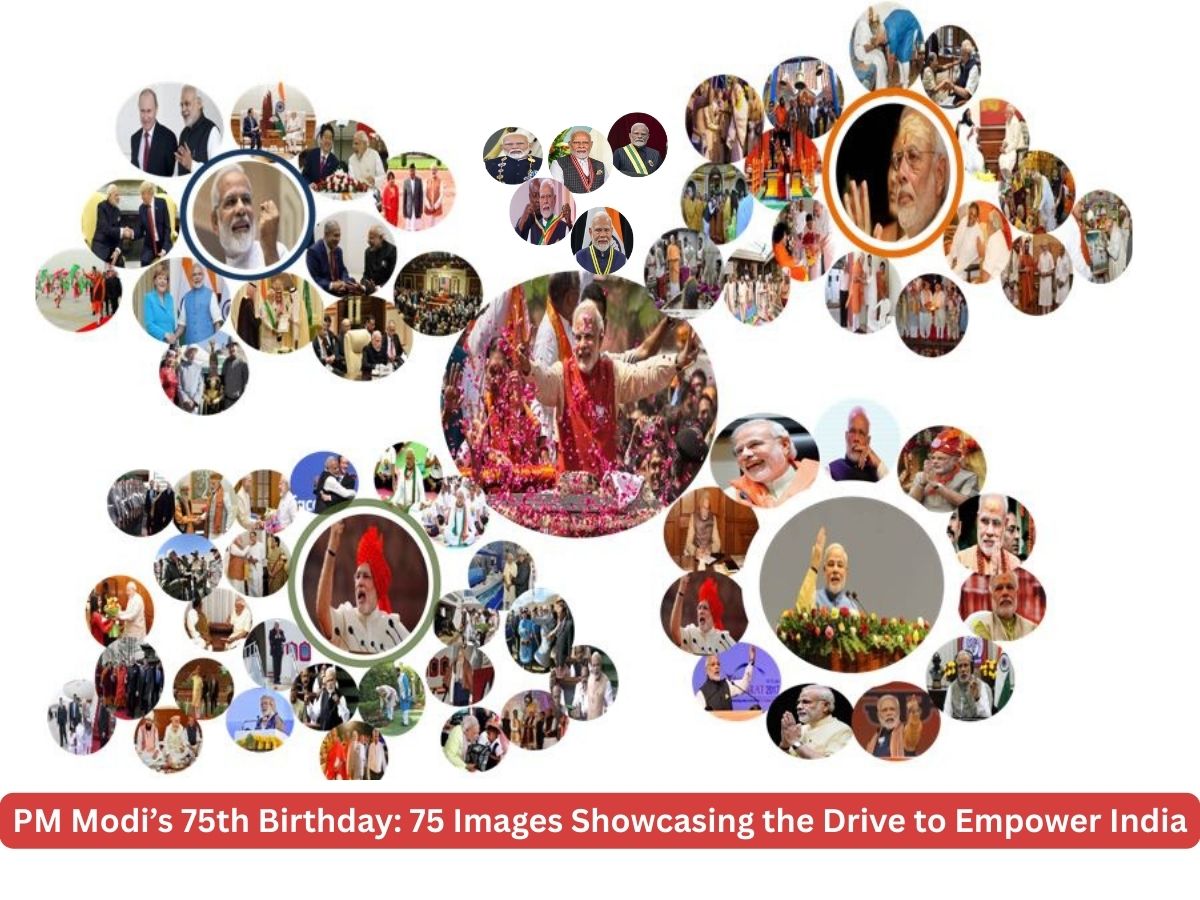

Prime Minister Narendra Modi marks his 75th birthday today, and it’s not only a personal milestone, it’s a symbolic moment for India’s economic revolution over the past few years. From 2014 to 2025, India has experienced a wave of strategic policy reforms and initiatives intended at creating a more self-sufficient, internationally competitive, and business-friendly nation. Also, once you dig into the numbers, it’s clear: all of these policies have meaningfully reformed India’s business landscape.
Therefore, what are the 75 key policies and initiatives that have formed the major impact? Let’s discover.
Building a New Business Ecosystem: One Policy at a Time
To start with, one of the most key initiatives in business domain is the Production Linked Incentive (PLI) scheme, which extents to 14 sectors, right from electronics, pharma to textiles and drones. It is, therefore, backed-up by the campaigns like Make in India, Startup India, and Digital India, each of them is focused and intended to enhance local industry, innovation practices, industrial advancements, process upgradations, and digital infrastructures.
The government also introduced Atmanirbhar Bharat program, to inspire self-sufficiency in key focused areas like defense, electronics, and critical raw materials. In order to support this initiative, National Single Window System (NSWS) was launched, which makes business sanctions easier through online, then the Smart Cities Mission, which is converting urban setup into business-ready structures and ecosystems.
In the related mobile production, India became a comprehensive assembly hub for most of the bigger players, thanks to the PLIs and incentives that are focused to attract companies like Apple, Foxconn, and Samsung to set up their big manufacturing unites in India. In the meantime, policies like the Bulk Drug Parks Scheme, Electronics Manufacturing Clusters (EMC 2.0), and PLI schemes for Green Hydrogen, Solar Modules, and EV Components intended to place India as a future-ready industrial production leader.
MSMEs Get a Major Makeover
India has around 6.3 crore-strong MSME, the sector saw an immense drive toward formalization, digitalization, and financial integrations. The Udyam Registration Portal has listed over 4.69 crore business enterprises, giving small industries access to formal credit and government schemes. Restructurings like the Revised MSME Definition, build on turnover and investment, have carried out more businesses into the fold.
The Emergency Credit Line Guarantee Scheme (ECLGS) distributed around Rs.5 lakh crore in loans to support MSMEs survive during the pandemic, whereas the Self-Reliant India Fund drove Rs.50,000 crore into equity funding. The MUDRA scheme further providing more than Rs.23.2 lakh crore in loans since 2015 to micro level business entrepreneurs.
There are numerous focused programs, similar to ZED Certification for quality, MSME SAMADHAAN for payment resolution, TReDS for invoice discounting, and the Digital MSME Scheme, have helped small businesses revolutionize and function more effectively and efficiently. MSMEs also benefited from the Design and IPR Schemes, Credit Guarantee Trust (CGTMSE), and Skill India programs customised to micro enterprises.
Traditional industries backed up by the schemes like SFURTI, Cluster Development Programme, and Tool Rooms & Technology Centers. Digital platforms like GeM (Government e-Marketplace) provides platforms to MSMEs so to directly access government finding worth Rs.4 lakh crore. In the meantime, the One District One Product (ODOP) program has given an immense boost to the local products, both nationally and internationally.
Women entrepreneurs on the other hand, received attention with the help of initiatives like Stand-Up India and Mahila Coir Yojana (MCY), reassuring comprehensive growth and development.
Infrastructure, Exports, and Reforms for Long-Term Growth
In order to reduce the logistic costs and bring reforms to the supply chains across various industrial sectors, the government launched the PM Gati Shakti National Master Plan, which combines roads, ports, rail, and airports. Additionally, projects like Bharatmala for national highways and Sagarmala for port-led connectivity are backing up and serving make Indian exports more competitive in domestic and international markets.
Similarly, various policies like the National Logistics Policy, UDAN scheme for domestic air connectivity, and the digitization of customs approval under ICEGATE and SWIFT arrangements are restructuring the trade and practices.
However, related to the taxation, GST carried consistency across Indian states, whereas the Corporate Tax Cut in 2019 lowered rates to 22% (15% for new manufacturers), making India more appealing for business investors. The promotion of Insolvency and Bankruptcy Code (IBC) along with the introduction of C-PACE advanced business closures, encouraging a healthier business environment across various categories.
The government also introduced Faceless Tax Assessment, announced Startup Tax Exemptions, and eliminated the Angel Tax for DPIIT-registered business startups. Policies and procedures like the Unified Payments Interface (UPI) and Jan Dhan-Aadhaar-Mobile (JAM) trinity added more than 50 crore people into the banking system, enabling quick and clear financial transactions.
India’s renewable energy initiatives and Electric Vehicle strategic push was guided and supported by the FAME II Policy, PLI for EVs, and the National Solar Mission. To appeal to the global capital market, the government relaxed FDI standards (up to 74% in defense sector, 100% in most of the sectors), launched Invest India, and advanced SEZ regulations under the forthcoming DESH Bill.
Various labour reforms and transformations were also combined into four labour codes to enhance ease of hiring whereas safeguarding the rights of workers.
What Does the Data Say?
India’s GDP today is amongst the five largest in the world, with the projection done by the IMF, to reach at 3rd position by 2027. Foreign Direct Investment inflows moved $85 billion in Financial Year 2023, the highest ever at that point.
The country exported goods and services valued at around $770 billion in Financial Year 2024, together with record-high mobile phone exports more than $15 billion. The Startup ecosystem today ranks third at the global stage, with more than 110 unicorns. Also, the MSME sector backs 35.4% to India’s manufacturing gross value addition (GVA).
Final Thoughts
Today, when the PM Modi turns 75, these 75 transformative policies and initiatives positioned as evidence to a decade of economic growth and restructuring. They replicate a change toward formalization, digitization, and strengthen industries across sectors.
Despite the fact that the challenges in execution and global headwinds continue, the path is clear, India is aligning and positioning itself not just as an emerging market, but then as a central player in the global economy ecosystem.
No matter if you are a startup founder, MSME owner, manufacturer, or investor, this moment in India’s economic journey proposes both hard lessons and immense opportunities.
Also Read: Gold Breaks All-Time Record At $3,500+ As Dollar Weakens And Fed Eyes Rate Cuts
Ankur Mishra is a journalist who covers an extensive range of news, from business, stock markets, IPOs to geopolitics, world affairs, international crises, and general news. With over a decade of experience in the business domain, Ankur has been associated with some of the reputed media brands. Through a sharp eye on global marketplaces along with deep insights and analysis of business strategies, Ankur brings simplicity to the complex economic matrix to decode market trends and empower people.
He is committed to entrenched data, facts, research, solutions, and a dedication to value-based journalism. He has covered trade tariff wars, international alliances, corporate policies, government initiatives, regulatory developments, along with micro- and macroeconomic shifts impacting global fiscal dynamics.




