
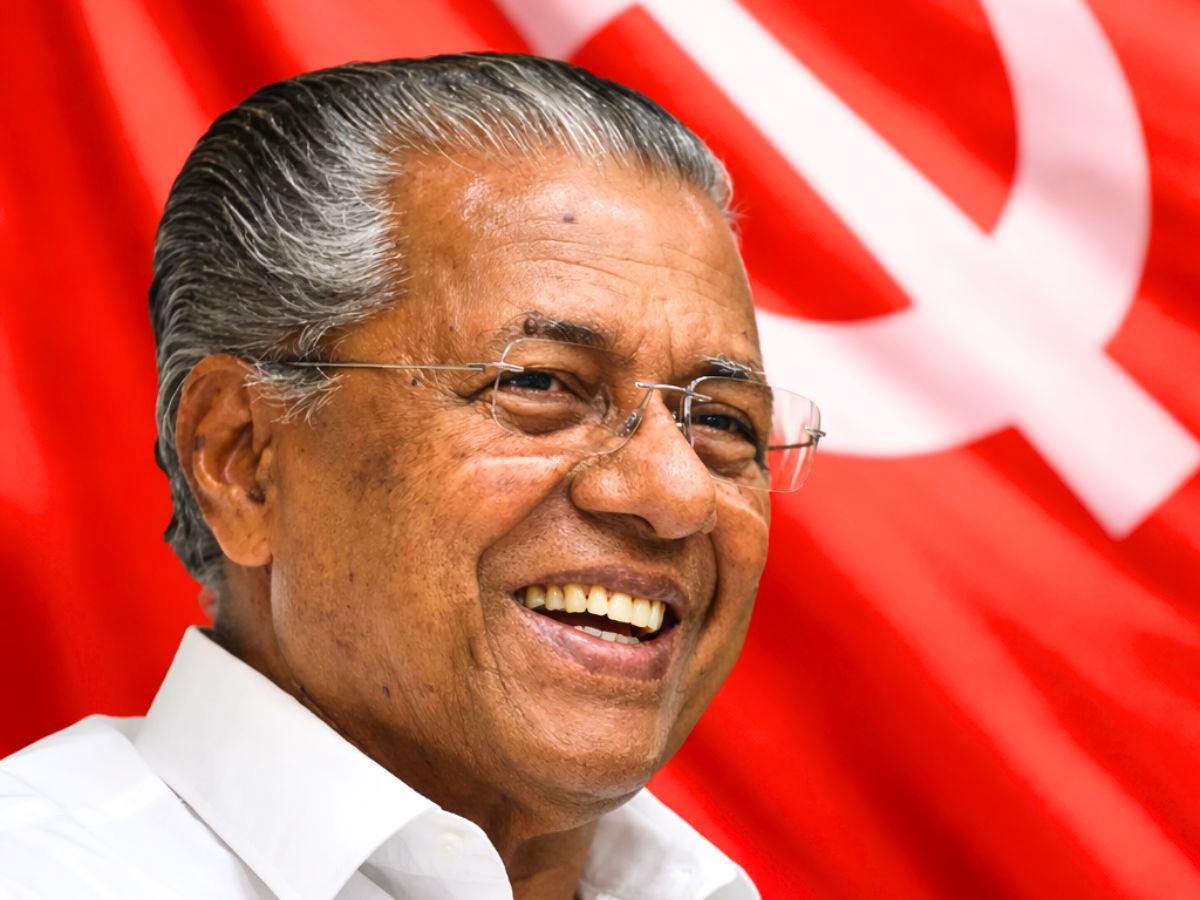

Kerala Election 2026: As the Kerala Assembly elections approach, political excitement is building across the state. Voters are preparing to decide the fate of the ruling Left Democratic Front (LDF), led by Pinarayi Vijayan, who is aiming for a historic third consecutive term from Dharmadam constituency.
The Congress-led United Democratic Front (UDF) and the BJP are emerging as the main challengers, setting the stage for a high-voltage electoral battle.
Pinarayi Vijayan’s Early Political Journey
Vijayan’s political career began in student politics at Government Brennen College, Thalassery, where he became active in union activities. He joined the Communist Party of India (Marxist) in 1964 and quickly rose through the ranks.
He held leadership positions in the Kerala Students Federation (KSF), which later became the Students Federation of India (SFI), and then in the Kerala State Youth Federation (KSYF), the precursor to the Democratic Youth Federation of India (DYFI).
Despite being jailed for one and a half years during turbulent political times, Vijayan continued to build influence, eventually becoming the Kannur district secretary of CPI(M).
He also served as president of the Kerala State Co-operative Bank, solidifying his position within the party and the state. His early career reflected a mix of activism, organizational skills, and strategic thinking traits that continue to define his leadership today.
First Term as Chief Minister
Vijayan first became Kerala’s Chief Minister in 2016, after the LDF secured a decisive victory. His administration focused on development-oriented policies, social welfare schemes, and infrastructure projects. He restructured the Kerala Infrastructure Investment Fund Board (KIIFB) to finance large-scale projects efficiently and implemented initiatives like the LIFE Mission, aiming to provide housing and financial empowerment for the underprivileged.
He also gained praise for his hands-on leadership during crises, particularly the 2018 Kerala floods. His direct involvement in relief efforts, coordination with central agencies, and public communication helped maintain confidence in the government and strengthened his image as a decisive leader.
Second Term and Continuing Governance
In 2021, Vijayan became the first Chief Minister in Kerala to be re-elected after completing a full five-year term. His second term retained a strong focus on infrastructure, including the Vizhinjam International Seaport and National Highway expansions, while continuing social welfare programs. He kept key departments under his control, such as Home, Vigilance, Planning, Economic Affairs, and IT, reinforcing his reputation as a hands-on administrator.
Despite facing criticism from opposition parties for certain policies and internal debates within CPI(M), Vijayan’s leadership has combined development, governance reforms, and pragmatic politics, making him a central figure in Kerala’s political landscape.
The Road to 2026: Pinarayi Vijayan’s Hat-Trick Ambitions
Now, as Kerala heads to the polls in 2026, Pinarayi Vijayan is aiming for a historic hat-trick victory, a feat no Kerala Chief Minister has achieved in recent decades.
With the Congress and BJP actively contesting, the election will test the strength of the LDF and Vijayan’s enduring appeal. His journey from student politics to becoming the ‘Captain’ of the Communist fortress reflects a combination of resilience, strategy, and pragmatism that will shape the state’s political future.
Sofia Babu Chacko is a journalist with over five years of experience reporting on Indian politics, crime, human rights, gender issues, and stories about marginalized communities. She believes journalism plays a crucial role in amplifying unheard voices and bringing attention to issues that truly matter. Sofia has contributed articles to The New Indian Express, Youth Ki Awaaz, and Maktoob Media. She is also a recipient of the 2025 Laadli Media Awards for gender sensitivity. Beyond the newsroom, she is a music enthusiast who enjoys singing. Connect with Sofia on X: https://x.com/SBCism




