
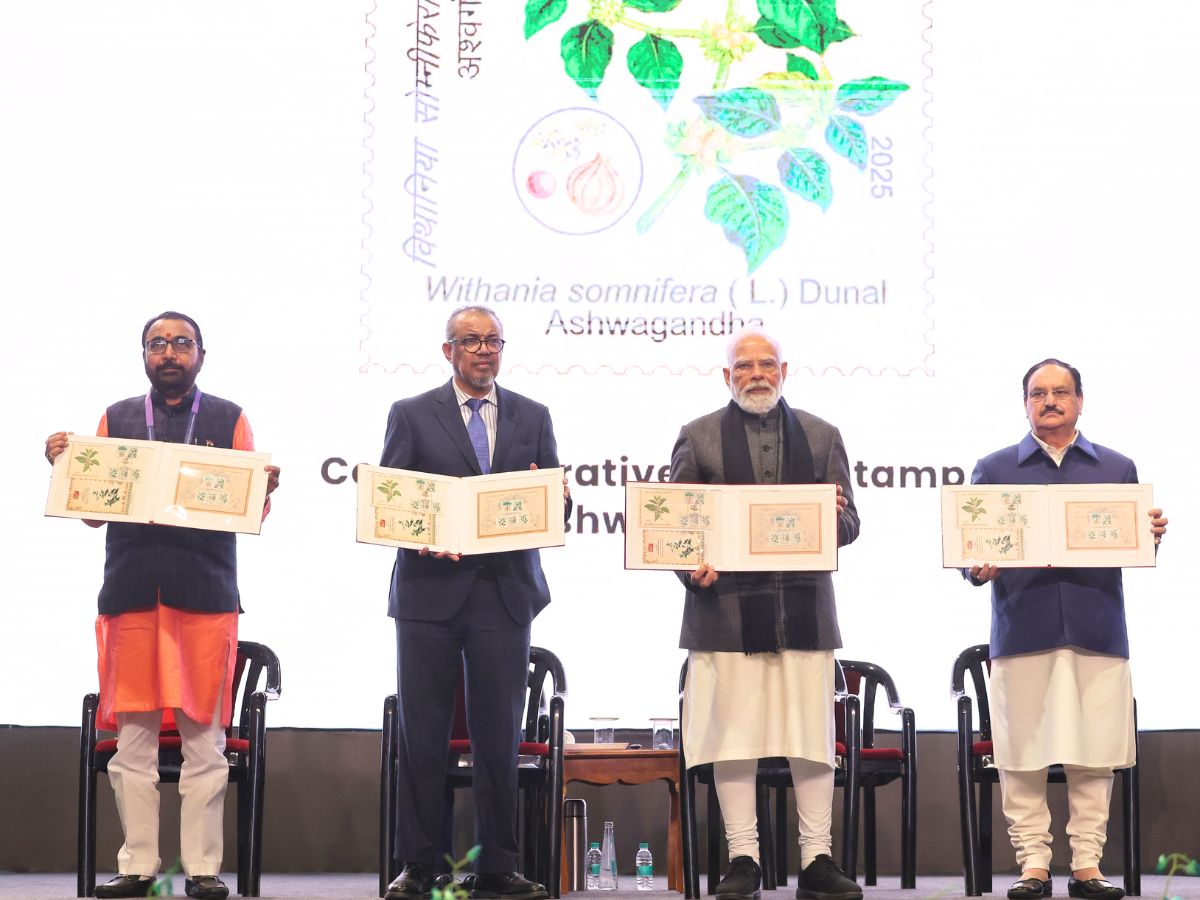

Prime Minister Narendra Modi unveiled the Ayush Mark, a global benchmark for traditional medicine products and services, at the closing ceremony of the Second WHO Global Summit on Traditional Medicine held at Bharat Mandapam from December 17 to 19.
The summit, themed “Restoring balance: The science and practice of health and well-being”, brought together world leaders, health experts, and policymakers to discuss strengthening, standardizing, and integrating traditional medicine systems into modern healthcare.
Know all about Ayush Mark
The Ayush Mark is a certification issued by India’s Ministry of Ayush for products and services in Ayurveda, Yoga and Naturopathy, Siddha, Unani, and Homoeopathy. It establishes a global standard for quality, safety, and efficacy in traditional medicine. Operated by the Quality Council of India (QCI) since 2009, the Ayush Mark builds on previous certifications, including the Ayush Standard Mark and Ayush Premium Mark.
The Standard Mark ensures compliance with Good Manufacturing Practices for Ayurvedic, Siddha, and Unani medicines under the Drugs and Cosmetic Rules, 1945, while the Premium Mark aligns with WHO’s GMP guidelines for herbal medicines. The new Ayush Mark consolidates these standards to position Indian traditional medicine products as internationally credible and trustworthy.
Focus on traditional medicine
Speaking at the summit, PM Modi said about India’s growing role in promoting traditional medicine as an integrated, people-centered, and evidence-based component of global health systems. He highlighted the establishment of the WHO Global Centre for Traditional Medicine in Jamnagar as a milestone in India’s global leadership.
Dr. Tedros Adhanom Ghebreyesus, WHO Director-General, praised India for translating vision into action, recognizing the country as a global leader in moving traditional medicine from heritage to evidence-informed practice.
Reinforcing trust and quality in traditional healthcare, Hon’ble Prime Minister Shri @narendramodi launched 𝐀𝐲𝐮𝐬𝐡 𝐌𝐚𝐫𝐤- the Benchmark for Quality at the Closing Ceremony of the Second @WHO Global Summit on #TraditionalMedicine. (1/2)@PMOIndia @mpprataprao @WHOSEARO pic.twitter.com/cKHCukF8RU
— Ministry of Ayush (@moayush) December 20, 2025
Alongside the Ayush Mark, PM Modi also launched the My Ayush Integrated Services Portal (MAISP), which serves as a central digital platform for accessing services related to Ayurveda, Yoga, Unani, Siddha, and Homoeopathy. He released a commemorative postal stamp on Ashwagandha, underlining India’s traditional medicine heritage, and unveiled the WHO technical report on training in Yoga, as well as the book “From Roots to Global Reach: 11 Years of Transformation in Ayush.”
The Prime Minister also felicitated the recipients of the Prime Minister’s Awards for Outstanding Contribution to the Promotion and Development of Yoga, recognizing their dedication to promoting Yoga globally.
Global trust in Indian products
The Ayush Mark certification ensures that traditional medicine products adhere to standardized raw materials, quality manufacturing processes, and rigorous safety testing. This certification is expected to boost international trust in Indian products, enhance exports, and further establish India as a leader in global health.
PM Modi highlighted the worldwide significance of Yoga, noting that it has guided the world toward health, balance, and harmony, and recalled that the United Nations declared June 21 as International Yoga Day with the support of over 175 countries.
The Second WHO Global Summit on Traditional Medicine focused on evidence-based practices, research investment, regulatory frameworks, and international cooperation. It is aligned with the WHO Global Traditional Medicine Strategy 2025–2034, which seeks to expand traditional medicine’s role worldwide while ensuring safety, quality, and scientific rigor.
Traditional Medicine Discovery Space
The summit also featured the Traditional Medicine Discovery Space, showcasing the depth and contemporary relevance of traditional medicine knowledge from India and across the world.
Through the Ayush Mark, MAISP, and the WHO Global Centre for Traditional Medicine in Jamnagar, India is solidifying its position as a global hub for evidence-informed traditional medicine. Dr. Tedros commended India for its initiatives, stating that the country is a leader in integrating traditional medicine into health systems, research, and policy, contributing to universal health coverage and sustainable development.
PM Modi reiterated that India’s traditional medicine heritage is not only cultural but also scientific, globally relevant, and central to holistic health and well-being.
Sofia Babu Chacko is a journalist with over five years of experience covering Indian politics, crime, human rights, gender issues, and stories about marginalized communities. She believes that every voice matters, and journalism has a vital role to play in amplifying those voices. Sofia is committed to creating impact and shedding light on stories that truly matter. Beyond her work in the newsroom, she is also a music enthusiast who enjoys singing.




