
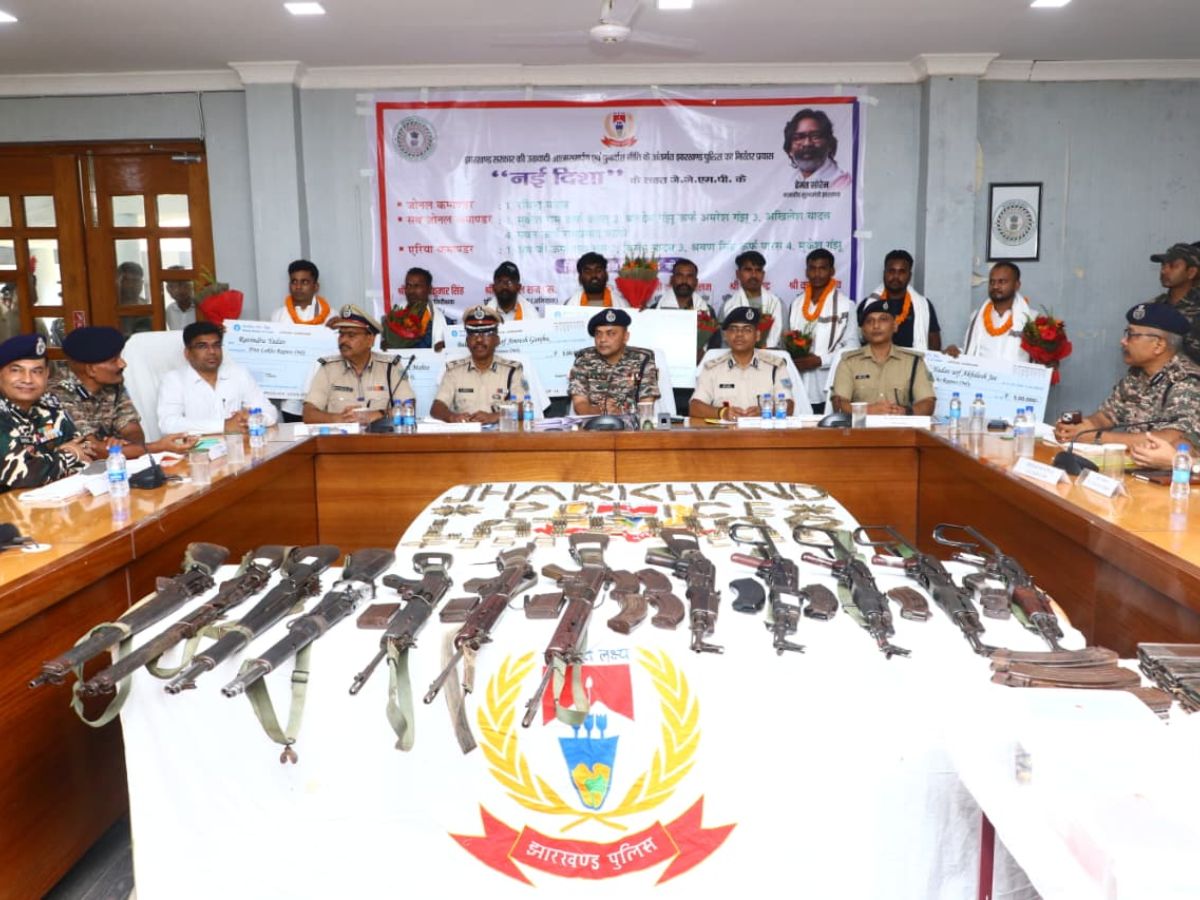

Union Home Minister on Wednesday reiterated that the central government will not rest until all the Naxalites are either surrendered, caught or eliminated.
The Home Minister’s remarks came at a felicitation ceremony of the Central Reserve Police Force (CRPF), Chhattisgarh Police, District Reserve Guard (DRG) and CoBRA personnel in New Delhi for successfully carrying out Operation Black on Karreguttalu hill.
In a post on X, Mr Shah wrote, “Making the country Naxal-free by 31 March 2026 is the resolve of the Modi government. Until all Naxals either surrender, are captured, or are eliminated, we will not rest in peace. The entire country is proud of the sacrifices and dedication of our security forces in fulfilling this resolve.”
31 मार्च 2026 तक देश को नक्सलमुक्त बनाना मोदी सरकार का संकल्प है। जब तक सारे नक्सली या तो आत्मसमर्पण न कर दें, पकड़े न जाएँ या समाप्त न हो जाएँ, तब तक हम चैन से नहीं बैठेंगे।
इस संकल्प को पूरा करने में हमारे सुरक्षाबलों के त्याग और समर्पण पर पूरे देश को गर्व है। pic.twitter.com/cDWbz2Eaqi
— Amit Shah (@AmitShah) September 3, 2025
Noting the bravery and valour of the jawans during the operation, he said that it will be remembered as a golden chapter in the history of the anti-Naxal operations.
As Home Minister Amit Shah vowed to eliminate Maoism by March 31, 2026, is the red corridor really shrinking? Here’s an analysis.
Decline Of Maoism In India
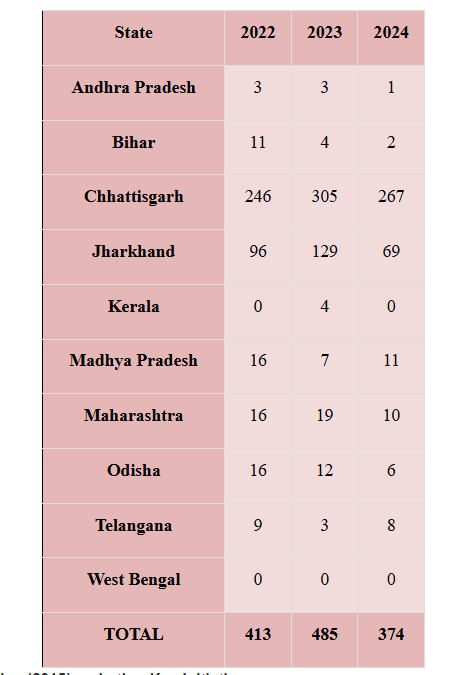
The Red Corridor was once expanded to more than 180 districts in India, but now it is limited to only 18 districts. As per government sources, incidents of Left-Wing extremism have fallen by over 50% between 2004–14 and 2014–23, with fatalities dropping nearly 70%. MoS Nityanand Rai said in the Lok Sabha that Naxal violence peaked in 2010 with 1,936 incidents and 1,005 deaths, but declined to 374 incidents and 150 deaths by 2024.
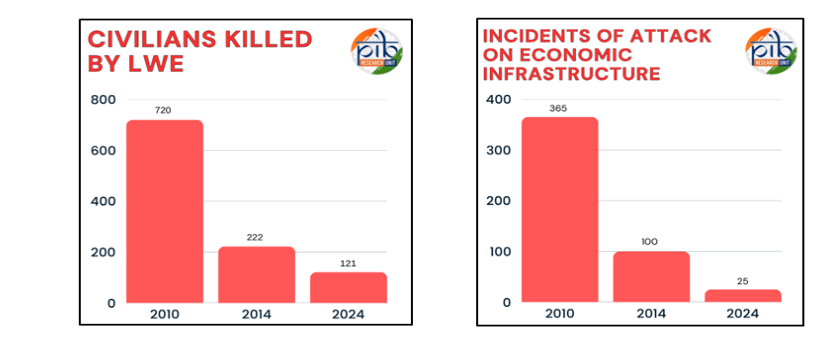
As per a PIB release, the number of most affected districts has been reduced from 12 to 6, which include four districts from Chhattisgarh (Bijapur, Kanker, Narayanpur, and Sukma), one from Jharkhand (West Singhbhum), and one from Maharashtra (Gadchiroli).
The report also said that in the last 10 years, over 8,000 Naxalites have abandoned the path of violence, and consequently, the number of Naxal-affected districts has reduced to fewer than 20.
Reasons for the Decline Of Maoism
Analysts find the reason for the decline in the targeted development initiatives, continuous counterinsurgency efforts and loss of local support.
The government has taken several initiatives, including the National Policy and Action Plan (2015). It ranges from a zero-tolerance approach towards left-wing extremism, and with 100% implementation of government schemes.
Since 2019, 280 new camps have been established, 15 new Joint Task Forces have been created, and 6 CRPF battalions have been deployed to assist state police in various states.
On October 2, 2024, Prime Minister Narendra Modi also launched the ‘Dharti Aaba Janjatiya Gram Utkarsh Abhiyan’ from Jharkhand, which provides personal amenities for achieving full saturation in rural areas in over 15,000 villages in LWE-affected areas.
What Is Left Wing Extremism (LWE) or Naxalism?
Left-wing extremism is considered among India’s most serious internal security challenges. Its origin traces back to the Naxalbari movement in 1967, which spread across the Red Corridor. Its root can be found in socio-economic inequalities, which are guided by Maoist ideology.
ALSO READ: Bihar Elections 2025: Amit Shah To Chair Bihar BJP Leaders To Discuss Strategy Months Ahead Of Polls




