
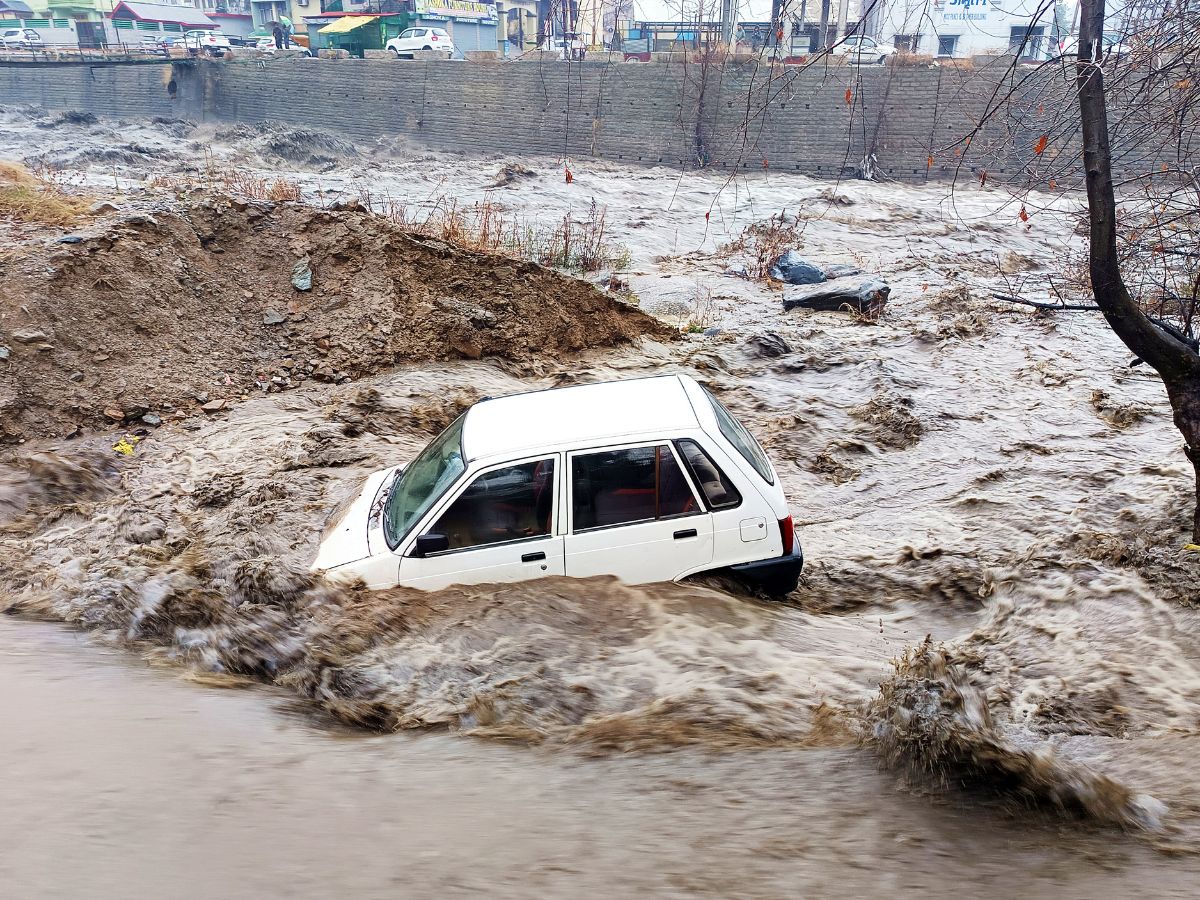

The Himalayas, popularly if less well-known, as the world’s “Third Pole,” suffering a terrifying rise in disasters of flash floods, landslides, cloudbursts and earthquakes, many of which now are turning out to be the products of unbridled human intervention and influence rather than nature herself. Experts contend that over-urbanisation and uncontrolled growth are the causes of accelerated ecological instability; it is rendering the Indian Himalayan Region increasingly vulnerable to natural disasters.
Himalayan Region: Vulnerable Zone and Stressed Region
The Indian Himalayan Region consists of the states Himachal Pradesh, Arunachal Pradesh, Manipur, Meghalaya, Mizoram, Assam, Nagaland, Sikkim, Tripura, Uttarakhand, West Bengal and the Union Territories of Jammu and Kashmir and Ladakh. In between January 2022 to March 2025, the ecologically sensitive zones including these States have experienced bad weather events on 822 out of 1,186 days. In fact, Himalayan disasters claimed 2,863 persons in the same time, too.
The following figures suggest that the deaths of ongoing disasters in Uttarkashi, Kishtwar and Himachal Pradesh is not an isolated event or a stand-alone spread of tragedies but shows we have systematically failed to treat the Himalayas as more than both a reserved unlimited resource base and the region without limit for tourists to flock to without bounds, rather than seeing it as sensitive ecological regions that must remain as they have distinctive ecological values, biodiversity, and unique socio-cultural aspects.
Himachal Pradesh: Development at the Cost of the Ecology
Himachal Pradesh serves as a crucial reminder of the effects of unscientific development practices. The Supreme Court of India has in recent times and categorically associated anthropogenic processes like hydro electric developments, four-lane of highways, indiscriminate deforestation and unrestricted construction of multistoreyed buildings with the ecological degradation of the state. “No amount of revenue collection”, the country’s highest court cautioned, “can be harvested at the expense of the environment and ecology”.
ALSO READ: Why Himachal Can’t Escape Monsoon Disasters? Fresh Flash Floods Hit Mandi District
There has been unscientific hill slope cutting and blasting to construct infrastructure development destabilizing the natural slopes and altering natural hydrology. Now landslide and flash flood-prone, there is also tremendous demand from tourism. In 2024 alone, the state hosted over 1.8 crore tourists – over 180 million. Meanwhile, and the seasonal travel of vehicles, hotels, and home stays choked already strained waste management, water supply, and traffic capacity in hill town. Greater use of automobiles also pushed greater emissions that contribute to poor air quality and early snowmelt, further exacerbating the climate crisis in the broader Himalayas.
Urbanisation and Flooding: Lessons from the Plains
The Himalayan crisis also finds expression in India’s cities, where unchecked growth has led to repeated urban flooding. Delhi, Gurugram, and Punjab get flooded nearly every monsoon. Flyovers ill-conceived, clogged stormwater drains filled with plastic debris, and mad multi-story apartment construction with not much open space have no room for natural rainwater runoff.
Specialists observe that over-concretisation of cities has contributed to the risk. Irresponsible demand-led economic growth has led to haphazard urbanisation and environmental pollution. Therefore, each episode of heavy rains causes waterlogging, flooding of low-lying colonies, and life disruptions.
What is Urban Flooding ?
Urban flooding is not new but has intensified in recent years due to a mismatch between rainfall intensity and the drainage capacity of cities. Stormwater runoff is choked by wetlands filled in with garbage, encroached water channels, and plastic litter. Percolation through natural channels is reduced by developing impervious surfaces such as roads and pavements. Climate change is an important factor for increasing heavy rains.
The effects have seen in urban centers in India like Hyderabad (2020, 2021), Chennai (2021), Bengaluru and Ahmedabad (2022), Delhi (2023), Nagpur (2023), as well as towns like Patna, Kochi and Bhopal. Both hill stations like Dehradun and Shimla (nevertheless always treated as absolutes) are just as vulnerable to flash floods and landslides as transit urban places. The flash floods of October 2023 in Sikkim that devastated towns and left thousands homeless are warnings of growing exposures of the hills to city-type disasters.
Climate Change, and the Himalaya Challenge
All that being said, the Himalayas have unique factors that make the region more vulnerable. The mountains of the region are still young fold mountains with an estimated rise rate of 10 mm a year. The Indian plate is moving north at 5 cm a year-rendering the Himalayas as one of the most tectonically active seismic zones in the WORLD.
The geological precariousness of the Himalayas and the persistent, reckless human activities (deforestation, slope cutting, and rampant concretisation) can create a deadly cocktail of periodic natural disasters.
And according to experts, the sustainable development plan for the Himalayas should be in line with the Sustainable Development Goals. Development in this region will not follow the same pathway as discussed for the metros or plains. It must take into account ecological and sociocultural values and the associated sacredness of Himalayan landscapes.
The recurring disasters in Himachal Pradesh, Uttarakhand, and Sikkim are once again a big alert. Unchecked urbanisation of the Himalayas accounts for the destruction of ecosystems and human lives and livelihoods. The Himalaya region is unlikely to accommodate further development with limited controls on environmental perspectives. If not controlled, the Himalayas, viewed in India as its water tower or climate regulator, may reach the tipping point of no return with respect to irreversible ecological change or degradation.
ALSO READ: ‘We Are Stuck With The Same Problem’: Why Gurugram Can’t Escape Urban Flooding Every Year?
Sofia Babu Chacko is a journalist with over five years of experience reporting on Indian politics, crime, human rights, gender issues, and stories about marginalized communities. She believes journalism plays a crucial role in amplifying unheard voices and bringing attention to issues that truly matter. Sofia has contributed articles to The New Indian Express, Youth Ki Awaaz, and Maktoob Media. She is also a recipient of the 2025 Laadli Media Awards for gender sensitivity. Beyond the newsroom, she is a music enthusiast who enjoys singing. Connect with Sofia on X: https://x.com/SBCism




