
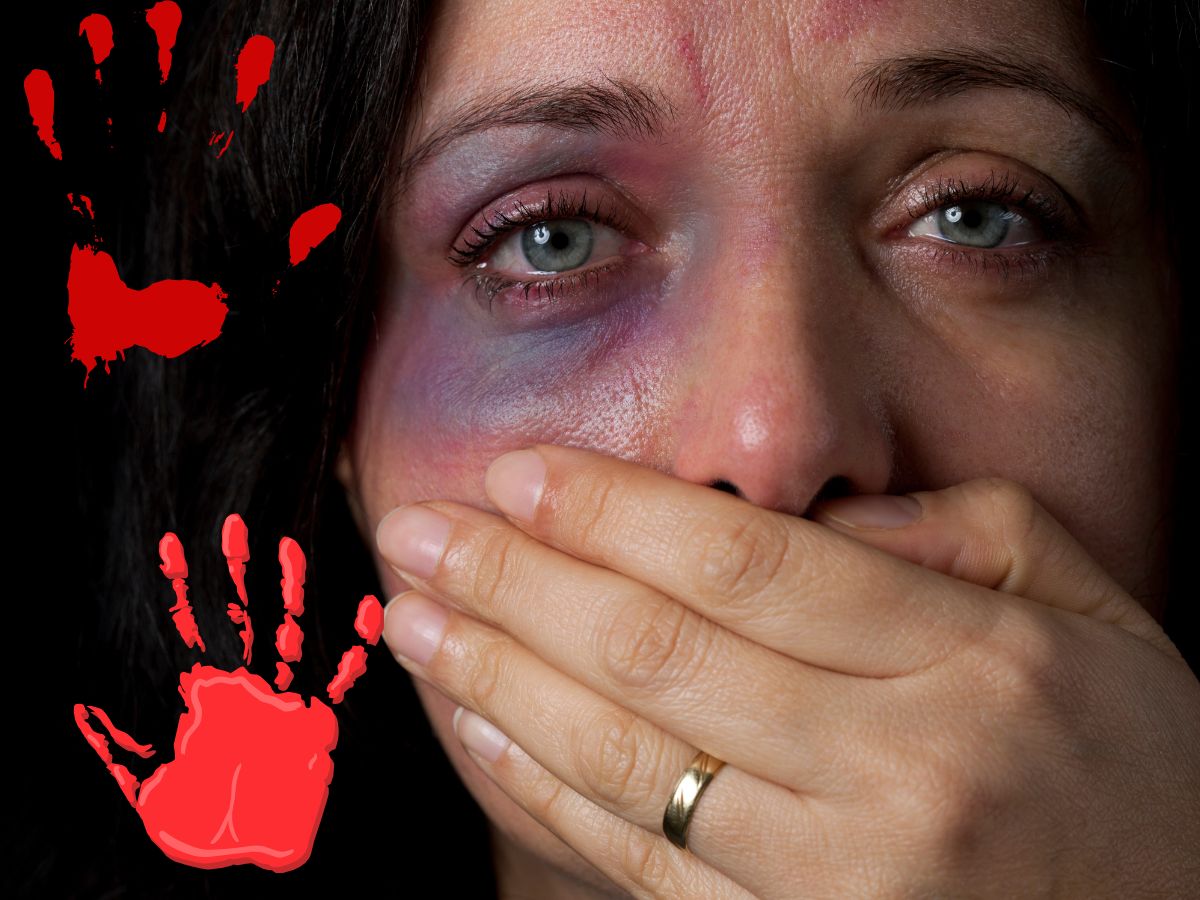

Dowry has become a daily problem now, nothing new, engrained in the very fiber of Indian homes. What was considered a sporadic offense is now a national shame, repeated so frequently that the country appears to take it as normal. The debates about dowry deaths only occur when a young woman is made a “martyr,” when someone else’s life is lost and another family is broken. The question that hangs over us in 2025 is haunting: why, with all the stringent laws, is dowry still a tradition accepted within Indian homes?
The reason is patriarchy and misogyny. Dowry is not a gift exchange; it’s an ancient reflection of a lesser estimation of women than men. Every time a person shies from resisting dowry, the nation quietly sanctions another daughter to be murdered. Such murders are not single instances; they are systemic, based on families that view brides as commodities and weddings as money transactions. The culture of silence still propels this brutal cycle.
Why Beating is Called Love?
Look at recent cases. In Greater Noida, the dowry death of victim Nikki Bhatti was written off by her husband as the outcome of “normal fights.” In the United Arab Emirates, a 29-year-old woman from Kollam in Kerala was found dead in her flat, with her family accusing dowry harassment by her husband. Her husband explained his violence when he said he beat her “out of love.”These explanations bare the shocking manner in which patriarchy brands violence towards women: as something normal, even acceptable. What is this love that legitimises beatings? Why society accepts such violence and continues like nothing has occurred?
The statistics tell us the extent of this epidemic. The National Crime Records Bureau reported in 2022, 6,450 dowry deaths. In this, Uttar Pradesh, Madhya Pradesh, Bihar, Jharkhand, Odisha, Rajasthan and Haryana reports 80% of dowry deaths. National Commission for Women has registered 4,383 complaints of dowry harassment in 2024 alone, and 292 dowry death cases.
In urban cities, the scenario is the same. Delhi alone recorded almost 30% of dowry deaths in metros, and then came Kanpur, Bengaluru, Lucknow, and Patna. Every figure conceals a muted cry, a bereaved family, and a life lost prematurely.
ALSO READ: Bengaluru Dowry Death Case: Family Says Harassment Pushed Pregnant Techie To End Life
Dowry- A ‘happy habit’ in family spending
Behind these statistics is another tale: the Indian household’s normalization of dowry. A 2010 survey published in Human Development in India: Challenges for a Society in Transition, conducted with the India Human Development Survey (2004–05), told harsh realities. On average, a bride’s family spent 1.5 times more on weddings than the groom’s family. Almost a quarter of families confessed to having given appliances such as TVs, refrigerators, cars, or motorcycles as dowry. Alarming and disturbingly, 29% of the respondents legitimized beating a woman if her family did not meet dowry expectations. This is not merely about finances it is about a culture that makes women expendable when things don’t go as expected.
The tragedy is exacerbated by underreporting. The NCRB 2022 report indicates 13,641 women as victims in dowry harassment cases filed under the Dowry Prohibition Act of 1961. On the face of it, this may be representative of the scale of the issue but if compared to 6,450 deaths that year, we would have to conclude that one woman harassed over dowry out of three is killed. This simply implies that innumerable women never come near the law until too late. Dowry is perhaps India’s most normalised unlawful custom unlawful in theory, but vigorous and very much in action.
Patriarchy considers dowry as a tradition
The law is in place. The Dowry Prohibition Act (1961) and Section 304B of the IPC criminalise the receipt and payment of dowry as well as identify dowry deaths as a separate offence. However, inadequate implementation, long trials, complicity of society, and the stigma involved in complaining have made these laws ineffective. So long as dowry is camouflaged as “tradition,” and daughters-in-law are viewed as burdens to be commercialised, the cycle will not be interrupted.
The names Nikki, Vismaya, Ridhanya, Lokeshwari are not merely victims of men, but of a society that let them down. Their stories highlight a harsh reality: India has learned to turn a blind eye to dowry deaths. They are mentioned fleetingly, dramatised by the media, then suddenly forgotten until the next woman is killed. But every case is not merely another statistic; it is a lost life, a forfeited future, a betrayal of India’s daughters.
The question is no longer whether India has legislation to prevent dowry, it does. The question is why, in 2025, women are still being killed in the name of marriage. Until families stop paying and receiving dowries, until society names this tradition what it is systemic violence and until the law gets swift and unyielding, dowry deaths will be the daily practice of national shame.
ALSO READ: Greater Noida Woman Death: Why Is Dowry Harassment Becoming A Daily Affair In Indian Households?
Sofia Babu Chacko is a journalist with over five years of experience reporting on Indian politics, crime, human rights, gender issues, and stories about marginalized communities. She believes journalism plays a crucial role in amplifying unheard voices and bringing attention to issues that truly matter. Sofia has contributed articles to The New Indian Express, Youth Ki Awaaz, and Maktoob Media. She is also a recipient of the 2025 Laadli Media Awards for gender sensitivity. Beyond the newsroom, she is a music enthusiast who enjoys singing. Connect with Sofia on X: https://x.com/SBCism




