
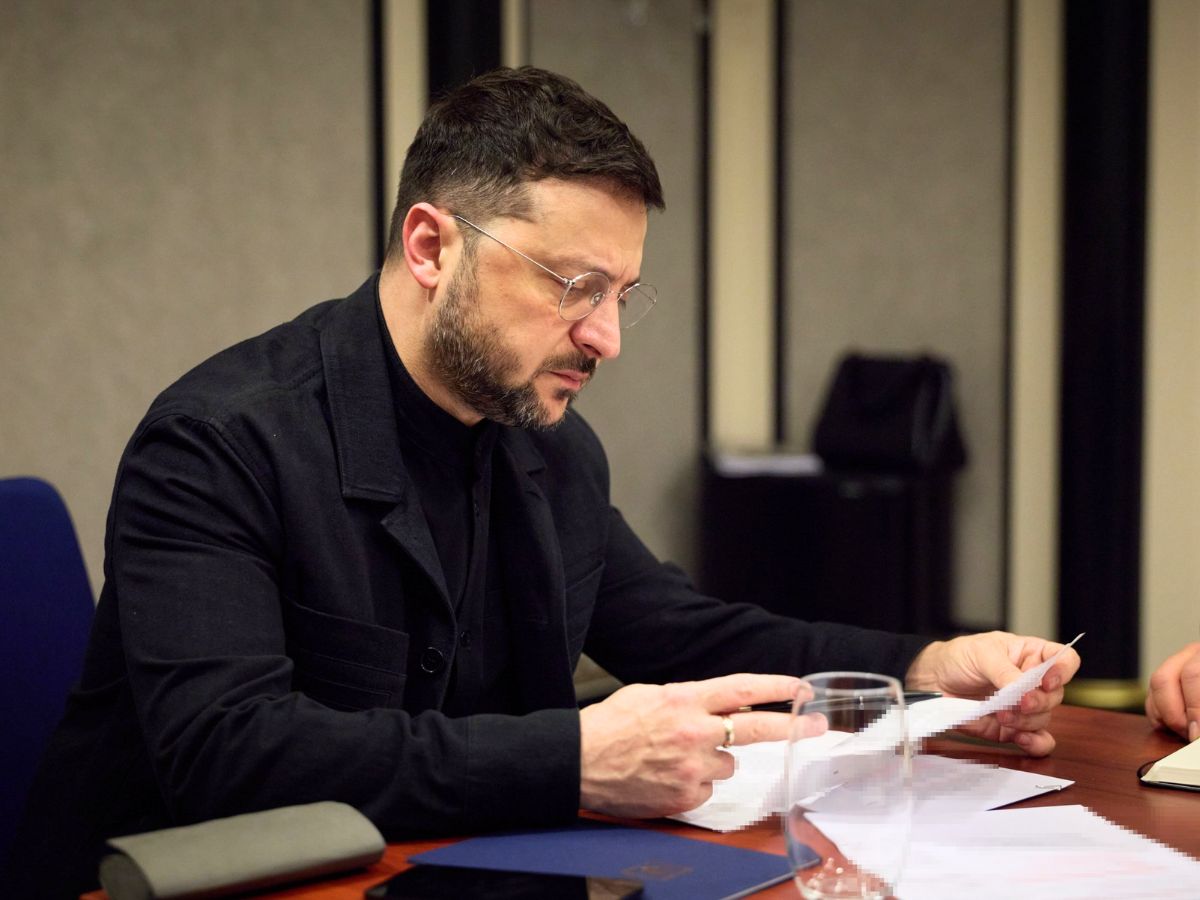

A surprising turn of events happening in the ongoing Russia-Ukraine conflict. Ukrainian President Volodymyr Zelenskyy has hinted that he may relinquish Ukraine’s long-run ambitions to join the NATO military alliance.
The development came in an expanded meeting with U.S. envoys in Berlin, meant to discuss a possible pathway toward the near four-year war’s conclusion. For Kyiv, which sees membership in NATO as vital security against Russian aggression, this is a key policy shift.
Five Hours of High-Stakes Talks in Berlin
Over the weekend, Zelenskyy had five hours of heated talks with U.S. officials, including Steve Witkoff, a special envoy of former President Donald Trump, and Jared Kushner, Trump’s son-in-law. The talks were part of broader international attempts to find a peace settlement between Ukraine and Russia and were hosted by German Chancellor Friedrich Merz.
Witkoff hailed the talks as productive, and said “a lot of progress was made” regarding issues like the 20-point peace plan and economic agendas. Zelenskyy’s aide Dmytro Lytvyn also confirmed the draft documents currently under consideration with more information expected after the end of negotiations.
Ukraine’s Offer of Dropping Membership in NATO
The willingness of Zelenskyy to jettison Ukraine’s NATO aspirations represents a major policy concession from Kyiv. For years, the country has pursued NATO membership as a means of securing collective protection against Russian aggression. This ambition was even written into Ukraine’s constitution. But Zelenskyy made it clear that the offer was a compromise, meant to secure legally binding security guarantees from the U.S., European powers and other allies such as Canada and Japan.
“From the very beginning, Ukraine’s desire was to enter NATO-the real security guarantees. And some partners, first of all from the United States and from Europe, did not support this movement,” Zelenskyy explained. He added that Article-5-like guarantees, akin to NATO’s collective defense clause, would grant Kyiv protection against future Russian attacks.
Why is this important to Russia?
Russia has consistently demanded that Ukraine drop its aspirations of joining NATO and adopt neutrality. “Non-accession of Ukraine to NATO is a fundamental issue in peace negotiations,” said Kremlin spokesman Dmitry Peskov. Moscow also urges the withdrawal of Ukrainian forces from about 10 percent of Donbas still controlled by Kyiv, while opposing the basing of any NATO forces on Ukrainian soil.
By signaling readiness to give up NATO aspirations, Zelenskyy might be addressing one of Russia’s principal war aims and thereby opening a route to negotiations without the loss of Ukrainian sovereignty entailed in territorial concessions.
Security Guarantees instead of NATO Membership
While Ukraine is ready to abandon its NATO aspirations, it insists on receiving firm security guarantees. Zelenskyy underlined the need for “Article 5-like guarantees,” binding commitments from partner nations to defend Ukraine should it come under attack-a NATO membership’s equivalent legally binding international protection.
That seems to strike a balance between Ukraine’s security requirements and Western trepidation in terms of further provocation against Moscow. Most NATO nations supported Ukraine’s bid for membership, but not all; some, like Hungary and Slovakia, have balked at moves that could escalate tensions with Moscow further.
Historical Background of Ukraine-NATO Relations
Ukraine’s relations with NATO began in 1991 when Ukraine gained its independence after the dissolution of the Soviet Union. At the beginning, Ukraine was neutral, joining the Partnership for Peace program at NATO in 1994 and later the NATO-Ukraine Commission in 1997.
Still, NATO membership proved unreachable despite incremental cooperation. At the 2008 Bucharest Summit, NATO avoided offering Ukraine a Membership Action Plan while signaling eventual membership. In 2010, Ukraine, under the presidency of Viktor Yanukovych, formally stated neutrality. However, the annexation of Crimea by Russia in 2014 and military aggression in Donbas changed both public and political moods on joining NATO; Ukraine included this goal in its constitution in 2018.
The 2022 Russian invasion furthermore sharpened Ukraine’s ambitions of NATO membership, though some Western allies remained cautious about the degree to which such membership was to be pursued, for fear of escalation with Russia.
Potential Consequences for Peace
Zelenskyy’s readiness to relinquish NATO membership might be just what’s needed to start peace talks, as his overture would meet both Western anxieties and Russian requirements. Supported by international security guarantees, Ukraine would pose no threat to Moscow, while the West would avoid the specter of a face-off with Russia.
Nevertheless, problems still persist. Russia opposed the international engagement with any peacekeeping arrangement, and legal political implementation of Article 5-like guarantees outside of NATO structures is immensely complicated. The effectiveness of these guarantees depends upon the political will of global powers to implement them.
Is this Zelenskyy’s strategic compromise?
The negotiations continue, with further negotiations scheduled with European leaders in Berlin. Zelenskyy has pledged to weigh in once those negotiations are complete. The decision might reshape the security landscape of Eastern Europe, determining the course of the expansion of NATO, the regional ambitions of Russia, and the long-term defense strategy of Ukraine.
Meanwhile, Zelenskyy’s strategic compromise emphasizes realism in wartime diplomacy, whereby security and survival come first, pushing ambitions to second place, while trying not to anger either Western partners or Russia.
ALSO READ: Thailand To Hold Parliamentary Election On These Dates, Check Full Schedule Here
Sofia Babu Chacko is a journalist with over five years of experience covering Indian politics, crime, human rights, gender issues, and stories about marginalized communities. She believes that every voice matters, and journalism has a vital role to play in amplifying those voices. Sofia is committed to creating impact and shedding light on stories that truly matter. Beyond her work in the newsroom, she is also a music enthusiast who enjoys singing.




