
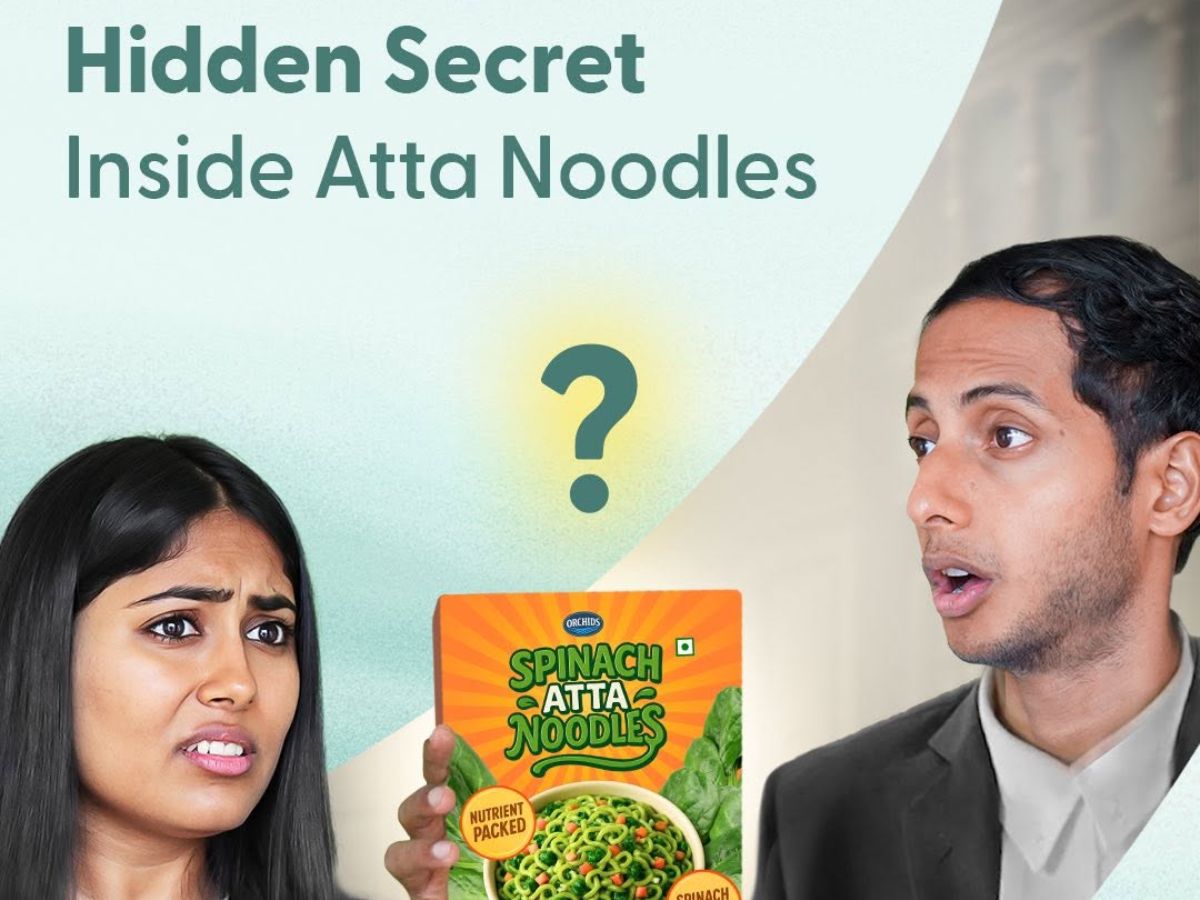

In today’s health-conscious world, food brands have mastered the art of marketing. A prime example? Instant “atta noodles” claiming to be enriched with spinach for added nutrition. The front of the packet boasts bold terms like “Iron-rich” and “Nutrient-packed”, luring customers into believing they’re making a healthy choice. But the truth is often hidden, right on the back of the packet.
A closer look at the ingredients list reveals a startling fact: the so-called spinach content is barely 1.2%. That means for every 100 grams of noodles, only a little over a gram is spinach. To put it in perspective, you’d have to eat nearly an entire box just to get the spinach equivalent of a few leaves.
This isn’t an isolated case. Across the packaged food industry, from biscuits “fortified” with protein to juices “packed” with real fruit, the reality is often far from the marketing promises. Small quantities of the highlighted ingredient are enough for brands to legally advertise their presence, yet nutritionally, they make little difference.
Health experts warn that such misleading packaging can create a false sense of security. Consumers might think they’re eating something wholesome when in reality, they’re consuming a product still high in refined flour, preservatives, sodium, and artificial flavorings, with negligible real nutritional benefit.
The lesson? Always read the back of the pack, not just the flashy claims in front. Check ingredient percentages, sugar levels, and sodium content before deciding what’s healthy.
Until food labeling regulations demand more transparency, the burden is on us to be informed and skeptical shoppers. Because when it comes to your health, a 1.2% spinach boost is hardly the superfood promise it appears to be.
Shubhi is a seasoned content writer with 6 years of experience in digital media. Specializing in news, lifestyle, health, sports, space, optical illusions, and trending topics, she crafts engaging, SEO-friendly content that informs and captivates readers. Passionate about storytelling, Shubhi blends accuracy with creativity to deliver impactful articles across diverse domains.




