
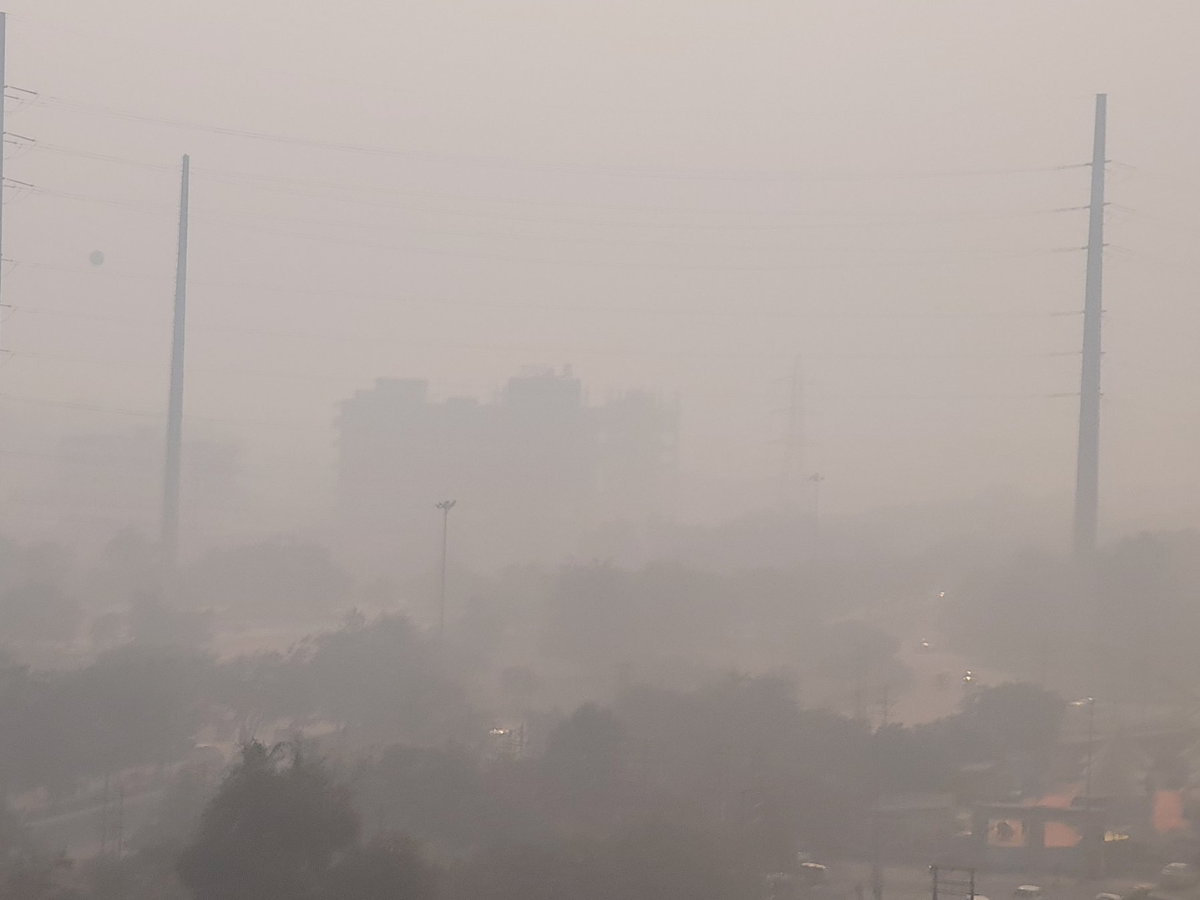

Delhi’s air quality continued to remain in the “very poor” category this week, recording an AQI of 347 on Saturday, according to IQAir. Data from the Central Pollution Control Board (CPCB) confirmed Delhi as the most polluted city in India. The pollution spike is being caused by post-Diwali smoke, stubble burning in nearby states, and stagnant winds that trap toxic particles.
PM2.5 remains the dominant pollutant, posing health risks to residents and reducing visibility across several areas of the national capital.
STORY | Delhi enters ‘red zone’ as pollution levels cross 400 mark, AQI ‘severe’
Delhiites are facing increasingly toxic air quality each day, with pollution levels crossing the 400 mark in several parts of the city on Saturday, making the national capital one of the most… pic.twitter.com/VS3LTsjpiZ— Press Trust of India (@PTI_News) November 8, 2025
DPCC Reports Slight Year-on-Year Improvement
The Delhi Pollution Control Committee (DPCC) reported a marginal improvement in AQI levels during the first week of November compared to last year. DPCC chairman Sandeep Kumar said Delhi’s AQI averaged 322 on November 7 this year, down from 377 last year. Similar trends appeared on most days of the week, except November 2, when pollution worsened. The DPCC credited improved government coordination and strict action against violators for the better readings, though levels remained well above the safe limit.
Data from the Decision Support System revealed a sharp drop in stubble burning this year. Crop fire contribution to Delhi’s pollution was just 9.03% on November 1 compared to 35.2% last year. Similar reductions continued through the week, with contributions staying below 10% most days. Experts stated that the decline in stubble burning likely played a key role in the improved air quality. The figures suggest that weather patterns and lower crop residue fires may have had more impact than policy measures.
Government Announces New Office Timings
Chief Minister Rekha Gupta announced staggered office hours for government departments and the Municipal Corporation of Delhi (MCD) to cut vehicular emissions.
From November 15 to February 15, Delhi government offices will function between 10 am and 6:30 pm, while MCD offices will operate from 8:30 am to 5 pm. Officials stated that the decision aims to reduce traffic congestion during peak hours and limit vehicular pollution, which remains one of the major contributors to Delhi’s poor air quality.
Swastika Sruti is a Senior Sub Editor at NewsX Digital with 5 years of experience shaping stories that matter. She loves tracking politics- national and global trends, and never misses a chance to dig deeper into policies and developments. Passionate about what’s happening around us, she brings sharp insight and clarity to every piece she works on. When not curating news, she’s busy exploring what’s next in the world of public interest. You can reach her at [swastika.newsx@gmail.com]




