
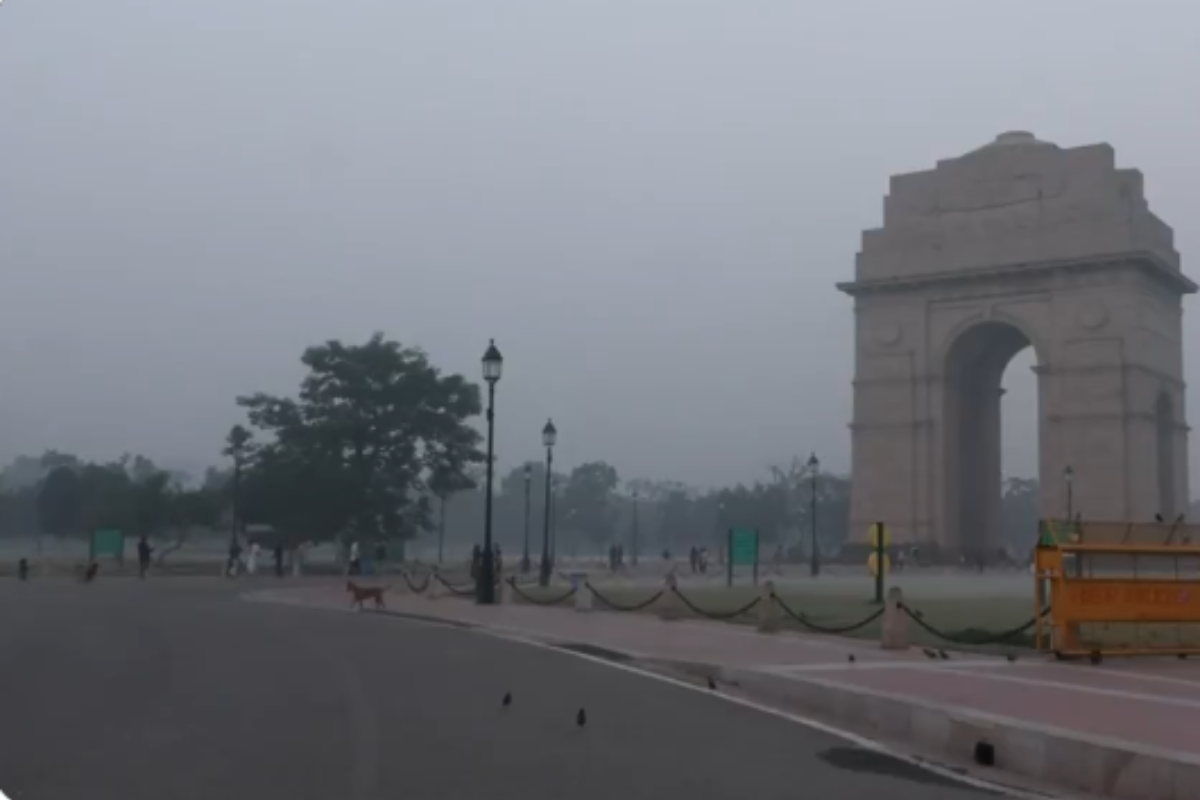

Delhi’s air quality remained critical on Sunday as winter smog tightened its grip over the national capital. The overall Air Quality Index (AQI) stood close to 430 at 7 am, placing the city firmly in the “severe” category. Several areas recorded extremely unhealthy readings, with Wazirpur recording an AQI above 450 and Bawana touching 435.
These figures highlighted the concentrated presence of pollutants in the air. Thick smog reduced visibility and created difficult conditions for commuters throughout the morning hours in many parts of the city.
#WATCH | Delhi: Drone visuals from near the Delhi-Noida-Delhi (DND) flyway and surrounding areas as a layer of toxic smog blankets the city.
AQI (Air Quality Index) in the area is 340, categorised as ‘Very Poor’, as claimed by CPCB (Central Pollution Control Board). pic.twitter.com/ukrEpC3n7o
— ANI (@ANI) November 23, 2025
Pollution Hotspots Show No Improvement
Live AQI readings showed that multiple pockets of Delhi continued to face hazardous pollution. Jahangirpuri registered a choking AQI of 438 at 7.15 am, placing it deep in the severe zone. Anand Vihar recorded an AQI of 427, while Ashok Vihar touched 421, underlining how widespread the toxic smog remained.
#WATCH | Delhi: Drone visuals from near Mayur Vihar and surrounding areas as a layer of toxic smog blankets the city.
AQI (Air Quality Index) in the area is 429, categorised as ‘Severe’, as claimed by CPCB (Central Pollution Control Board). pic.twitter.com/AYUYbSSDgj
— ANI (@ANI) November 23, 2025
These neighbourhoods have repeatedly reported some of Delhi’s highest pollution levels during winter months. Residents said the dense smog made early-morning movement difficult and added to health concerns for people with respiratory issues.
The wider NCR region also reported dangerous air quality with little signs of relief. Noida recorded an AQI of 390, staying close to the severe threshold, while Greater Noida showed a reading of 380 in the “very poor” category. Ghaziabad continued to face some of the harshest conditions in the region with a severe AQI of 426.
#WATCH | Delhi: Visuals from the area around India Gate this morning as a layer of toxic smog blankets the city.
AQI (Air Quality Index) around the area is 388, categorised as ‘Very Poor’, as claimed by CPCB (Central Pollution Control Board). pic.twitter.com/doXoKU8lj3
— ANI (@ANI) November 23, 2025
The persistent smog extended the toxic air blanket far beyond Delhi’s borders. These levels reflected high concentrations of PM2.5 and PM10, posing serious health risks to all age groups.
#WATCH | Delhi: Visuals from near Akshardham Temple and surrounding areas as a layer of toxic smog blankets the city.
AQI (Air Quality Index) in the area is 429, categorised as ‘Severe’, as claimed by CPCB (Central Pollution Control Board). pic.twitter.com/XxVII61gGE
— ANI (@ANI) November 23, 2025
GRAP Stage 3 Measures Remain In Force
Authorities continued to enforce strict steps under Stage 3 of the Graded Response Action Plan (GRAP) as pollution levels stayed in the severe category. Officials stated that measures originally meant for the “Poor”, “Very Poor” and “Severe” AQI categories under GRAP Stage IV would now also apply under Stage III.
Delhi | The following measures for the ‘Poor’, ‘Very Poor’ and ‘Severe’ AQI categories, currently under GRAP Stage IV to be taken under GRAP Stage III, including the following:
1. NCR State Governments/GNCTD to take a decision on allowing public, municipal and private offices… pic.twitter.com/QcA9xqTox6
— ANI (@ANI) November 22, 2025
NCR State Governments and the GNCTD will take decisions on allowing public, municipal and private offices to operate with 50% staff on-site, with the remaining employees working from home. The Central Government may also take a decision on permitting work-from-home for employees in central government offices. These measures aim to reduce pollution from traffic and workplace activity as the region faces hazardous air quality.
Must Read: Shootout In Greater Noida: Gunmen Open Fire On Students’ Car, Several Vehicles Damaged
Swastika Sruti is a Senior Sub Editor at NewsX Digital with 5 years of experience shaping stories that matter. She loves tracking politics- national and global trends, and never misses a chance to dig deeper into policies and developments. Passionate about what’s happening around us, she brings sharp insight and clarity to every piece she works on. When not curating news, she’s busy exploring what’s next in the world of public interest. You can reach her at [swastika.newsx@gmail.com]




