
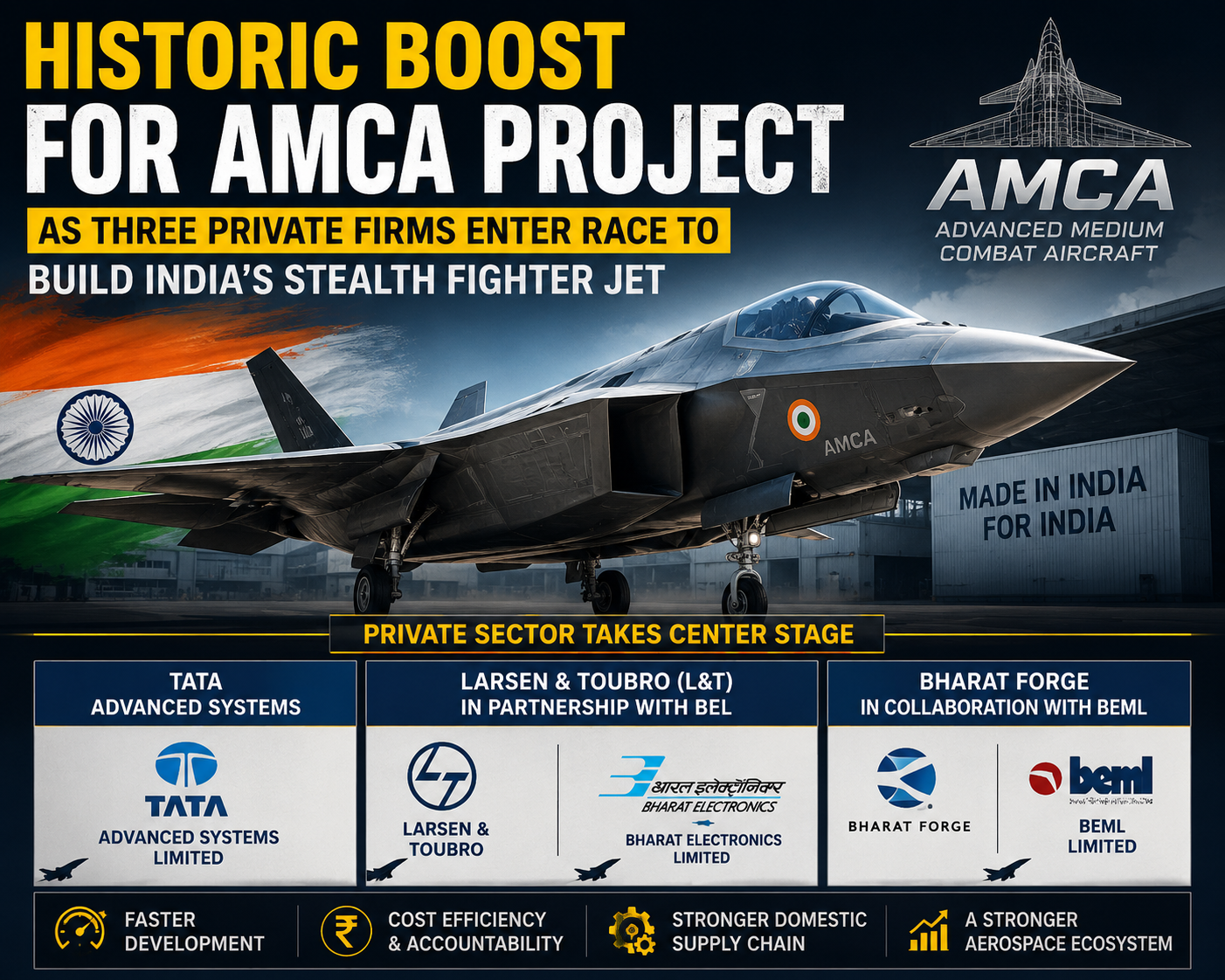
India’s ambitious fifth-generation fighter jet programme, the Advanced Medium Combat Aircraft (AMCA), has moved into a rather decisive new phase, with the government officially shortlisting three major private sector contenders to develop and build its prototype(s). This feels like one of the bigger structural changes in India’s defence manufacturing ecosystem, and it’s not small at all.
Private Sector Takes Centre Stage in AMCA Project
Tata Advanced Systems Limited TASL
Larsen & Toubro (L&T), in partnership with Bharat Electronics Limited BEL
Bharat Forge, in collaboration with BEML
Why This Move Is Historic
The move is seen as a push to:
Speed up development timelines a bit faster so we can move sooner and get rolling.
Improve cost efficiency, plus take more accountability, clearly, no excuses.
Build a stronger domestic aerospace supply chain and strengthen the local aerospace ecosystem more broadly.
About the AMCA Programme
The Advanced Medium Combat Aircraft (AMCA) is India’s planned. It was designed by the Aeronautical Development Agency (ADA) under DRDO, kind of built around the notion of air superiority together with multirole combat missions, yeh. On top of that, it includes stealth shaping along with internal weapons bays, and also upgraded avionics so it can handle more than one job without much fuss.
The aircraft is expected to feature:
- Stealth technology for the deliberate attempt to slip past radar detection
- Supercruise capability to sustain continuous flight, with less drag and greater reach
- AI-assisted cockpit systems that help with situational awareness, kinda like a calm co-pilot
- Advanced sensor fusion routines so battlefield awareness is more coherent and faster
What Happens Next
The shortlisted private players will now move into the prototype bidding and design phase, where one consortium will be chosen to lead development and manufacturing, in a way.
Officials say that:
A dedicated production facility is being prepared
Prototype rollout is expected by the end of the decade, probably
Multiple industry partnerships will support avionics, airframe, and systems integration, too.
Strategic Impact for India
Reducing how much India relies on foreign fighter aircraft, while at the same time strengthening the “Make in India” defence manufacturing push, and boosting the private sector’s capability in advanced aerospace technology, also positions India among a small circle of elite nations that can build stealth fighters, without much hesitation.
Saniya Siddique is a skilled Content Writer with a background in Journalism. Specializes in creating engaging, accurate, and audience-focused content, with expertise in news writing, digital media, and writing trendy articles on buzz and entertainment.





