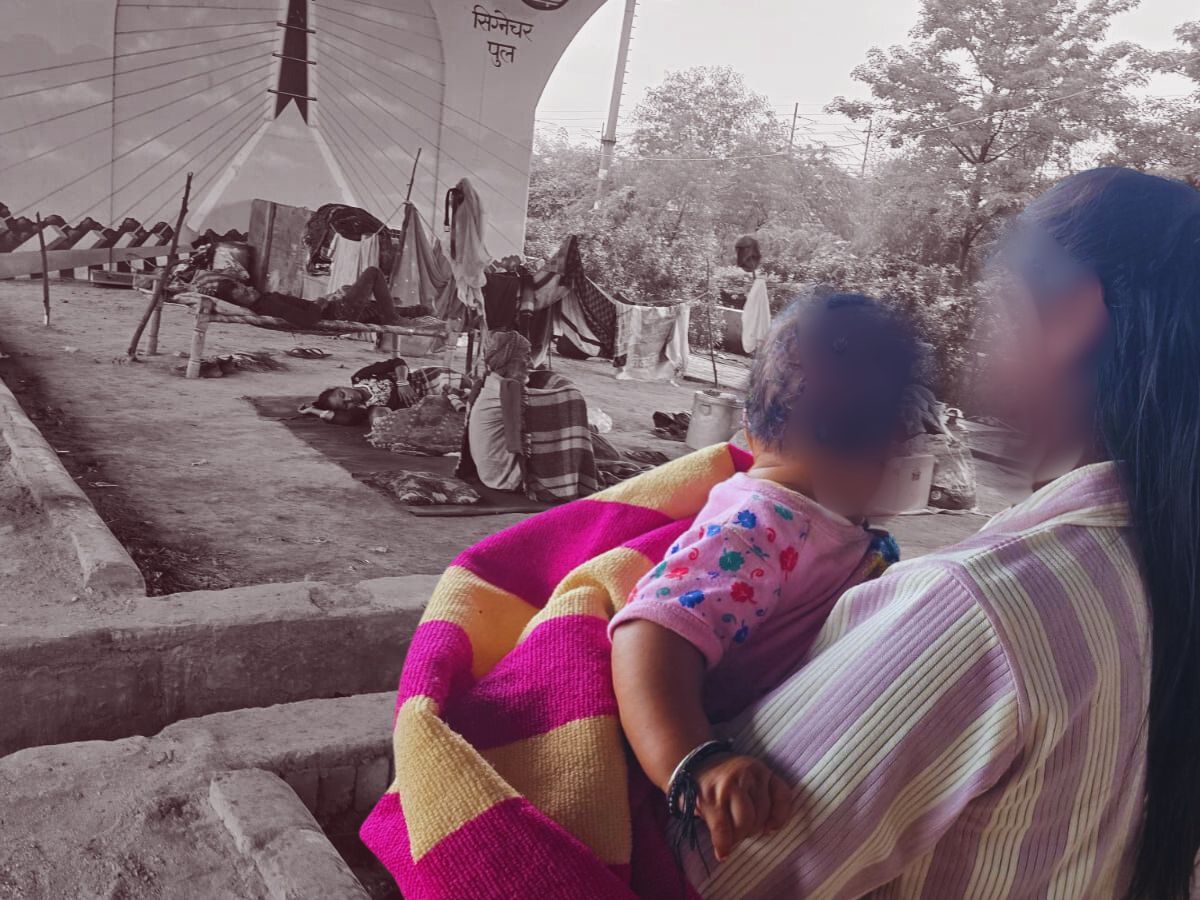

In Delhi’s monsoon solitude, eighteen-year-old Rukhsar who is seven months pregnant, is getting ready for motherhood. She is spending nights looking for privacy in a flood relief camp in Mayur Vihar, Delhi. Her thin body bears the burden of her unborn baby and the cruel practicalities of existence in a relief camp organized after the Yamuna River breached its danger mark.
“I don’t use the dirty toilet here,” she said to NewsX, her voice cracking. “I urinate in the jungle at night. Sometimes there is no water in the toilet. I hold my urine for hours. I bathe only at night so that people don’t see me. But then I get a fever.”
To this teenager, this camp is not just surviving a natural disaster; it is about preserving her dignity. She uttered the challenges that women, including pregnant and lactating women, are challenged to modify their behaviour by being unhygienic. “I bathe at night because I don’t want people to see me. There is no privacy, no security. That is the entire issue,” she said.
Her story is a mirror to the miseries of thousands of children and women residing in flood relief camps in Delhi.

NewsX Visits Mayur Vihar Relief Camps
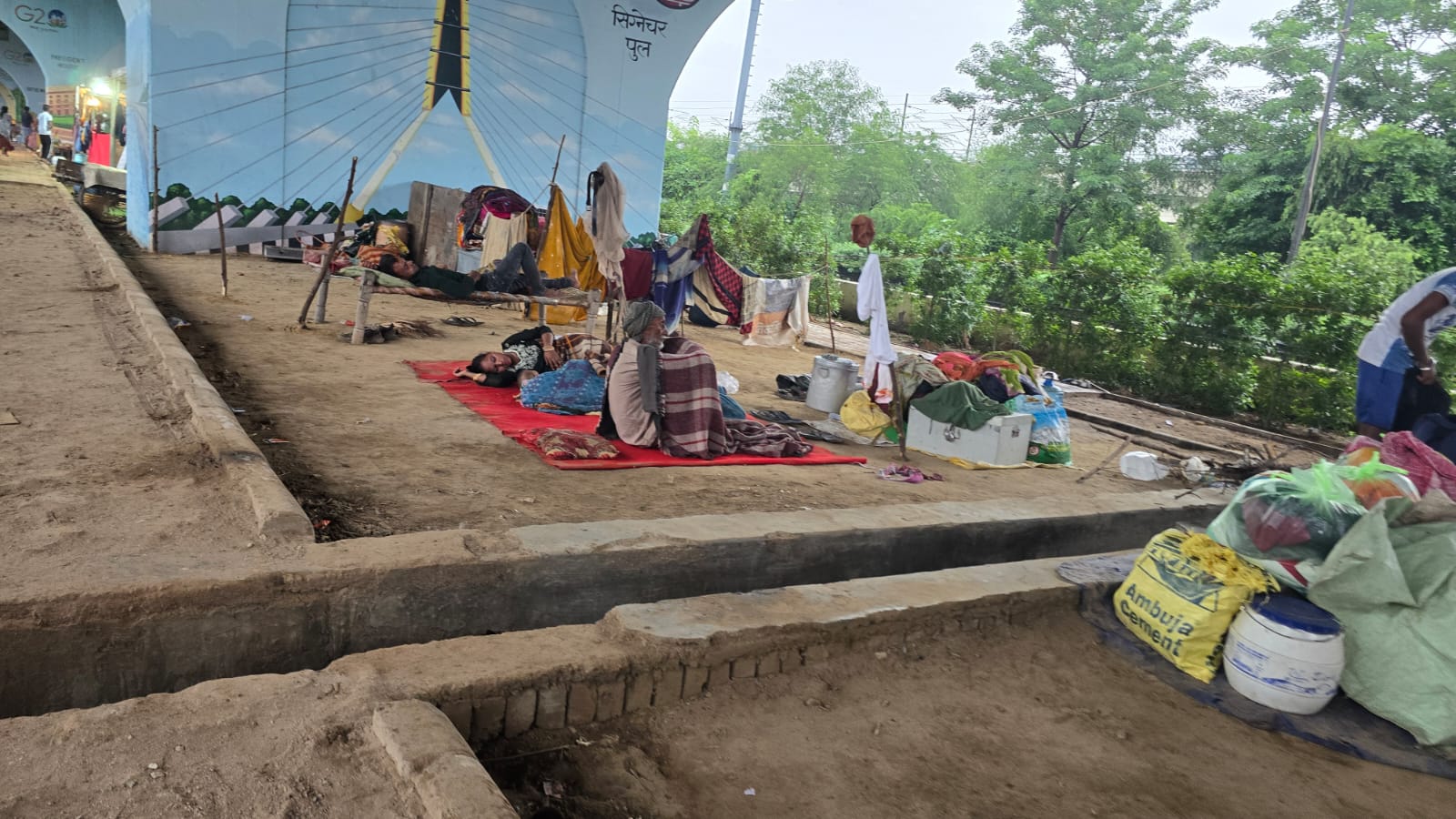
In the backdrop of Delhi rains, on September 2, NewsX went to the flood relief camps in Mayur Vihar and met some of the inmates. Delhi is forecasted to undergo moderate to heavy rainfall this week, as well as some thunderstorms, according to the India Meteorological Department. When NewsX visited the camps, what came to light was a dismal report of weak sanitation, no menstrual hygiene management, shortage of food, and the dilapidated education system for children.
Women reported they cannot bathe every day, with most going without a bath for four to five days. Others are made to swap sanitary pads in areas around the jungle, exposing them to infections and attack. Others complained of unclean and broken toilets without doors, forcing them to defecate outdoors.
“There are many mosquitoes, too much mud, and no proper medicine. Children are getting ill. Doctors visit, but they do not listen to us. When food arrives, it is half-cooked. We have to cook ourselves. One day, the foodserver gave it in my hand and my hand got burned. He did this on purpose”.
The anguish was palpable in all voices, with women constantly emphasizing that they are the most forgotten during calamities.
Yamuna’s Rising Waters Add to Misery
Danger mark 205.33 meters was breached at 9 a.m. Wednesday by the Yamuna River, putting thousands at risk. The threshold for evacuation is 206 meters, and officials are worried about evacuating people given the intense rain is still falling.
Residents of low-lying areas were moved to safer areas, nonetheless, many were stuck wading through flooded roads with their belongings atop their heads up to their knees and thighs in deep water. Businessmen in Civil Lines and Yamuna Bazar have already begun transporting goods to avoid losing money.
However, for women within the relief camps, evading water levels has only meant fresh fights battles for privacy, hygiene, and food.
“Wrap curtains around us to change clothes”
Within Mayur Vihar’s relief camps, Roopali, a migrant laborer from Bihar, talked openly: “We don’t have bathrooms. We ladies have to wrap curtains around us to change clothes. There is just one toilet for women, and it is very dirty. So far, the government has only provided food and tents for us. We purchase sanitary napkins ourselves, and at times we change behind sarees in open spaces. We feel so ashamed because there is no hygiene”.

Roopali is making ₹250 daily working at a vegetable farm and pays ₹400 rent. Now she relies on relief as the floods washed away her livelihood. Another woman, Mayuri, who lived in this area for 16 years, described, “My children are not going to school. It is interrupting their studies. Due to the flood, there is no employment, and we are entirely reliant on the government. They provide food twice a day, but that is it. Whenever there are floods, they distribute tents and forget about us.” A young girl also repeated the same helplessness: “I like to read. I am waiting to go to school again.”
The voices of the women also spoke of a morbid reality: dearth of menstrual hygiene. Several said they do not drink water to cut down the need for visiting toilets, while others said they hold urine during their periods. “Sometimes we even go to the jungle to change sanitary pads,” one resident told us, pointing to the indignity imposed upon them.
Delhi’s Troubled History With Floods
Floods in Delhi are not new. Over the past century, the Yamuna has repeatedly threatened the city. Since 1900, the national capital has experienced a total of 6 floods, in 1924, 1947, 1976, 1978, 1988, and 1995. The worst flooding happened in September considering the river was 2.66 meters over danger level, so there was a lot of water, 206.92 meters still on the second half of September in 1988.
In just the past 33 years, the Yamuna has breached danger level 25 times, usually displacing thousands of families every time. The worst victims, even as this has become a crises, has been the women and children, and many people report having their sanitation, health, and education levels hastened down.
Political uproar
Delhi Chief Minister Rekha Gupta visited relief camps on September 2. She reassured citizens that the government was offering food, tents, and protection for women.However, the opposition Congress accused the BJP-led Delhi government of neglect. Delhi Congress chief Devender Yadav, after visiting East Delhi’s Badarpur Khadar village, alleged that relief camps were set up “only for show” while thousands remained without tents or shelter. “The government has abandoned the flood-hit people,” he said.
For the women in Mayur Vihar, political blame games mean little. Their struggle is immediately holding back urine during menstruation, bathing on the roadside at midnight, and feeding half-cooked rice to hungry children.
Crisis of Women’s Dignity
The Yamuna flood has again laid bare the unfortunate situation of disaster preparedness in Delhi, especially in responding to the needs of women. Adolescent girls who are pregnant, lactating women, and schoolgirls all are caught in a cycle of shame without toilets, without dignity, and without voice.
As one woman bluntly stated, “No one listens to us. We are not just flood affected residents, we are 1000 voters” She concluded.
(Note: All names of the residents in flood affected camps have been changed to protect their privacy.)
ALSO READ: Monsoon Rage In Delhi: Floodwater Enters Houses As Yamuna Crosses Danger Mark
Sofia Babu Chacko is a journalist with over five years of experience reporting on Indian politics, crime, human rights, gender issues, and stories about marginalized communities. She believes journalism plays a crucial role in amplifying unheard voices and bringing attention to issues that truly matter. Sofia has contributed articles to The New Indian Express, Youth Ki Awaaz, and Maktoob Media. She is also a recipient of the 2025 Laadli Media Awards for gender sensitivity. Beyond the newsroom, she is a music enthusiast who enjoys singing. Connect with Sofia on X: https://x.com/SBCism