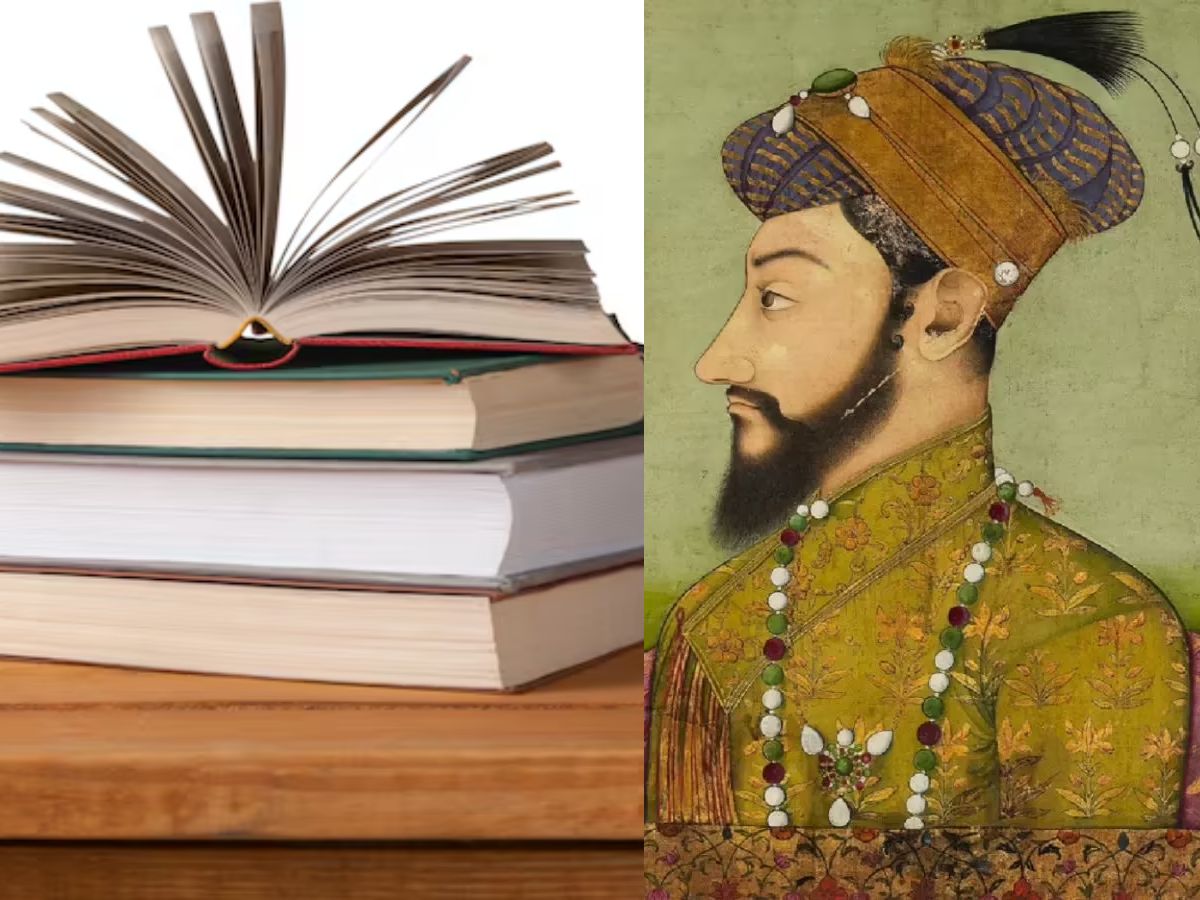

The National Council of Educational Research and Training (NCERT) has revised the Class 8 Social Science textbook to cover extensive references to the “religious intolerance” and “brutality” under the Delhi Sultanate and Mughal periods. These revisions come in Part 1 of the newly released textbook named Exploring Society: India and Beyond, that is being adopted in the ongoing academic session.
The new chapters, titled Reshaping India’s Political Map, span from the 13th to the 17th century from the emergence and decline of the Delhi Sultanate, the advent of the Vijayanagara Empire, the Mughal period, and rebellion movements such as those of the Sikhs. The book points to brutal invasions, temple and centres of learning destruction, and general plundering by certain rulers.
NCERT textbook describes Babur as “Brutal and ruthless”
The textbook describes Babur as a “brutal and ruthless conqueror, massacring whole populations of cities”, while Akbar’s reign is characterized as a “combination of brutality and tolerance”. Aurangzeb is also mentioned for his demolition of temples and gurdwaras, marking a new way of presenting Mughal history to young minds.
In order to broach the topic of sensitivity of such representations, NCERT has incorporated a special note called A Note on Some Darker Periods in History. It reads: “No one should be held responsible today for events of the past.” This note seems to be an attempt to prevent communal interpretation of history.
Earlier this period was covered in Class 7. But as the revised syllabus under the National Curriculum Framework 2023, the period from the Delhi Sultanate to the Maratha Empire will exclusively be covered in Class 8.
The new changes have received reactions from historians and teachers. Some seeing it as a correct method towards accepting historical facts, whereas others are worried that it may further create communal issues if not dealt with sensitively.
As per the National Education Policy (NEP) 2020, the NCERT’s revision of the textbooks is under a larger curriculum transformation across school levels.
ALSO READ: In Pics: 10 Leaders Whose Name Has Been Taken Down From History Textbooks
Sofia Babu Chacko is a journalist with over five years of experience reporting on Indian politics, crime, human rights, gender issues, and stories about marginalized communities. She believes journalism plays a crucial role in amplifying unheard voices and bringing attention to issues that truly matter. Sofia has contributed articles to The New Indian Express, Youth Ki Awaaz, and Maktoob Media. She is also a recipient of the 2025 Laadli Media Awards for gender sensitivity. Beyond the newsroom, she is a music enthusiast who enjoys singing. Connect with Sofia on X: https://x.com/SBCism