
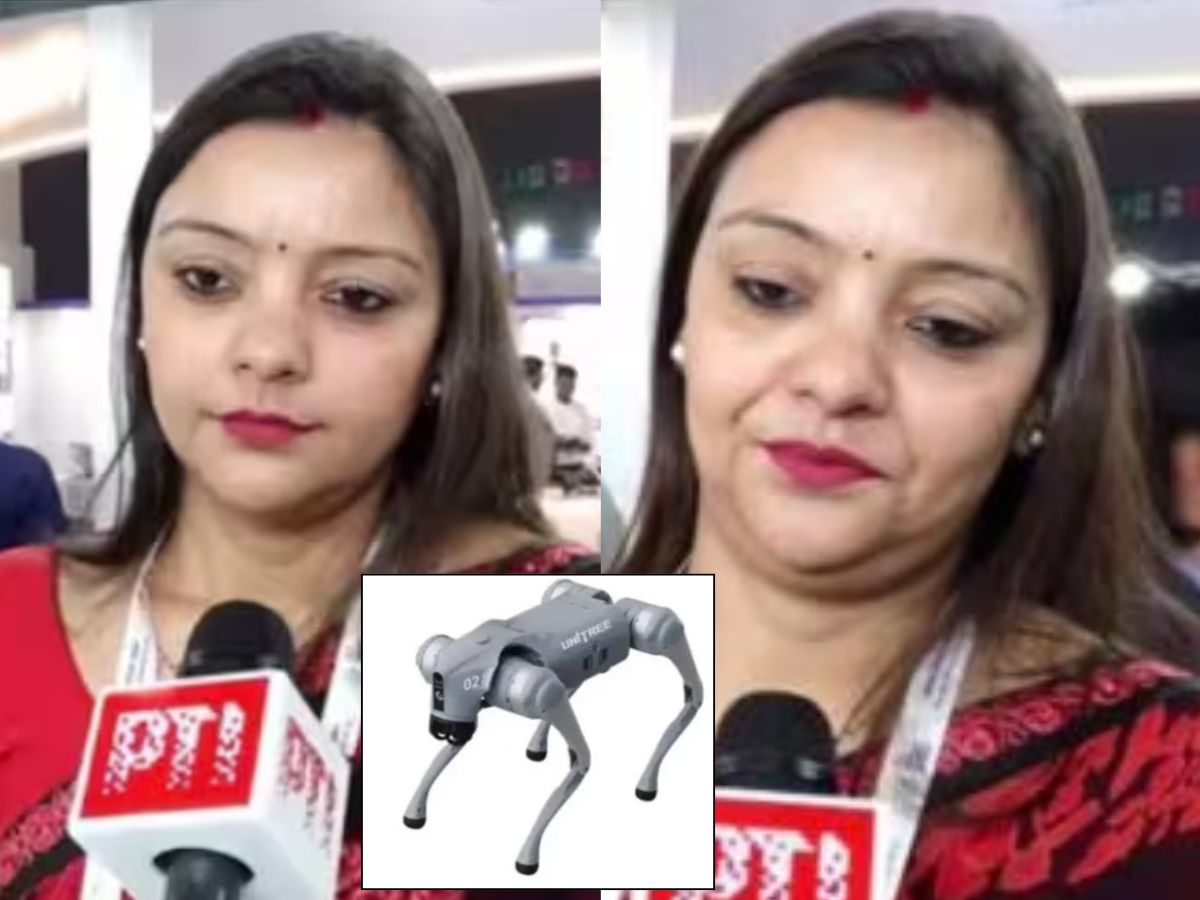

The controversy was first sparked by the India AI Impact Summit 2026 in New Delhi, during which Neha Singh, a professor at the Galgotias University, unveiled a robotic dog named Orion saying that the university had created the AI dog as part of its considerable investment in artificial intelligence. Social media users did not take long to point out the robot as a commercially available Chinese made Unitree Go2 model and not a novel idea, which resulted in a subsequent volley of criticism and online backlash. The incident was highly disseminated and the officials at the summit supposedly requested the university to clear its exhibition stall as they were disgraced by the misrepresentation.
Galgotias University’s Viral Professor Neha Singh Makes Major Move After RoboDog Incident At India AI Impact Summit, Decides To…
In the immediate backlash, there were rumors of the professional status of Neha Singh, with clips of her introducing the robot becoming viral and briefly her LinkedIn profile indicated that she was open to work, leading to the rumor of her being suspended or fired. Galgotias University explained that she was not suspended and requested her to stay until an internal investigation can be conducted on what the university defined as a mistake due to misunderstood communication. But she has apparently deactivated her LinkedIn profile. When one tries to visit her profile it shows ‘404’ error. Authorities stressed the fact that there was no organisational desire to present the robotic dog as an original technology and to offer their apologies regarding the misunderstanding it created in one of the largest global technology events, where the main objective was to demonstrate the real AI advances.
Galgotias University’s Viral Professor Neha Singh Makes Major Move After RoboDog Incident At India AI Impact Summit, Decides To…
In the controversy, government officials also got involved. To avoid any misinformation during high profile events, the Ministry of Electronics and Information Technology and other authorities told the exhibitors not to display what was not their own. The bigger controversy has led to the demand of increased transparency and responsibility in technology exhibitions, particularly those that attract international presence and attraction. The episode has also brought criticism and broader debate on how the institutions introduce innovations to the people and media, as the investigation is carried out.




