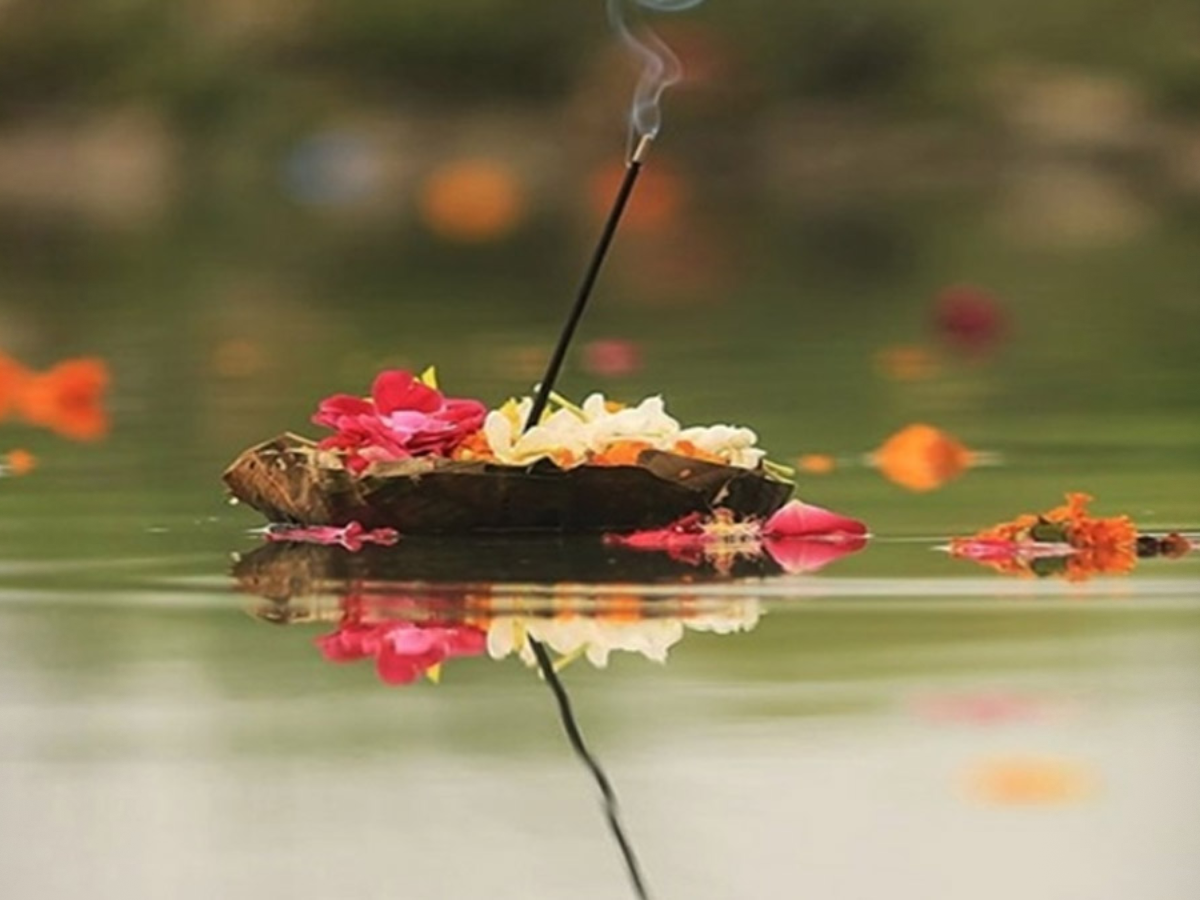

As today marks the begenning of a holy month – Pitru Paksha, devoted to the ancestors, there stands an age old story from Ramayana on the same. In the Valmiki Ramayana, it is described that King Dasharatha’s soul attained salvation when Mother Sita performed Pind Daan for him.
During their exile, Lord Rama, Lakshman, and Sita visited Gaya Dham (now in Bihar) to perform Shraddh for their ancestors during the holy month- Pitru Paksha. While Rama and Lakshman went to collect the required materials, they were delayed, and the time for performing Pind Daan was running out. Understanding the urgency, Mother Sita decided to perform the ritual herself to ensure her father-in-law’s soul received peace, following all prescribed Vedic procedures.
Rituals Of Pind Daan Observed by Mother Sita
Mother Sita chose the Banyan tree, a Brahmin, a cow, a crow, Tulsi, and the Falgu River as witnesses. She offered Pind Daan for King Dasharatha, praying with folded hands.
Her devotion brought immediate acceptance from the late king’s soul. When Rama returned with the materials, he was astonished to learn that Sita had completed the ritual alone, without his presence or the usual materials.
Sita explained that the natural and spiritual witnesses – river, cow, crow, Tulsi, and Brahmin – could testify to her actions.
But Here’s the Twist!
When Rama asked for confirmation, the river- falgu, cow, Tulsi, and Brahmin denied witnessing the ritual, leaving only the Banyan tree as truthful. Angered by the falsehoods, Mother Sita cursed the five: the Falgu River would remain shallow, cows would be worshipped only partially, Tulsi would not grow in Gaya soil, crows would always fight over food, and Brahmins would never feel fully satisfied.
She blessed the Banyan tree to grant longevity and shade, ensuring that virtuous women remembering their husbands could gain long life.
Vishnupad Temple: Redemption Amid the Curse
Despite the curse on the Falgu River, Gaya remained a revered pilgrimage site. The Vishnupad Temple, marking Lord Vishnu’s footprint, became the central location for pind daan rituals. Devotees from across India and abroad visit the temple to perform Shraddha and seek blessings for their ancestors.
While the river symbolizes divine displeasure, the temple offers spiritual redemption, peace, and fulfillment. Lord Rama and Sita performed additional rituals at the Vishnupad Temple, emphasizing that divine grace and salvation remain accessible even in the presence of curses.
Must Read: What Is Pind Daan? A Crucial Puja Performed During Pitru Paksha, Check Who Can Perform
Swastika Sruti is a Senior Sub Editor at NewsX Digital with 5 years of experience shaping stories that matter. She loves tracking politics- national and global trends, and never misses a chance to dig deeper into policies and developments. Passionate about what’s happening around us, she brings sharp insight and clarity to every piece she works on. When not curating news, she’s busy exploring what’s next in the world of public interest. You can reach her at [swastika.newsx@gmail.com]