

Its Bihar elections that went cleary very interesting and was also an eye opener yo several day dreamers. Stating the final numbers of the Bihar Assembly elections :
BJP: 89
JDU: 85
RJD: 25
LJPRV: 19
INC: 6
AIMIM: 5
HAMS: 5
RSHTLKM: 4
CPI (ML)(L): 2
IIP: 1
CPI(M): 1
BSP: 1
Total Number Of Seats : 243
This single-digit tally in a large, politically crucial state like Bihar demonstrates the party’s failure to establish a robust, state-level organizational presence capable of converting national anti-incumbency into a local victory.
The journey of the INC from its hegemonic position in the early 1980s to its current reduced status is a key narrative in contemporary Indian politics.
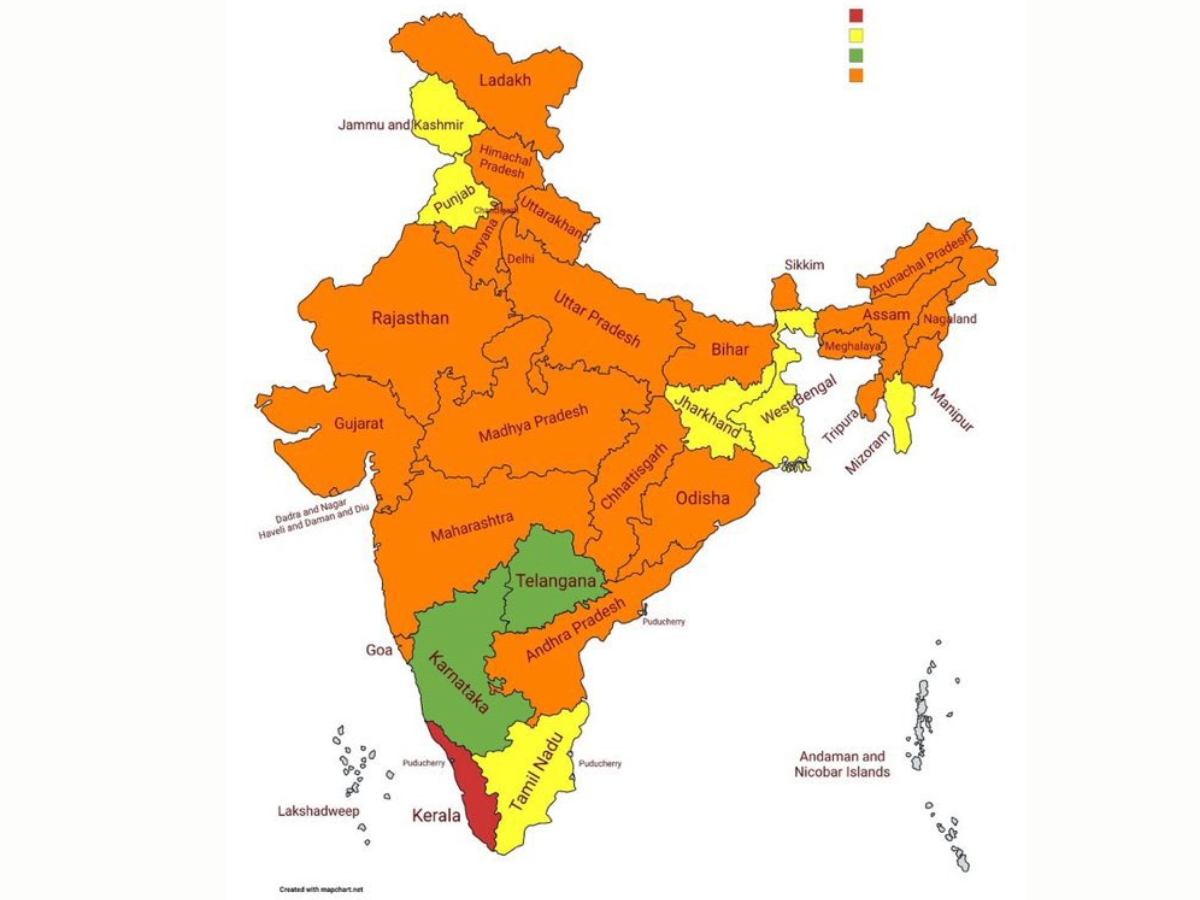
1983 :: MAP Highlighting Non Congress Governments In India
From 1983 to 2025 The Change https://t.co/x4rPYL8a3e pic.twitter.com/e71vJucD2f
— indianhistorypics (@IndiaHistorypic) November 14, 2025
1983: Dominance Under Challenge
In 1983, despite the map highlighting “Non-Congress Governments,” the INC was still the central pivot of Indian politics. The states shaded (or marked with question marks) represented islands of opposition in a sea largely governed by the Congress at the center and in most states.
The INC held power in the vast majority of states and union territories, with major regions like Uttar Pradesh, Madhya Pradesh, Maharashtra, Rajasthan, and Gujarat all under its rule.
Non-Congress governments were typically found in regions with strong regional/leftist movements, such as West Bengal (Left Front), Andhra Pradesh, Karnataka, Tamil Nadu, and Jammu & Kashmir. Even with these opposition pockets, the INC’s national command was undeniable.
2025: A Fragmented Footprint
Fast forward to 2025, and the INC’s geographical presence has been severely curtailed. The political landscape is now dominated by the BJP-led National Democratic Alliance (NDA).
As of early 2025, the INC directly or in alliance, governs a significantly smaller number of states and union territories. The party has lost much of its historical stronghold in the Hindi heartland and several key regional states, a space primarily filled by the BJP.
Decline in National Elections: 2024 Lok Sabha Results
The decline is acutely visible in the national Parliament. The 2024 Lok Sabha election results underscored the INC’s struggle to regain its national standing, even as it improved upon its previous performance:
Total Seats Won (INC): The Congress won 99 seats out of 543.
The INC contested the election as the main constituent of the INDIA bloc, which collectively outperformed expectations but fell short of forming the government, which was successfully achieved by the NDA (winning 293 seats).
From Dominance to Coalition Politics
The transition from the 1983 map to the 2025 reality is a testament to the fundamental reshaping of Indian democracy. The era of a single dominant party, inaugurated by the INC after independence, has given way to a multi-party system characterized by intense coalition politics at the regional and national levels.
While the INC remains a major national opposition force, its historical dominance on the map of India has undeniably shrunk, replaced by a much more variegated political topography led overwhelmingly by the BJP and its regional allies.
Stay informed on all the latest news, breaking news updates, and check all the important headlines in India news, World News, Sports News and Entertainment News on NewsX. Follow Us on Facebook, Twitter.
Swastika Sruti is a Senior Sub Editor at NewsX Digital with 5 years of experience shaping stories that matter. She loves tracking politics- national and global trends, and never misses a chance to dig deeper into policies and developments. Passionate about what’s happening around us, she brings sharp insight and clarity to every piece she works on. When not curating news, she’s busy exploring what’s next in the world of public interest. You can reach her at [swastika.newsx@gmail.com]




