
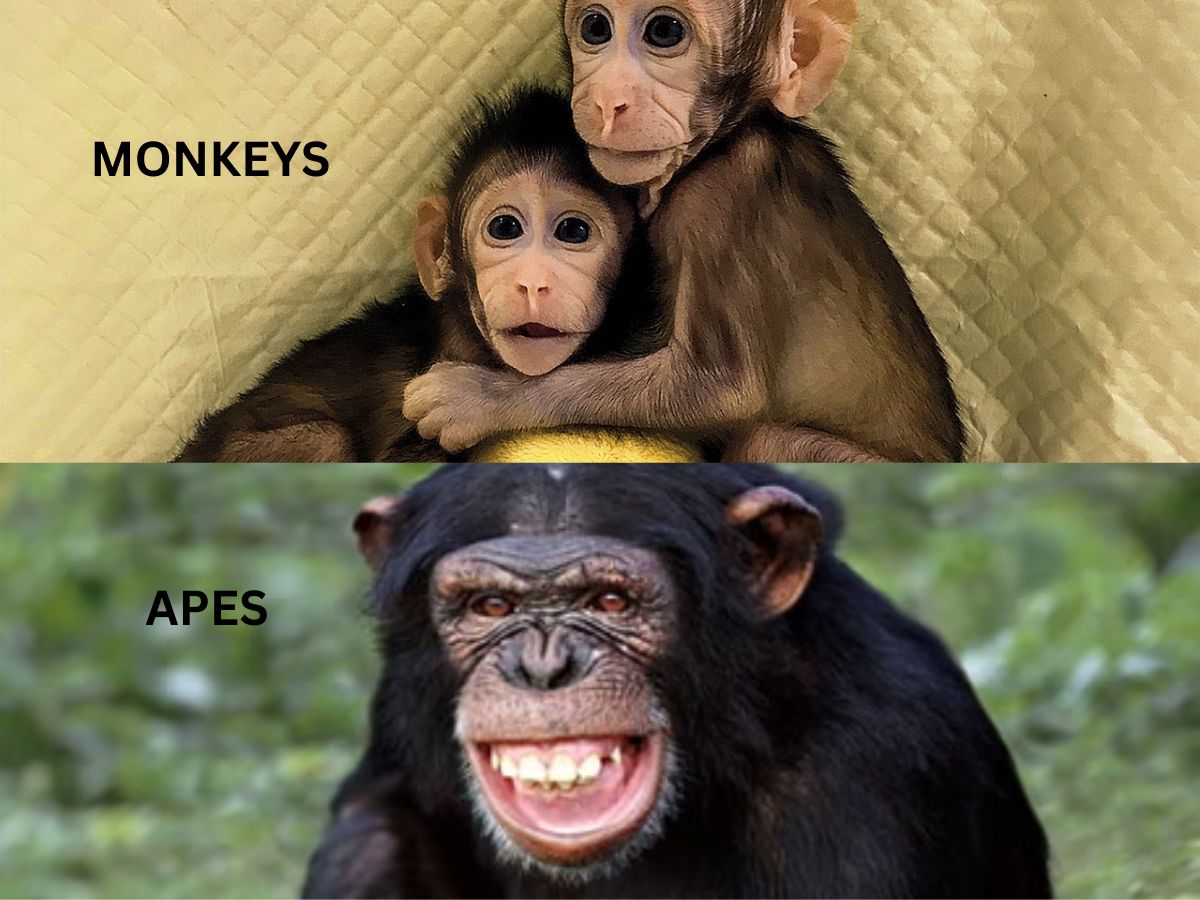

Monkeys and apes are both fascinating members of the primate family, but they are quite different in many ways. People often confuse the two, as they share similarities like intelligence, social behavior, and diet. However, when it comes to behavior, physical traits, habitat, and diet, there are clear differences that set them apart. Understanding these distinctions helps us appreciate the diversity and complexity of primates.
Behavioral Differences Between Monkeys and Apes
Monkeys are highly social animals that live in large groups called troops. They are playful, energetic, and spend most of the time jumping, climbing, and grooming each other. Their behavior is often more Instinct driven, though they show signs of problem solving.
Apes, on the other hand, such as gorillas, chimpanzees, and orangutans, display higher intelligence and advanced social structures. They are known to use tools, communicate through complex gestures, and form deep emotional bonds within their groups. Apes exhibit behavior similar to humans, like cooperation, empathy, and even mourning their dead.
Physical Traits: Monkeys vs Apes
One of the most noticeable differences is the presence of tails.
Monkeys: Almost all monkeys have tails, which they often use for balance and, in some species, as a prehensile tool to grab branches.
Apes: Apes do not have tails, and their bodies are generally more muscular and upright.
Monkeys tend to have smaller brains relative to their body size, while apes have larger brains, giving them superior cognitive abilities. Apes also have broader chests and longer arms, making them excellent climbers and swing movers, known as brachiators.
Habitats Of Monkeys and Apes
Monkeys are more widely distributed across the globe. They are divided into two categories:
Old World Monkeys: Found in Africa and Asia, like baboons and macaques.
New World Monkeys: Found in Central and South America, like capuchins and spider monkeys.
Dietary Habits Compared
Both monkeys and apes are omnivorous, but their diets vary slightly:
Monkeys: Primarily eat fruits, seeds, leaves, and small insects. Some species are known to raid crops or steal food in human-populated areas.
Apes: Have a more diverse diet, including fruits, leaves, nuts, and occasionally meat. Chimpanzees, for example, are known to hunt smaller animals using tools.
Apes’ larger brains allow them to plan and use strategies to find food, giving them an advantage over monkeys.
Conclusion
While monkeys and apes share a common ancestry, they are remarkably different in behavior, physical traits, habitat, and diet. Monkeys are more widespread, tail-bearing, and group-oriented, while apes are tailless, highly intelligent, and display advanced problem-solving abilities. Understanding these differences not only helps in scientific study but also emphasizes the importance of protecting these incredible creatures and their habitats.




