

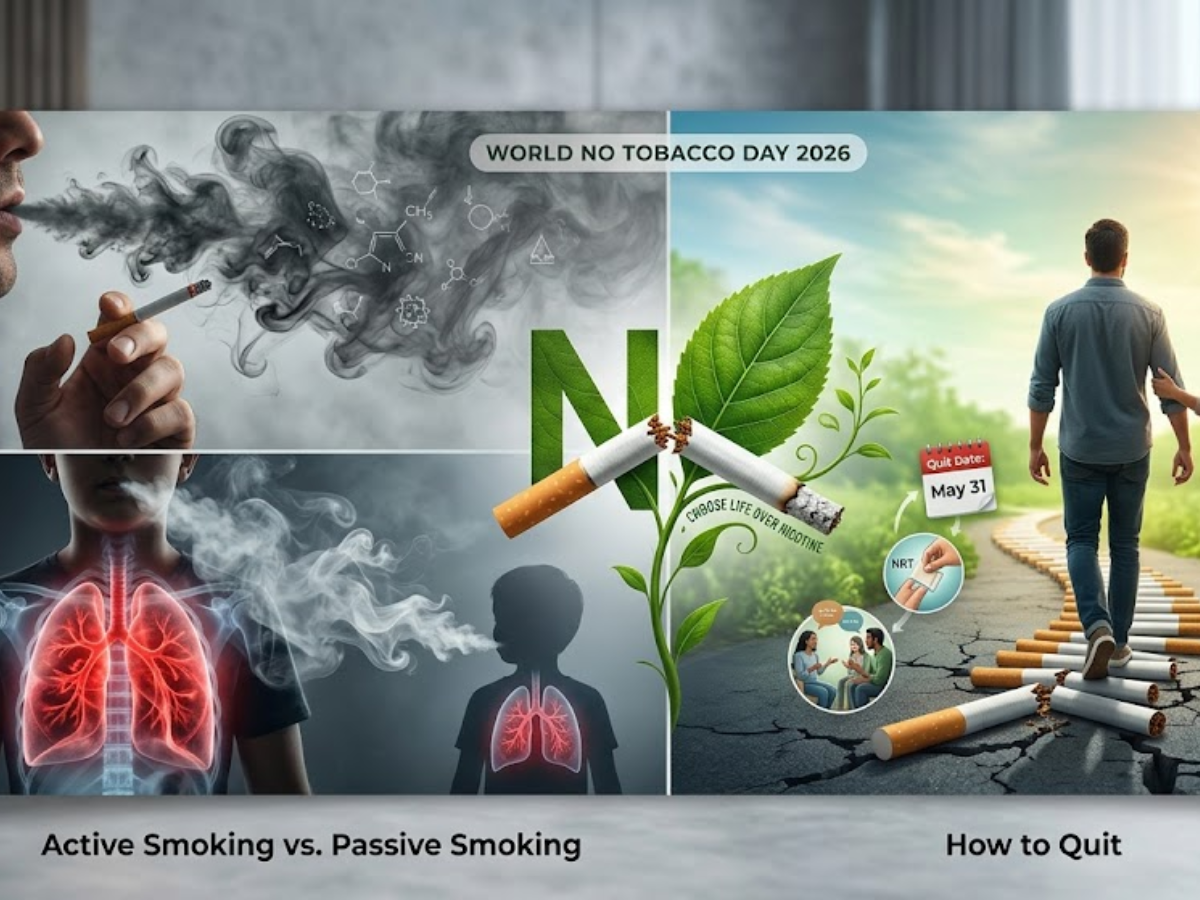
Every year on May 31 World No Tobacco Day is a reminder of the bad effects of tobacco. The World Health Organizations 2026 theme is about showing how the nicotine industry tricks people into using e-cigarettes and flavored vapes. Tobacco is still bad for you no matter what form it takes. We need to look at how tobacco hurts smokers and people around them.
Active Smoking vs. Passive Smoking: Understanding the Threat
Tobacco smoke doesn’t just hurt the person smoking; it also hurts people nearby. Here’s how active and passive smoking are different:
Active Smoking
Active smoking is when someone intentionally breathes in tobacco smoke. When you smoke you breathe in mainstream smoke.
How it works The smoke goes through the cigarette filter and into your lungs.
The dangers : get a lot of nicotine, carbon monoxide and over 70 chemicals that can cause cancer. This hurts your lungs, arteries and heart.
Passive Smoking
Passive smoking is when someone breathes in smoke that’s already in the air. This smoke comes from the burning cigarette and the smokers breath.
How it works: Non-smokers breathe in the stuff thats left in the air.
The dangers: This smoke has levels of some chemicals that can cause cancer. It can hurt your blood vessels make asthma worse and cause lung cancer.
A Step-by-Step Plan to Quit Smoking
Quitting tobacco is a journey to health. Nicotine is very addictive so you need to prepare and use practical strategies.
1. Know Your Triggers
Nicotine cravings often happen at times or in certain situations.
Notice when you want to smoke the most.
Replace smoking with something like drinking water or taking a short walk.
2. Set a Quit Date
Pick a date to quit smoking within the two weeks. Before that day get rid of all your smoking stuff.
3. Consider Nicotine Replacement Therapy (NRT)
Quitting nicotine can be tough. Talk to a doctor about using NRTs to make it easier.
Nicotine patches
Nicotine gum or lozenges
Prescription medications that reduce cravings
4. Build a Support System
You don’t have to quit. Tell your friends and family about your decision. Consider joining a support group or using a smoke- app.
5. Try the “Delay” Method
When you have a craving wait 10 minutes before giving in. Distract yourself with a task or some deep breathing exercises.
Your Health Recovery Timeline:
Within 20 minutes: Your heart rate and blood pressure go back to normal.
Within 12 hours: The carbon monoxide level, in your blood drops to normal.
Within 2–12 weeks: Your circulation. Your lung function increases.
Within 1 year: Your risk of heart disease is cut in half.
This World No Tobacco Day choose air over tobacco. Your body, family and future will thank you.
I am a seasoned writer with 2.5 years of experience who presently works at ITV Digital. I specializes in entertainment journalism, reporting on the newest Bollywood news as well as compelling healthy lifestyle pieces. I am master at creating material around popular issues and internet buzz, bringing unique, reader-friendly viewpoints to every item i write





