
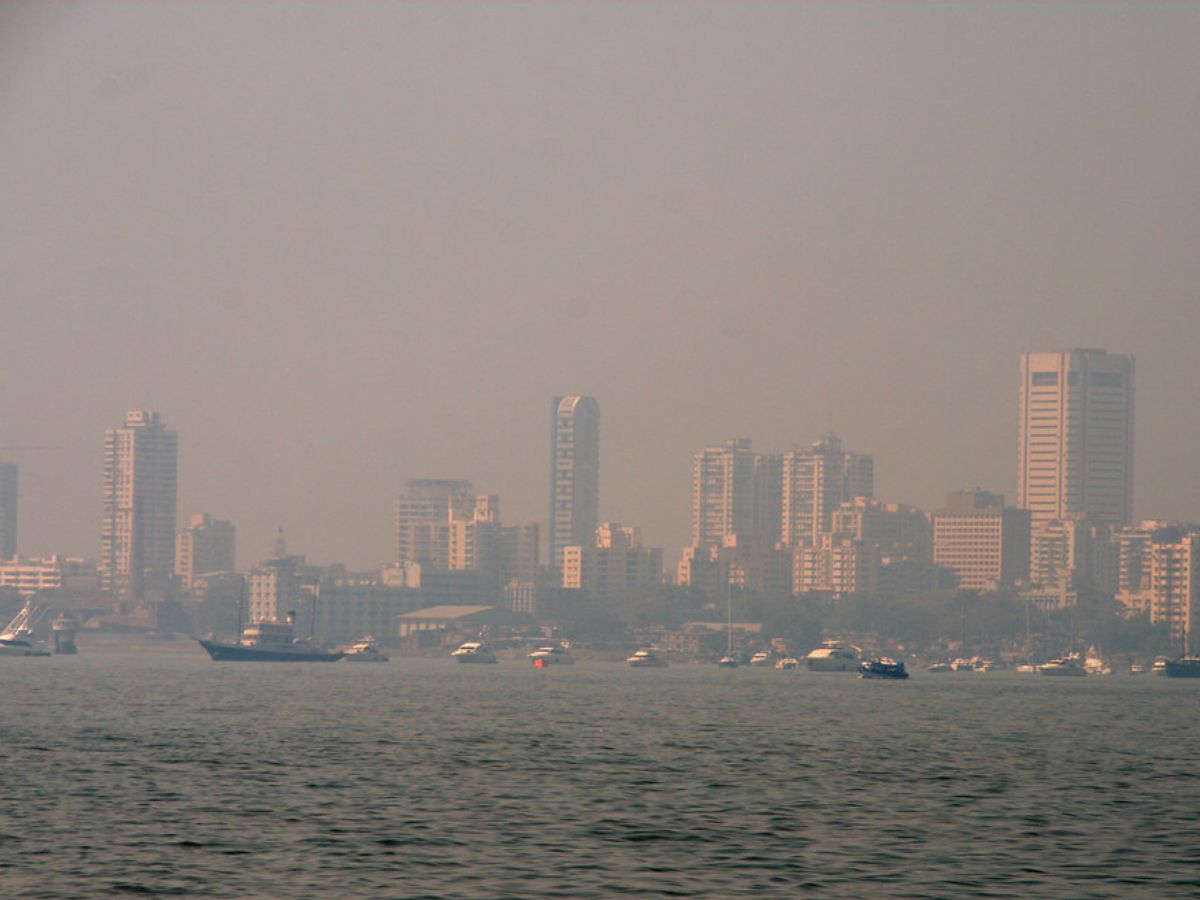

Mumbai Pollution: Mumbai has officially entered the highest stage of pollution control- Graded Response Action Plan (GRAP) Stage 4, after air quality in several pockets of the city dipped into the ‘very poor’ and ‘severe’ categories. For the first time, the country’s financial capital finds itself alongside Delhi on the list of cities battling dangerously toxic air.
Pollution Hotspots Trigger Emergency Restrictions
Civic authorities began enforcing GRAP-4 restrictions as AQI levels spiked across multiple locations, including Mazgaon, Deonar, Malad, Borivali East, Chakala–Andheri East, Navy Nagar, Powai, and Mulund.
To curb rising emissions, the Brihanmumbai Municipal Corporation (BMC) has halted all construction and dust-generating activities in these hotspots. Over 50 construction sites have already received shutdown or stop-work notices. Small industries such as bakeries, marble-cutting units, and workshops—have been asked to switch to cleaner, non-polluting processes.
To ensure compliance, the BMC has deployed flying squads in every ward. These teams, comprising engineers, police staff, and GPS-enabled vehicles, are conducting inspections to track emissions, identify violators, and clamp down on polluting activities.
Residents, Celebrities Voice Alarm Over Toxic Air
Over the last two weeks, several Mumbai neighbourhoods have consistently recorded AQI levels in the ‘very poor’ and ‘severe’ ranges. Residents complain of burning eyes, breathlessness, and coughing, symptoms now reminiscent of Delhi’s annual pollution crisis.
Celebrities Too Have Expressed Concern:
Vir Das shared a satirical video singing, “AQI, AQI, let me die.”
Soni Razdan appealed for urgent action, saying, “Let us not be guilty of allowing apathy to kill us… because that’s what will happen.”
Varun Grover reminded that air pollution’s real danger is slow and silent, adding it may “cut down your lifespan by 15 years.”
Political Response And Long-Term Concerns
Under growing public pressure, the Mumbai Congress unit released a ‘Mumbai Clean Air Action Plan’. It calls for recognising clean air as a fundamental right, round-the-clock monitoring of polluting activities, planting 1 million trees, and imposing stricter rules on vehicles, construction, and industries.
Experts warn that Mumbai’s deteriorating air quality is a national alarm bell. Unchecked construction, heavy vehicular emissions, and waste burning are choking major cities, while policy measures have failed to address core issues. Delhi has struggled for years, and Mumbai is now firmly on the same trajectory.
At a recent BMC review meeting, Municipal Commissioner Dr. Bhushan Gagrani noted that GRAP-4 would be triggered if AQI stayed above 200 for three consecutive days, a threshold Mumbai has now crossed.
What’s Allowed And What’s Banned
In the past few days, BMC officials have intensified enforcement. Flying squads inspected 70 construction sites, ordering work stoppages at 53 for violations. Bakery operators in Mazgaon have been told to replace outdated chimneys, while marble-cutting units in Andheri East must adopt cleaner technologies. The Maharashtra Pollution Control Board (MPCB) has been instructed to act against polluting industries and RMC plants in Deonar.
To strengthen regulatory monitoring, 450 junior supervisors from the Solid Waste Management department have been empowered to levy fines for dust-related and waste-handling violations.
The crackdown comes in response to concerning AQI data: Mazgaon reported “poor” air quality on 12 days and “very poor” on two days this month, while Deonar saw “poor” AQI on 14 days. With pollution levels showing no improvement, GRAP-4 restrictions will remain in force in these pockets until conditions significantly improve.




