
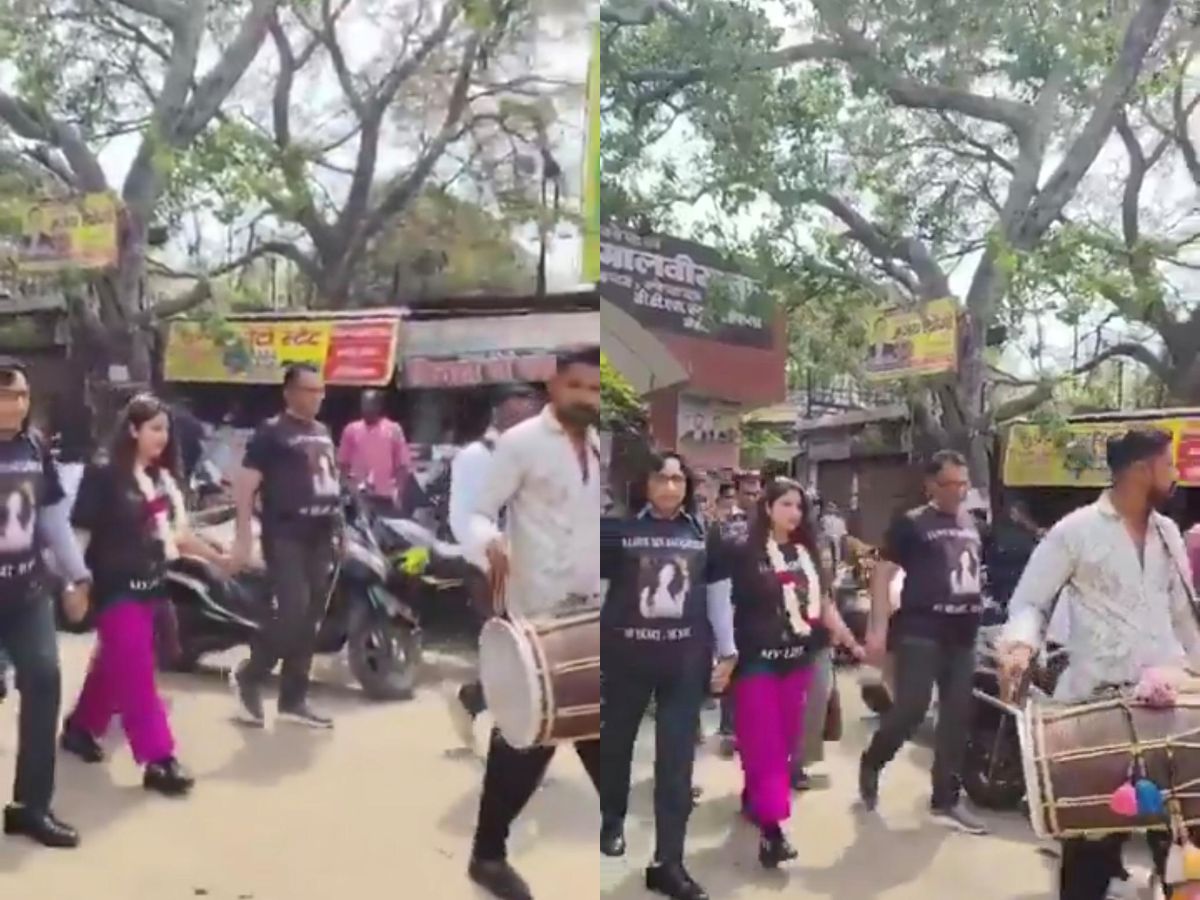

Meerut: In a scene that turned heads in Uttar Pradesh’s Meerut, a woman’s return home after her divorce was celebrated with the kind of enthusiasm usually reserved for weddings.
Pranita Sharma, who ended her seven-year marriage with Major Gaurav Agnihotri, was welcomed back with drums, trumpets, and dancing as her family escorted her from the courthouse to their home. The atmosphere was festive, with relatives celebrating openly on the streets.
Adding to the moment, family members wore matching T-shirts that read, “I Love My Daughter,” making the occasion both personal and symbolic.
Father’s Message: Daughter’s Happiness Comes First
The grand welcome was organised by Pranita’s father, a retired judge, who made his stance clear. “My daughter wasn’t happy in her marriage, so it is my duty to keep her happy,” he said.
UP’s Meerut tells a changing story…
After 7 years of marriage, Pranita Sharma’s divorce from Major Gaurav Agnihotri was finalized. But what followed looked like a wedding celebration—drums, dancing, matching “I Love My Daughter” T-shirts, and a grand welcome home organized by… pic.twitter.com/z1DkELqMwy
— Oxomiya Jiyori 🇮🇳 (@SouleFacts) April 5, 2026
यूपी –
मेरठ में शादी के 7 साल बाद प्रणिता शर्मा का मेजर गौरव अग्निहोत्री से तलाक हो गया। तलाक के बाद बेटी अपने घर आई तो ढोल–नगाड़े बजे। बेटी के साथ घरवाले नाचते हुए कोर्ट से घर तक आए। सबने एक जैसी टीशर्ट पहनी थी। जिस पर लिखा था– “I Love My Daughter”.पिता रिटायर जज हैं,… pic.twitter.com/KUwBSgitAH
— Sachin Gupta (@Sachingupta) April 5, 2026
His words reflected a strong show of support, placing his daughter’s well-being above social expectations often tied to marriage and divorce.
Changing Social Signals In Meerut
Such celebrations, once associated only with weddings, are now being seen in entirely different contexts. The Meerut incident highlights a shifting mindset where families are increasingly open about supporting their children’s decisions, even when it comes to ending a marriage.
At the same time, it has sparked a wider conversation. While many see it as a sign of empowerment and acceptance, others question whether it reflects changing values in a society where personal choices are becoming more openly expressed than ever before.




