
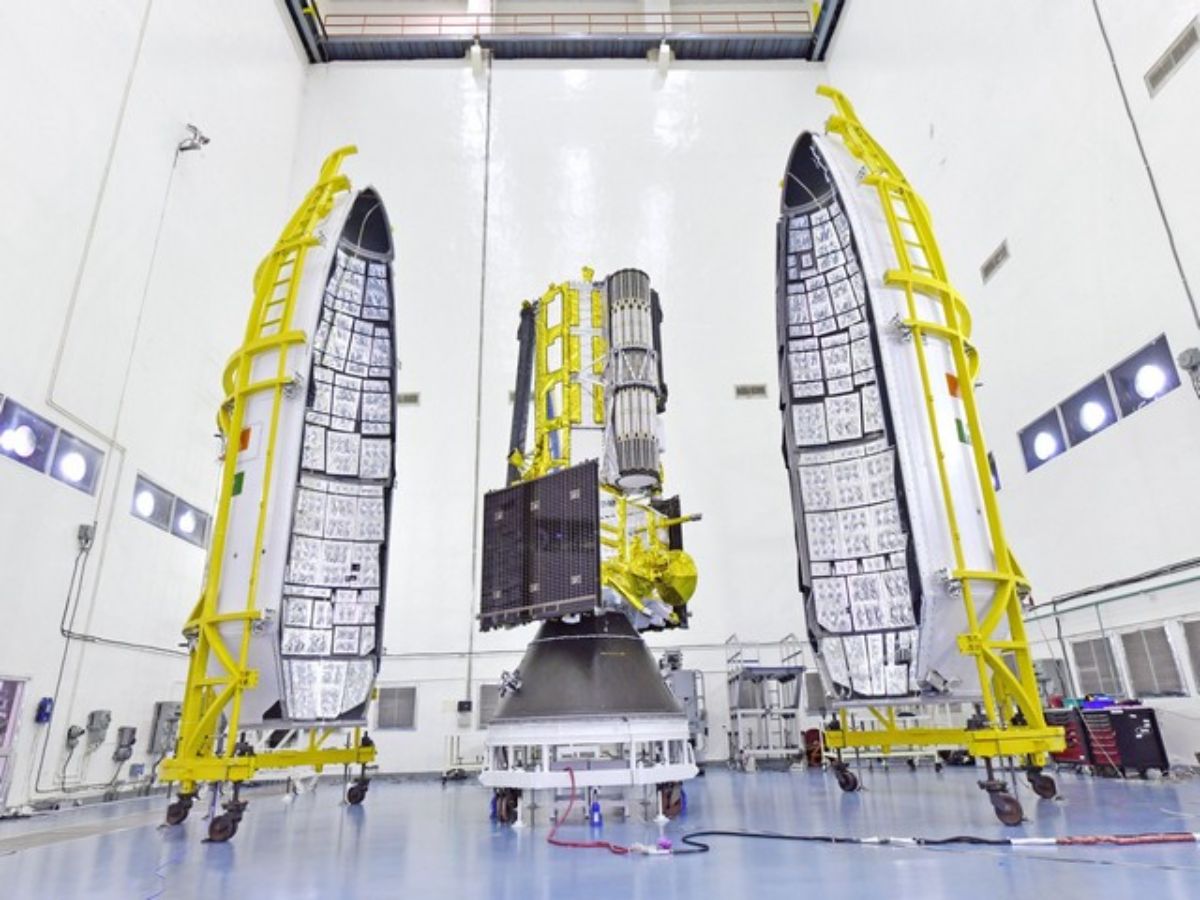

The Indian Space Research Organisation is set to launch a historic joint mission, NASA- ISRO Synthetic Aperture (NISAR) satellite by ISRO and NASA on July 30 at 5:40 PM IST from Satish Dhawan Space Centre in Sriharikota, Andhra Pradesh. The launch of the NASA-ISRO Synthetic Aperture Radar (NISAR) Satellite will mark a historic mission between the US and Indian space agencies.
According to ISRO, NISAR Satellite would provide high-resolution, day-and-night, all-weather data by scanning the entire world every 12 days, which will identify minute variations in the Earth’s surface, such as vegetation dynamics, ice sheet shifts, and ground deformation.
ISRO Post
ISRO shared a post on X, stating, “On July 30, 2025 at 17:40 IST, ISRO’s GSLV-F16 will launch NISAR, the first joint Earth observation satellite by ISRO & NASA, from Sriharikota. NISAR will scan the entire globe every 12 days, providing high-resolution, all-weather, day-and-night data. It can detect even subtle changes in Earth’s surface–like ground deformation, ice sheet shifts, and vegetation dynamics,”
Advanced Radar Satellite Launch
The NISAR Satellite weighs 2,392 kg, and the first satellite to observe the Earth with a dual-frequency Synthetic Aperture Radar- NASA’s L-band and ISRO’s S-band delivers a 12-meter unfurlable mesh reflector antenna integrated to ISRO’s modified 13k satellite bus. With the use of SweepSAR technology, NISAR will observe Earth with a swath of 242 km and high spatial resolution.
All-Weather Earth Monitoring
NISAR delivers capability to scan the globe and provide high-resolution, all-weather data at 12- 12-day intervals and enable a wide range of applications. The satellite can track climate changes, including storm characterisation, disaster responses, and moisture, mapping & monitoring of water resources surfaces.
“The satellite will scan the entire globe and provide all weather, day & night data at 12-day interval and enable a wide range of applications. NISAR can detect even small changes in the Earth’s surface, such as ground deformation, ice sheet movement and vegetation dynamics. Further applications include sea ice classification, ship detection, shoreline monitoring, storm characterisation, changes in soil moisture, mapping & monitoring of surface water resources and disaster response,” ISRO stated in a press release.
Manisha Chauhan is a passionate journalist with 3 years of experience in the media industry, covering everything from trending entertainment buzz and celebrity spotlights to thought-provoking book reviews and practical health tips. Known for blending fresh perspectives with reader-friendly writing, she creates content that informs, entertains, and inspires. When she’s not chasing the next viral story, you’ll find her diving into a good book or exploring new wellness trends.




