

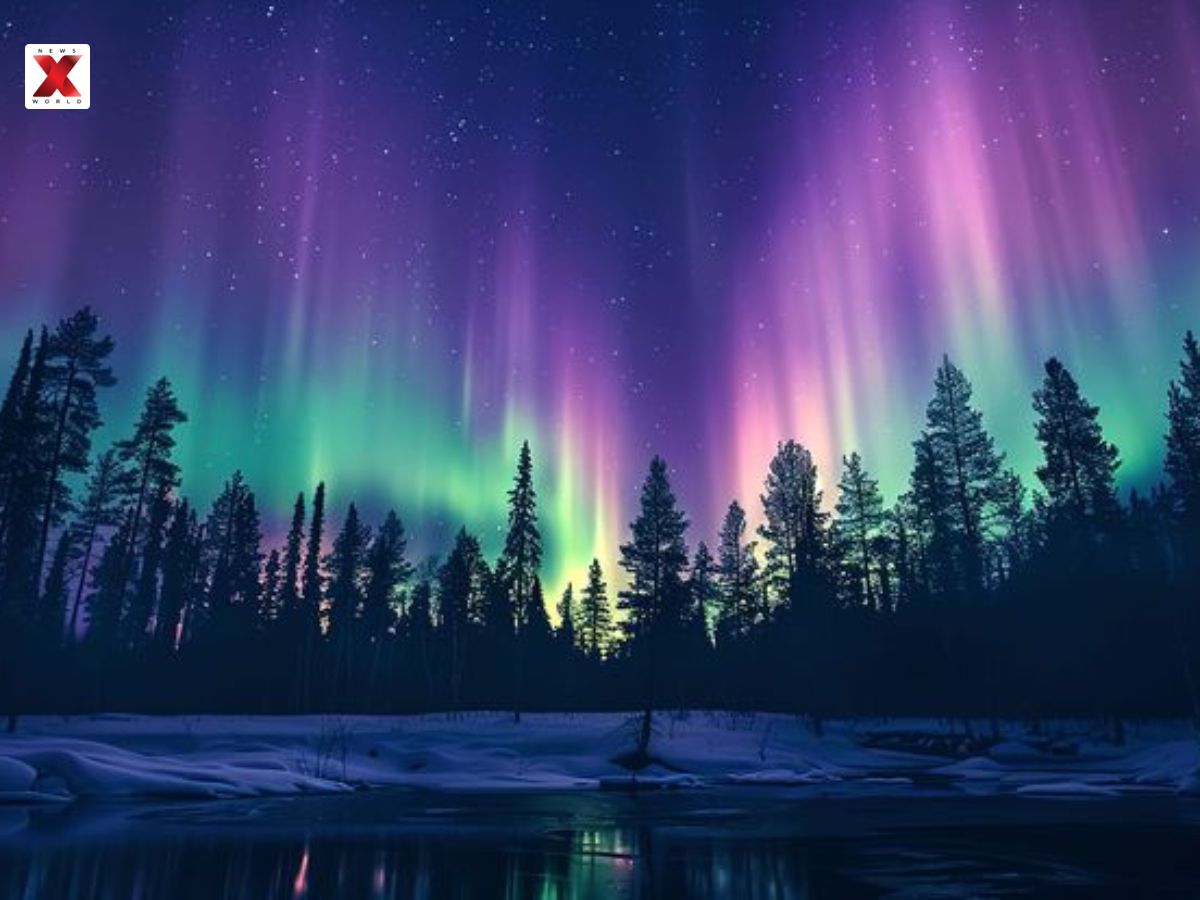
Northern Lights Update: An intense solar storm is moving toward Earth after the Sun decided to unleash a strong eruption from a very highly active part of its surface. Space weather experts have issued a G3 geomagnetic storm watch which means there is a real chance of brighter auroras, aka the Northern Lights. In general, these glowing curtains are seen mostly near the Arctic but with this storm turning out more forceful than usual, so there are some chances to see northern lights in India.
Northern Lights Update: Massive Solar Storm Headed for Earth Today
An active zone on the Sun, called Active Region 4461, has recently released an M1.8-class solar flare with a significant burst of energy. Solar flares happen when stored magnetic energy on the Sun gets released suddenly and then radiation nd charged particles into space.
What made space weather specialists alert was that this eruption also launched a dense and very strongly magnetised solar filament straight toward Earth. This thick mass of solar matter is moving through space at roughly 1,400 kilometers per second and it’s slated to arrive at our planet today.
Because of that, the U.S. Space Weather Prediction Center, SWPC, has put out a G3, Strong Geomagnetic Storm Watch. Geomagnetic storms take place when solar particles run into Earth’s magnetic field, and that can sometimes bring along annoying effects for radio links, satellites, and even power grid systems.
NASA and other science groups are watching closely as well, while skywatchers and photographers are kind of hoping the whole thing might gift us with spectacular auroras, sometimes referred to as the Northern Lights, if timing lines up.
NASA and other science groups are watching closely as well , while skywatchers and photographers are hoping the whole thing might gift us with spectacular auroras, sometimes referred to as the Northern Lights.
Where Northern Lights Will be Seen in India?
Even though this geomagnetic storm is likely to affect Earth’s magnetic field for most of India it seems unlikely anyone will see bright auroras with just the naked eye because northern lights are usually seen at far higher latitudes.
Still when a strong G3-level storm kicks in there is a small chance of odd skyglow or faint auroral activity being detected through cameras in the northernmost regions of India.
Areas with the best chance of observing any effects include:
-
Ladakh
-
Jammu and Kashmir
-
High-altitude regions near the Himalayan border
Even though hte chances of visibility of northern lights in India is not guaranteed as it would depend on storm intensity, local weather conditions, and darkness levels.
Manisha Chauhan is a passionate journalist with 3 years of experience in the media industry, covering everything from trending entertainment buzz and celebrity spotlights to thought-provoking book reviews and practical health tips. Known for blending fresh perspectives with reader-friendly writing, she creates content that informs, entertains, and inspires. When she’s not chasing the next viral story, you’ll find her diving into a good book or exploring new wellness trends.





