
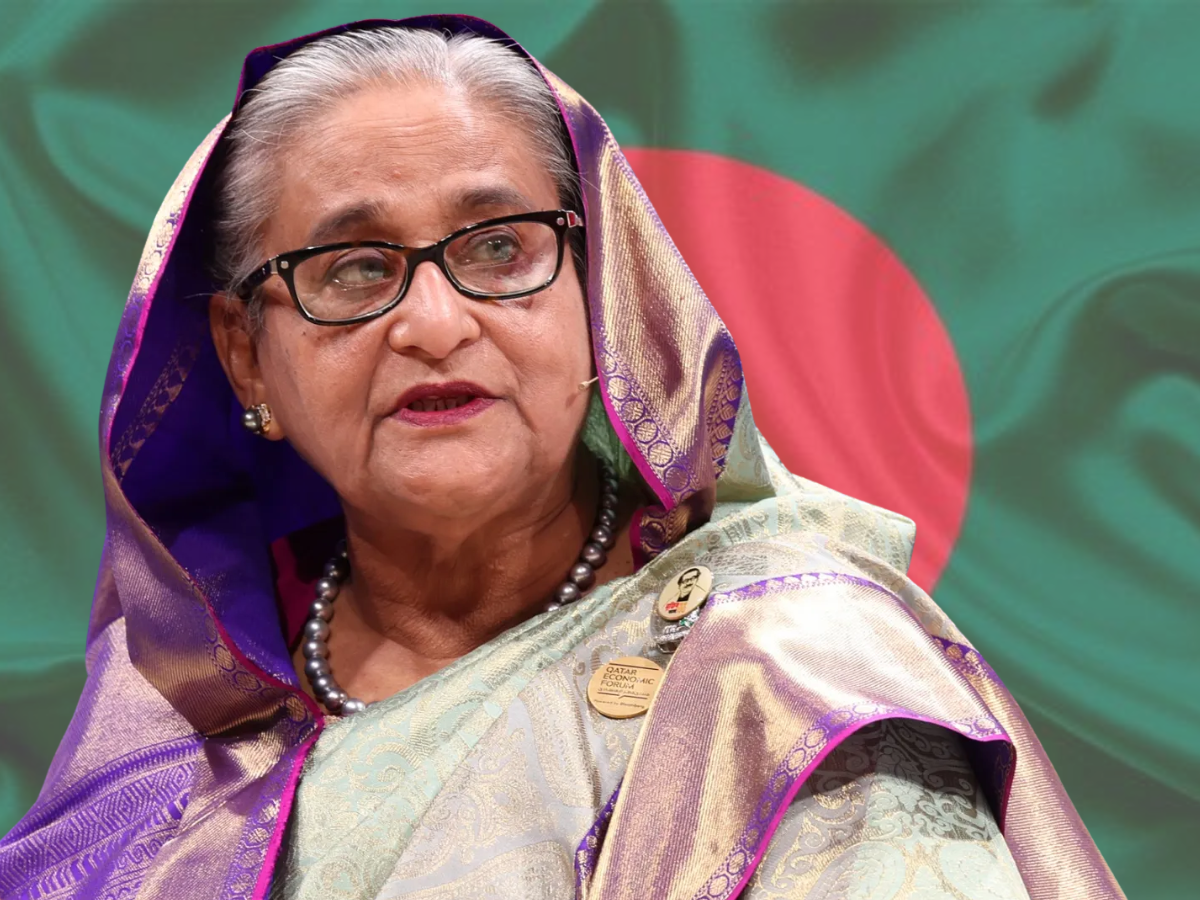

Sheikh Hasina, leader of the former government, was sentenced together with her former interior minister and police chief. They were convicted of condoning the lethal force against protesters and not taking measures to stop the atrocities against protesters.
Will Sheikh Hasina Be Hanged Or Imprisoned?
Since Sheikh Hasina has been ordered a death sentence by ICT, the former Bangladesh PM will likely be executed. NewsX will keep you posted with the updates.
All the charges that were brought against the accused were read out in court and the magnitude of the violence during the police action was given. The overthrown ruler rejects any allegations in the crackdown in which the UN reports that hundreds of people were killed.
The demonstrations led to the escape of Hasina to India, where she lives to date. A special tribunal tried her in absentia. Of the accused only a former police chief Abdullah al-Mamun attended the sentencing.
On the International Crimes Tribunal and the verdicts against her, ousted Prime Minister Sheikh Hasina says, “The verdicts announced against me have been made by a rigged tribunal established and presided over by an unelected government with no democratic mandate. They are biased… pic.twitter.com/zSGjFdfxtw
— ANI (@ANI) November 17, 2025
How the Rules for the Death Sentence Work in Bangladesh
The death penalty is a legal punishment in the various serious crimes in Bangladesh such as murder, terrorism, kidnapping which leads to death, drug dealing (in severe situations) and some offenses in the military and special laws.
The procedure is, however, not quick and automatic, it has an orderly course of law in order to have various layers of checking before an execution can be enacted.
A trial court, typically a District and Sessions Court or a special tribunal (such as the Anti-Terrorism Tribunal or Women and Children Repression Prevention Tribunal) first imposes a death sentence.
Even when the convicted person does not appeal, the law stipulates that upon the death verdict being issued by the trial court, the case should be automatically referred to the High Court Division where it will be upheld.
This is referred to as Death Reference. The High Court looks at the whole case including the evidence, the trial proceedings and the legal procedures in order to quash, rebuke or appeal the sentence.
In case the High Court upholds the death penalty, then the convict may appeal to the final court that is the Appellate Division of the Supreme Court.
This is the superior judicial court in Bangladesh. The Supreme Court can either affirm the sentence, change it to life imprisonment or clear the accused. It is not until such final review of the court that the case is regarded as settled.
There is still a last resort that the convicted individual can take before an execution is implemented; he or she can submit a mercy petition to the Bangladesh President. The President who usually does it at the recommendation of the government may or may not accept the petition. In case of denial, the prison officials are allowed to execute the person.
Bangladesh’s death penalty
In Bangladesh, death penalty is executed through hanging, mostly in a central prison.
Before the implementation of the sentence, the convict should be adequately notified, given an opportunity to visit his family members and be treated in line with the rules of the prison. In case of a new appeal, court stay order, and even legal complication at any stage, the execution cannot be done until the matter is handled.
In short, despite the fact that death penalty exists in Bangladesh, it passes through a lengthy and multifaceted court system, whereby the trial court, High Court, Supreme Court and even the President are involved.
This system is created in order to minimize the risk of the occurrence of wrongful executions and guarantee the maximum level of legal control.




