
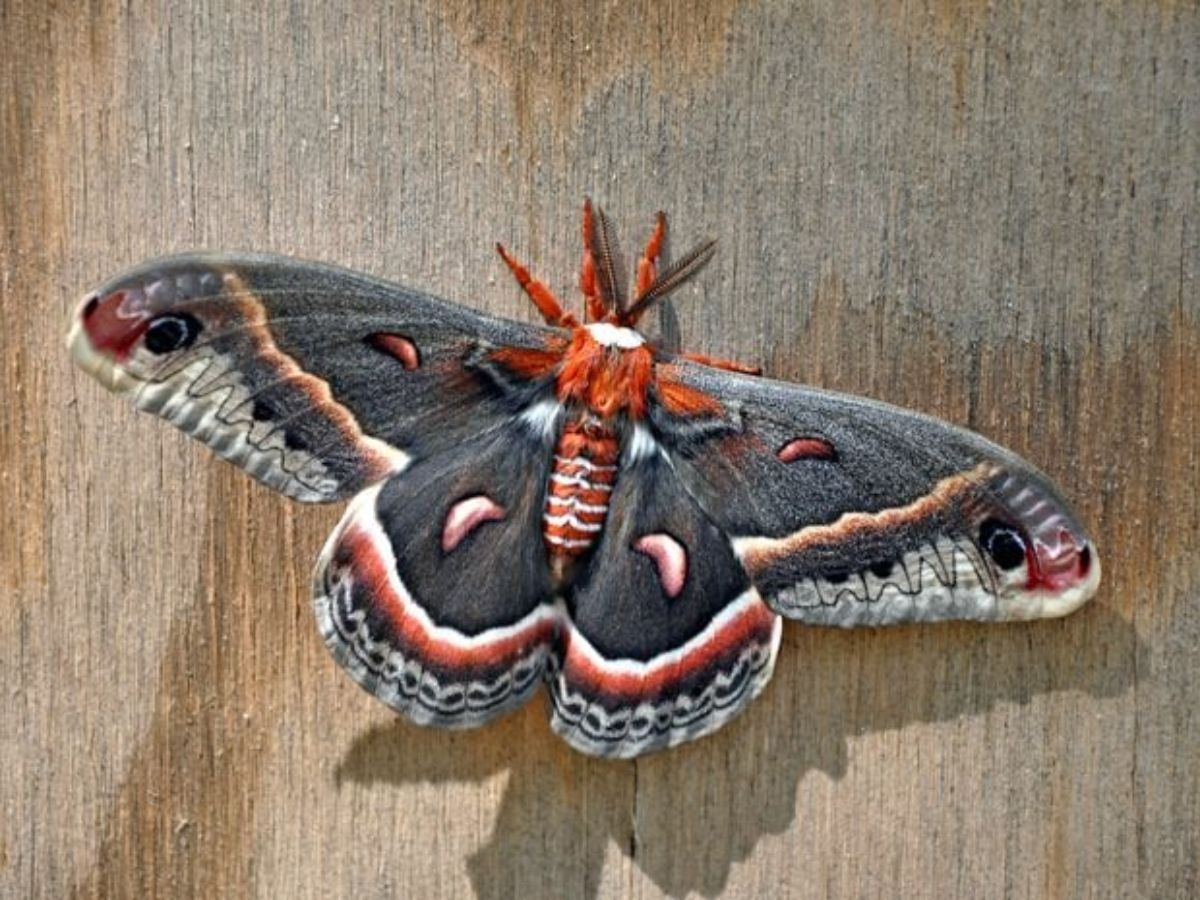

Nature never ceases to amaze with its diversity, and among its most fascinating creations is the Cecropia moth. Belonging to the Saturniidae family, this moth holds the title of North America’s largest and most colorful silk moth. With its striking appearance, unique life cycle, and ecological significance, the Cecropia moth is not just a marvel for entomologists, but also a source of wonder for anyone who encounters it. Its beauty and rarity make it one of the most iconic symbols of natural splendor.
Appearance and Size
This moth is instantly recognizable due to its massive wingspan, which can reach up to 6 inches. Its wings are patterned in shades of reddish-brown, grey, and white, with crescent-shaped spots and thick bands that make it visually striking. The moose’s body is equally impressive. Often displaying vibrant red, black, and white tones, this bold coloration not only makes the moose a visual delight, but also helps in deterring predators by giving it a somewhat intimidating presence.
Life Cycle and Transformation
Like all moths, this undergoes complete metamorphosis. The female lays hundreds of eggs on tree leaves, which hatch into large, bright green caterpillars. These caterpillars feed on a wide range of host plants, including maple, birch, and cherry trees. As they mature, they spin large, tough cocoons of silk where they remain through the winter months. Emerging in late spring or early summer, the adult moths live only for about two weeks, with their sole purpose being reproduction. Interestingly, these moths do not eat during their adult phase, relying entirely on energy stored from their caterpillar stage.
Ecological Importance
This moth plays a role in maintaining ecological balance. Their caterpillars serve as a food source for birds and small mammals, while adults contribute to pollination indirectly. As they are a part of a larger moth community essential for night-time ecosystems, their presence also serves as an indicator of environmental health as declines in their population may signal ecological stress in certain regions.
Human Fascination and Conservation
People are often captivated by the moth’s sheer size and beauty, making it a favorite subject for photographers, naturalists, and educators. However, habitat loss, pesticide use, and invasive species have caused declines in some areas. Conservation efforts such as planting native trees and reducing pesticide use are vital to ensuring the survival of these majestic moths for future generations.
Conclusion
The moth is more than just North America’s largest silk moth. It is a living masterpiece of color, design, and transformation. From its vibrant caterpillars to its breathtaking adult form, the moth’s life cycle highlights the wonders of nature’s adaptability. As we appreciate its beauty, it also reminds us of the delicate balance within ecosystems and the need to protect biodiversity. Preserving this moth is not only about saving a species but also about valuing the natural heritage that makes our world so enchanting.




