
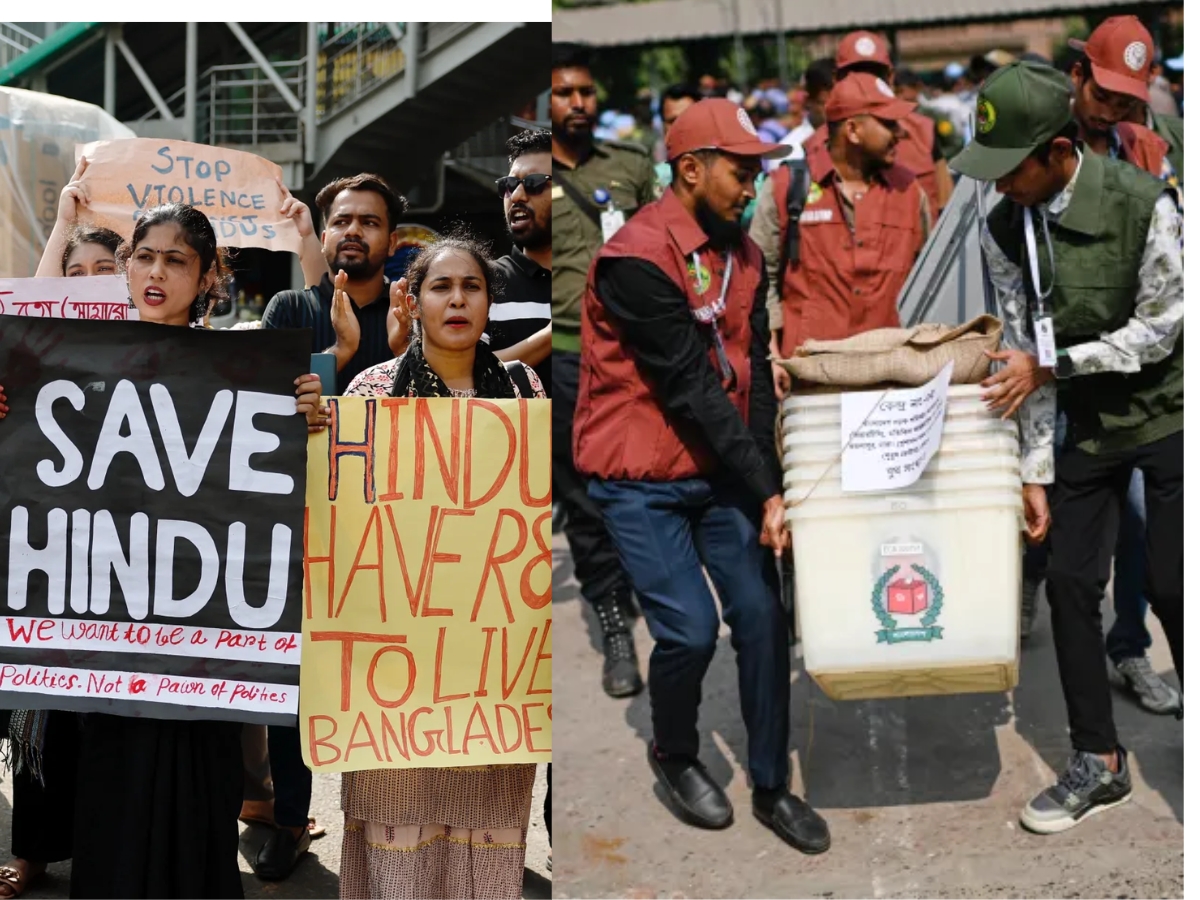

Bangladesh: In what is being viewed as a defining moment for Bangladesh’s democracy, voters are casting their ballots in the country’s first general election since the ouster of former Prime Minister Sheikh Hasina in 2024. Polling began at 7 am IST and will continue until 4:30 pm (16:00 IST).
The election is being described as Bangladesh’s first genuine electoral contest since 2009. Hasina’s Awami League, which had dominated the political landscape for years, has been barred from participating after the Election Commission cancelled its registration.
Why This Election Is Important For Bangladeshi Hindus
The polls carry profound implications for Bangladesh’s Hindu minority, which constitutes around 8 per cent of the population in the Muslim-majority nation. Bangladesh is nearly 90 per cent Muslim, with over 16 crore Muslims and approximately 1.3 crore Hindus.
The government that emerges from this election will influence the political environment in a country that has witnessed targeted violence against minority Hindus in recent months. Critics argue that the interim government has remained in denial even as incidents mounted.
According to community leaders, around 2,700 incidents of targeted violence have allegedly occurred during the 18 months of the interim administration led by Prof Muhammad Yunus.
Civil society organisations representing Hindus, Buddhists and Christians say minorities are living in fear. They report killings, attacks on property, and threats directed at business owners across the country – developments they believe could discourage minorities from voting freely.
Recent Killings Heighten Anxiety Among Bangladeshi Hindus
Just days before polling, minority groups organised a human chain to highlight concerns over safety and security.
The brutal killing of Dipu Chandra Das, a Hindu man, exposed what many describe as deepening societal fault lines. Separately, a Hindu trader was also killed days before voting, further intensifying fears within minority communities.
These incidents have sharpened anxieties about the growing influence of Bangladesh Jamaat-e-Islami, a hardline Islamist group advocating the establishment of Sharia law in the country.
Political Realignment In Bangladesh After Sheikh Hasina
The political landscape has undergone significant transformation since Sheikh Hasina’s removal from office. Major parties have formed new alliances, and analysts suggest that Islamist political forces could gain influence after the polls.
All eyes are now on the Bangladesh Nationalist Party (BNP) and Jamaat-e-Islami, which are widely expected to emerge as the two largest parties in the election.
The BNP has highlighted a section in its manifesto focused on “religious harmony.” The document states,
“National Identity: ‘Religion is individual, the state is for all’, ending all divisions through the unified Bangladeshi identity.”
In terms of representation, the BNP has nominated six minority candidates, while Jamaat-e-Islami has nominated one candidate in the contest for 300 parliamentary seats.
How Muhammad Yunus Failed To Protect Bangladeshi Hindus
Many within the Hindu community express dissatisfaction with the interim government’s response to violence.
There is a perception that the Yunus-led administration has failed to adequately protect minorities or deliver justice to victims. This sentiment has contributed to broader unease about the future.
Two days before the election, the interim government announced that “12 people directly involved in the incident have already been arrested and investigations are underway.” The statement came amid mounting pressure over recent killings.
As Bangladesh votes on February 12, uncertainty hangs over whether Hindus and other minorities feel secure enough to participate freely in the democratic process.
The outcome could either embolden hardline forces, with adverse consequences for minority rights, or strengthen protections and restore confidence among vulnerable communities.
Zubair Amin is a Senior Journalist at NewsX with over seven years of experience in reporting and editorial work. He has written for leading national and international publications, including Foreign Policy Magazine, Al Jazeera, The Economic Times, The Indian Express, The Wire, Article 14, Mongabay, News9, among others. His primary focus is on international affairs, with a strong interest in US politics and policy. He also writes on West Asia, Indian polity, and constitutional issues. Zubair tweets at zubaiyr.amin




