

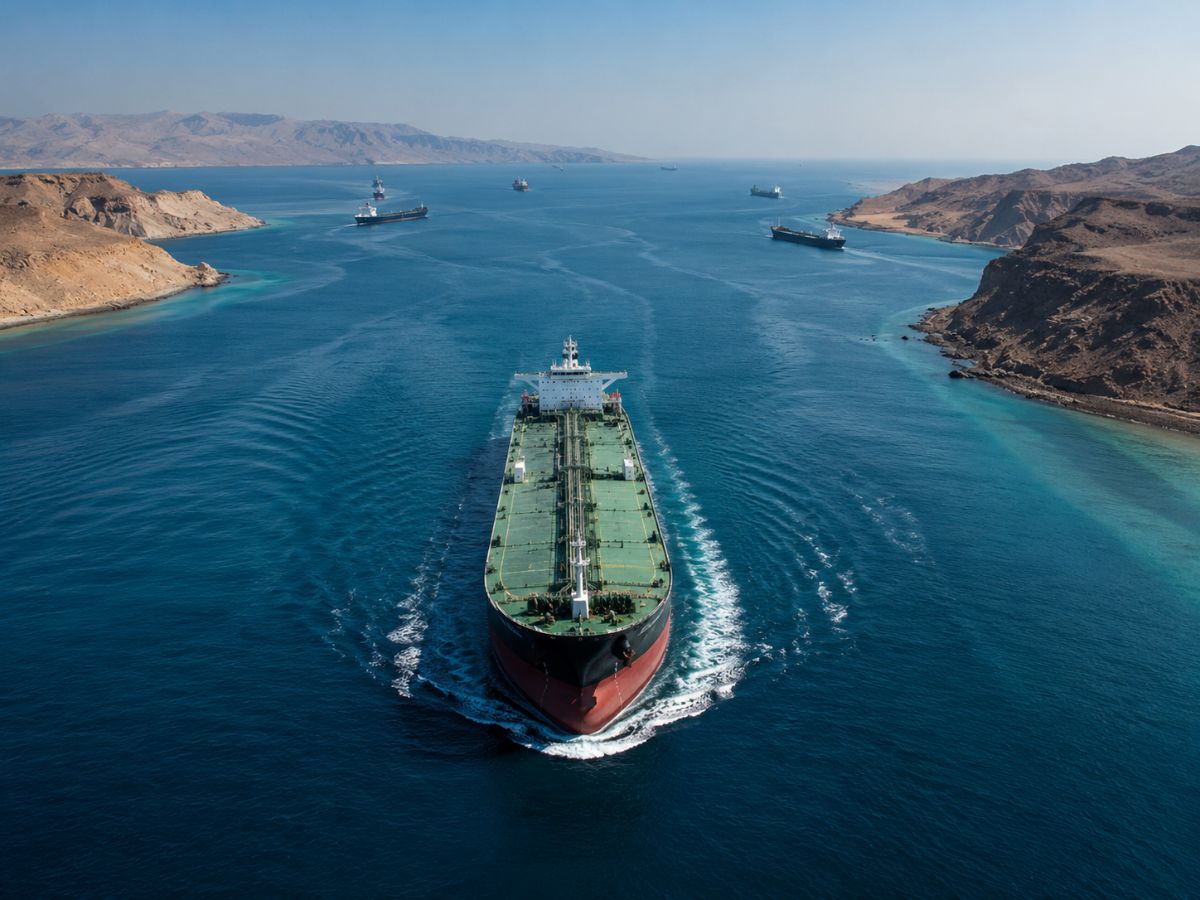
The Strait Of Hormuz has once again become the centre of global attention after Iran indicated that it may begin charging ships for navigation and maritime security services in the strategically important waterway. Iran’s Ambassador to India, Dr Mohammad Fathali, said Tehran had for decades provided several services free of cost in the Strait Of Hormuz, including navigation support, maritime rescue, traffic control and shipping security. However, he said the situation has changed because of the ongoing regional conflict and tensions involving the United States and Israel. The comments are important for countries like India because the Strait Of Hormuz remains one of the world’s most critical oil and energy transit routes, carrying a major share of global crude supplies every day. Any disruption or additional charges in the route could directly affect shipping costs, fuel prices and energy security for several countries dependent on imports.
Iran says it offered free navigation and security services for years
Speaking to ANI, Dr Mohammad Fathali said the Strait Of Hormuz had been one of the safest global energy transit routes before the recent conflict in West Asia escalated. “The main cause of today’s problems is the tense and warmongering actions of the United States and the Zionist regime. By imposing this war, they have put not only regional security but also global energy security at risk,” he said.
The Iranian ambassador also stressed that the Strait Of Hormuz lies within the territorial waters of Iran and Oman and that both countries are responsible for maintaining its security. “However, it must be noted that the Strait of Hormuz is part of the territorial waters of Iran and Oman, and its security is maintained by these two countries. We do not believe in charging tolls on ships passing through the strait,” he added.
According to Fathali, Iran has long offered extensive support services in the waterway without taking payment from international vessels. “Over the past decades, the Islamic Republic of Iran has provided extensive services for free in areas such as navigation, maritime rescue, traffic control, and shipping security,” he stated.
Why Iran now plans to charge fees in the Strait Of Hormuz
Although Iran earlier avoided charging ships crossing the Strait Of Hormuz, Fathali indicated that the present regional situation has forced Tehran to reconsider its approach. “But under the new conditions, these services and facilities will no longer be free, and fees will be charged for navigation services, environmental protection, and maritime security,” he said.
The ambassador argued that charging for such services is not unusual globally. According to him, many coastal nations impose transit and technical charges in strategic maritime routes. “This practice is common in many important international passages and straits, where coastal countries charge fees for transit, technical services, maritime piloting, and securing the area,” he explained.
The move also comes after Iran launched a new body called the Persian Gulf Strait Authority (PGSA), which has been described as a mechanism to regulate and monitor maritime traffic through the Strait Of Hormuz. Iran’s Supreme National Security Council also reposted an announcement on X confirming that the official account of the PGSA had become operational.
How new fees in the waterway could affect India
The Strait Of Hormuz is especially important for India because a large portion of India’s oil imports passes through this narrow shipping corridor connecting the Persian Gulf to global markets. Any additional maritime charges, security fees or shipping restrictions could increase transportation costs for crude oil shipments heading towards India. Experts believe higher operational and insurance costs for oil tankers may eventually affect fuel prices and import bills for countries dependent on energy supplies from the Gulf region.
The Quad countries (India, the United States, Japan, and Australia) recently emphasised the importance of ensuring the safety and uninterrupted movement of commercial shipping through the Strait Of Hormuz and the Red Sea. The Quad statement reaffirmed support for international law under the United Nations Convention on the Law of the Sea (UNCLOS). The group opposed attacks on commercial vessels and criticised any future measures inconsistent with UNCLOS, including the imposition of tolls.
US sanctions deepen tensions over the strategic route
Tensions around the Strait Of Hormuz increased further after the United States imposed sanctions on Iran’s Persian Gulf Strait Authority earlier this week. The US Treasury’s Office of Foreign Assets Control accused Tehran of using the body to “extort” commercial vessels passing through the Strait Of Hormuz and allegedly funnelling revenues to Iran’s Islamic Revolutionary Guard Corps (IRGC).
The PGSA has now been added to the Treasury Department’s Specially Designated Nationals list under the Trump administration’s “Economic Fury” campaign aimed at increasing pressure on Iran amid the ongoing regional tensions.
(with inputs from ANI)
Khalid Qasid is a media enthusiast with a strong interest in documentary filmmaking. He holds a Master’s degree in Convergent Journalism from AJK MCRC. He has also written extensively on esports at Sportsdunia. Currently, he covers world and general news at NewsX Digital.





