
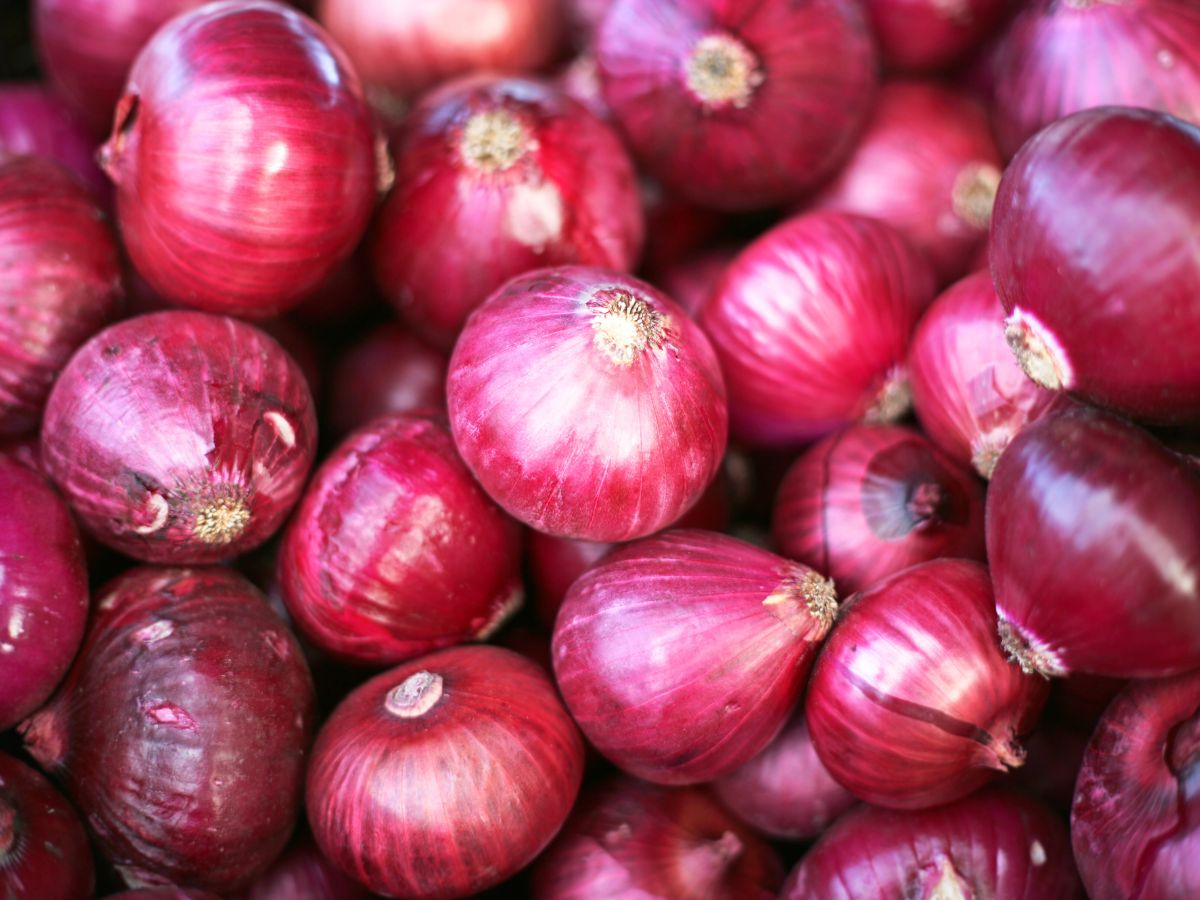

The heat of the crisis in Bangladesh is being felt by onion exporters of India who are grappling with frequent changes in the policies being adopted by the two neighbours towards exports and imports.
The staple vegetable that has been playing a crucial for India’s political economy especially around elections, has been one of the sticking points in the India-Bangladesh ties.
With India banning onion exports for about six months between December 2023-May 2024, countries like Bangladesh, Sri Lanka and Saudi Arabia have diversified their imports and rivals like China and Pakistan are giving Indian exporters a major competition. Exporter associations have asked the government to continue the ban on the sale of Indian onion seeds to other countries but the seeds continue to be smuggled, exporters say.
In a bid to ensure that onion prices don’t shoot ahead of the Lok Sabha elections in 2024, the government of India had in December 2023 banned exports of the vegetable but had allowed shipments to other countries on the basis of the demand from such nations. Measures like slapping of a minimum export price of USD 800 per tonne and imposition of duty till 40 per cent on onion exports were introduced by the government of India till December 31, 2023 in a bid to improve domestic sales.
The export ban was lifted on May 4, 2024 after the completion of two phases of the 2024 Lok Sabha elections just before voting was scheduled in western Indian states including Maharashtra – the biggest onion producer of India- producers from where had been seeking that the ban be overturned to boost onion exports.
However, the prolonged ban led to an irreversible damage to prospects of Indian onion exporters as countries like Bangladesh and Saudi Arabia who were amongst the topmost importers of Indian onion diversified their imports and India’s rivals China and Pakistan capitalized on the country’s absence from onion trade.
Exporters say that not only did Bangladesh pushed for self-reliance in onion production with Indian seed varieties but started importing the vegetable from Pakistan and China.
In August 2023, Bangladesh announced that it will import onions from nine more countries apart from India including Pakistan and China allowing maximum exports from the former.
“That was a major mistake. Due to internal politics, the government of India decided to ban onion exports and now, Pakistan has become a major alternative source of onions to Bangladesh. They made hay while India moved out of their market. Sadly, Pakistan has developed its variety of onions that is similar to the Indian onion thanks to the sale of onion seeds to Pakistani producers,” said an onion exporter based in Maharashtra’s Nashik.
While India has repeatedly banned the sale of onion seeds to other countries, Vikas Singh, vice president, Onion Exporters Association told TDG that the seeds continue to be smuggled out to countries like Pakistan and Saudi Arabia.
“Pakistan continues to compete with India in onion production and exports and has vowed to increase onion production to 2.78 million tonnes in the 2025-26 crop year to meet domestic consumption and potentially boost exports. Bangladesh didn’t issue import permits to Indian exporters till as late as December 2024 but it significantly reduced the quota window introducing a lottery-system for Indian exporters. It started allowing only 50 permits per day with a cap of 30 tonnes each,” Singh told TDG. This significantly impacted Indian onion exports to Bangladesh as Indian exporters started competing with exporters from rivals like China and Pakistan.
“The changing policies have majorly impacted our business. It is not that this never happened during Sheikh Hasina’s time but under the present dispensation, our profits have significantly dwindled. Now, border closures are happening more often. While earlier, we would fetch around Rs80-85 per kg of onion, now the profits have reduced to Rs. 45-47 per kg,” Pritam Sarkar, an onion exporter told TDG.
Singh said that the interim government of Bangladesh will re-analyse the situation on January 16.
On December 13 this year, Bangladesh decided to increase the number of import permits for onion exporters from 50 to 200. However, the number of exporters actually entering the neighbouring country hover around 150, Singh said.
“They have done this only due to their own compulsion to bring onion prices under control but their government has said it will re-evaluate the situation on January 16 -around which time, their own varieties of onion will be ready for sale. They have a variety called Murikata which has been prepared from the Indian onion itself. This was our biggest mistake that we failed to check the sale of our seeds to countries like Bangladesh, Pakistan and Saudi Arabia,” he said.
An onion exporter from Nashik told TDG that onion seeds consignments from India have been transported to Saudi Arabia frequently and Indian seeds are in high demand there.
Indian exporters have sought from the government of India to increase the RoDTEP incentive on onions to boost exports as the same will help the Indian exporters offer lower prices to their purchasers abroad.
On December 21, the association wrote to Agricultural & Processed Food Products Export Development Authority (APEDA) after the latter sought clarification from them about the incentive issue.
“The RoDTEP incentive on onion is currently at 1.9 per cent while on other vegetables, it stands at 4 per cent. We have demanded from the Commerce and Finance Ministries that the incentive on onion be increased to 4 per cent too. The commerce ministry has said that this falls in the domain of the Finance Ministry. The problem is that in our country, things take time due to the involvement of multiple ministries but the government will have to do this soon because otherwise rivals like Pakistan will capitalise and send their produce in international markets,” Singh said.
The Onion Exporters Association had asked the commerce minister Piyush Goyal to constitute a committee to ensure that the incentive is raised speedily.
However, after the association’s request, the commerce ministry’s APEDA has sent a note to the association seeking clarification on the issue after which, it has replied to the APEDA clarifying the issues.
“The APEDA will now forward our request to the incentive committee of the finance ministry which has to approve this,” Singh said.
Further, the Indian Horticulture Produce Exporters Association (HPEA) had in October asked the agriculture ministry to continue the ban on onion seeds to other countries as nations like Sri Lanka, Bangladesh and other neighbours had been producing onions in their own countries with Indian seeds leading major competition to Indian farmers.
In the letter, the association had mentioned that the demand for onion seeds from India in China and Pakistan had sharply increased which could pose a major challenge to Indian farmers.
Sofia Babu Chacko is a journalist with over five years of experience covering Indian politics, crime, human rights, gender issues, and stories about marginalized communities. She believes that every voice matters, and journalism has a vital role to play in amplifying those voices. Sofia is committed to creating impact and shedding light on stories that truly matter. Beyond her work in the newsroom, she is also a music enthusiast who enjoys singing.




