

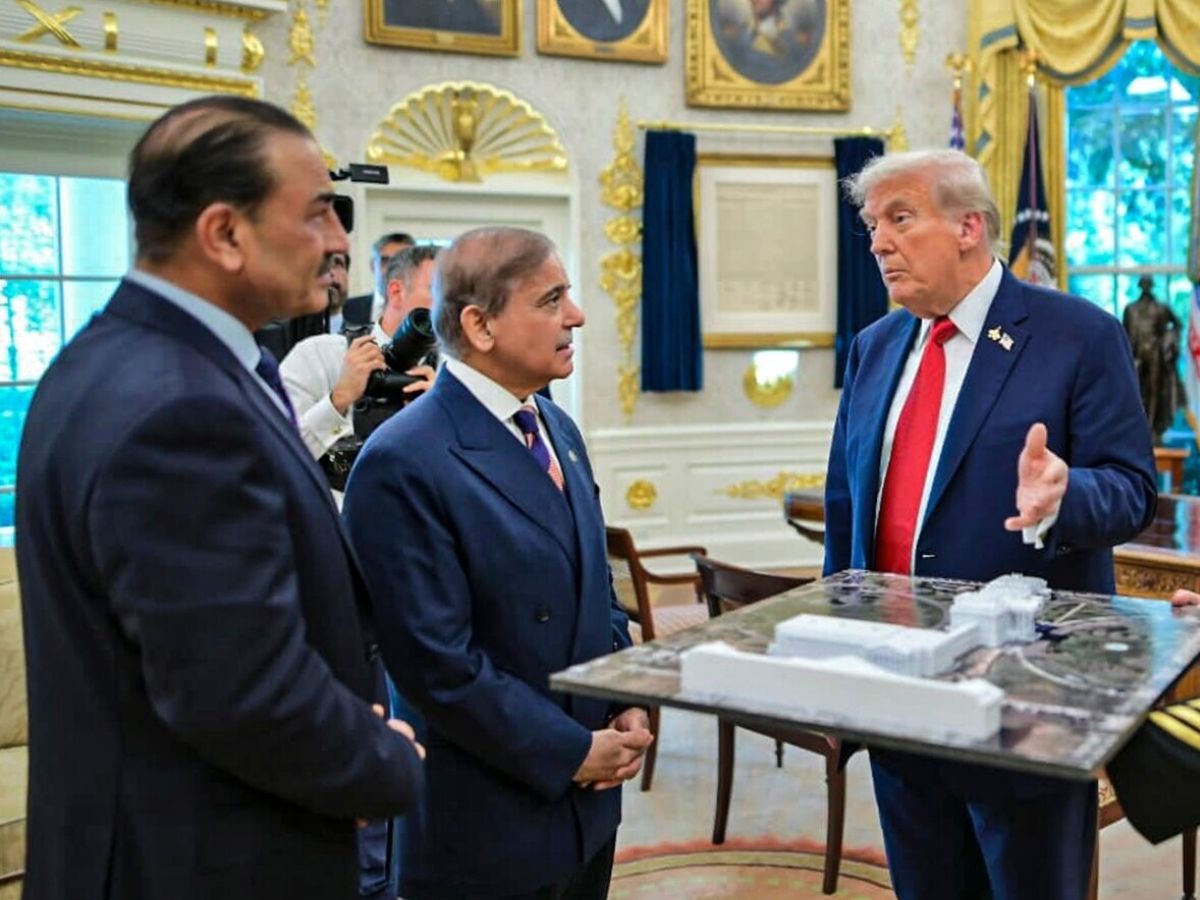
US President Donald Trump on Tuesday announced an open-ended extension of the ceasefire with Iran. The US President stepped back from an earlier position against prolonging the truce. The decision came as a planned US diplomatic mission to Pakistan was put on hold. The ceasefire, originally set to expire on Wednesday, April 22, after a two-week duration, had sparked widespread speculation about a possible resumption of war between the two countries.
Trump Cites Request From Pakistan To Extended Iran Ceasefire
In a post on Truth Social, Trump said the he took the decision after a request from Pakistan’s leadership.
“Based on the fact that the Government of Iran is seriously fractured, not unexpectedly so and, upon the request of Field Marshal Asim Munir, and Prime Minister Shehbaz Sharif, of Pakistan, we have been asked to hold our Attack on the Country of Iran until such time as their leaders and representatives can come up with a unified proposal,” Trump wrote.
He added, “I have therefore directed our Military to continue the Blockade and, in all other respects, remain ready and able, and will therefore extend the Ceasefire until such time as their proposal is submitted, and discussions are concluded, one way or the other.”
Reports say that Iran’s political leadership is divided between hardliners linked to the Islamic Revolutionary Guard Corps and the ruling Khamenei family, and more moderate figures such as President Masoud Pezeshkian.
JD Vance Pakistan Visit Delayed
The ceasefire extension coincided with the postponement of a high-level US delegation’s trip to Islamabad. Vice President JD Vance, who was expected to lead the team, returned to the White House shortly before 1 p.m. Tuesday.
The trip, which would have involved a 17-hour flight, has now been delayed indefinitely. Special envoy Steve Witkoff and Trump’s son-in-law Jared Kushner were also expected in Islamabad but instead travelled from Miami to Washington for meetings.
From ‘No Extension’ to Strategic Pause: How Trump Reversed Course On Iran Ceasefire
Trump’s decision marked a sharp reversal from his earlier stance. Just hours before the announcement, he had ruled out extending the ceasefire.
“I don’t want to do that. We don’t have that much time,” Trump told CNBC when asked about a possible extension.
He had also issued fresh warnings, stating he expected to be “bombing” Iran if negotiations failed and the ceasefire expired without resolution.
While Trump did not elaborate beyond his Truth Social post, he cited two key reasons for the shift: the “seriously fractured” Iranian government and a direct appeal from Pakistan’s leadership to allow time for a unified proposal from Tehran.
Pakistan Positions Itself as Key Mediator Between US And Iran
Pakistan has emerged as a central diplomatic player in the ongoing US-Iran tensions, positioning itself as a lead negotiator. Prime Minister Shehbaz Sharif acknowledged Trump’s decision and welcomed the extension.
“With the trust and confidence reposed in, Pakistan shall continue its earnest efforts for negotiated settlement of conflict,” Sharif said, thanking the US for accepting Islamabad’s request to extend the ceasefire.
He also confirmed that a second round of talks would be held in Pakistan, though no timeline was specified.
How Pakistan Lobbied To Mediate Between US and Iran
Pakistan’s growing diplomatic role is being attributed to sustained backchannel efforts over several years. A Texas-based firm, Linden Strategies, has been identified as a key player in cultivating ties in Washington.
Led by chairman Stephen Payne, the firm facilitated high-level access for Pakistan’s military leadership, including a 2025 meeting between Field Marshal Asim Munir and Trump.
Zubair Amin is a Senior Journalist at NewsX with over seven years of experience in reporting and editorial work. He has written for leading national and international publications, including Foreign Policy Magazine, Al Jazeera, The Economic Times, The Indian Express, The Wire, Article 14, Mongabay, News9, among others. His primary focus is on international affairs, with a strong interest in US politics and policy. He also writes on West Asia, Indian polity, and constitutional issues. Zubair tweets at zubaiyr.amin





