

As Israel continues its offensive in Gaza, Turkey has announced to completely shut its commercial and economic relations with Tel Aviv. Besides, Ankara has also closed its airspace to Israel, banned its ships from entering Israeli ports, and barred Israeli vessels from using Turkish ports.
What Turkish Foreign Minister Hakan Fidan Said About Trade With Turkey
The announcements were made by Turkish Foreign Minister Hakan Fidan during a special parliamentary debate on Gaza in Ankara. Foreign minister said that Israel’s ongoing military operations in the Middle East could drag the entire region into a wider conflict.
“We have completely cut off our trade with Israel. We do not allow Turkish ships to go to Israeli ports. We do not allow their planes to enter our airspace,” Fidan said. He added that Turkish airspace was now “closed to all aircraft carrying weapons (to Israel) and to Israel’s official flights.”
Also Read: Houthi PM Ahmed al-Rahawi Reportedly Killed in Israeli Airstrike on Yemen
Fidan also urged the international community to take stronger measures against Israel and called on global powers to stop their support for Tel Aviv.
Despite political tensions, trade between the two countries amounted to $7 billion in 2023. Last year in May, Turkey had already scaled back its direct trade ties with Israel while calling for a permanent ceasefire and the immediate delivery of humanitarian aid into Gaza.
Islamic Countries Continue To Do Trade With Israel
Israeli foreign trade data for the first nine months of 2024 showed a growth in its trade relations with several Arab nations and 14 other member countries of the Organisation of Islamic Cooperation (OIC). These countries continue to trade with Israel while there are widespread public calls for boycotts of countries supporting Tel Aviv.
According to data, imports of 19 Arab and Islamic countries from Israel reached $2.3 billion during this period.
In these nine months of 2024, Israel’s overall trade with these nations totaled nearly $7 billion.
Which Arab and Islamic Countries Are Doing Trade With Israel?
The data shows significant increases in Israel’s trade with five Arab states – the United Arab Emirates (UAE), Egypt, Jordan, Morocco, and Bahrain.
Trade with Bahrain rose nearly tenfold in 2024.
Morocco recorded a 53 percent increase in this period.
Egypt saw a 52 percent rise in trade with Israel.
The UAE registered a 4 percent increase as the country has a free trade agreement with Israel.
Jordan witnessed a 45 percent rise in Israeli exports, although a decrease in imports led to a slight decline in overall trade.
Collectively, Israel’s trade with these five Arab countries amounted to $3.4 billion, which is a 12 percent increase.
Trade with Other OIC States
Israel’s trade with 14 other OIC member states, excluding Turkey, also recorded an 11 percent increase.
Trade with Albania grew fivefold.
Uzbekistan saw a 65 percent rise.
Nigeria registered a 45 percent increase.
Azerbaijan reported a 34 percent growth.
Indonesia experienced a 25 percent increase.
On the other hand, trade values declined with Malaysia, Cameroon, Senegal, Kazakhstan, Turkmenistan, Gabon, Côte d’Ivoire, and Uganda.
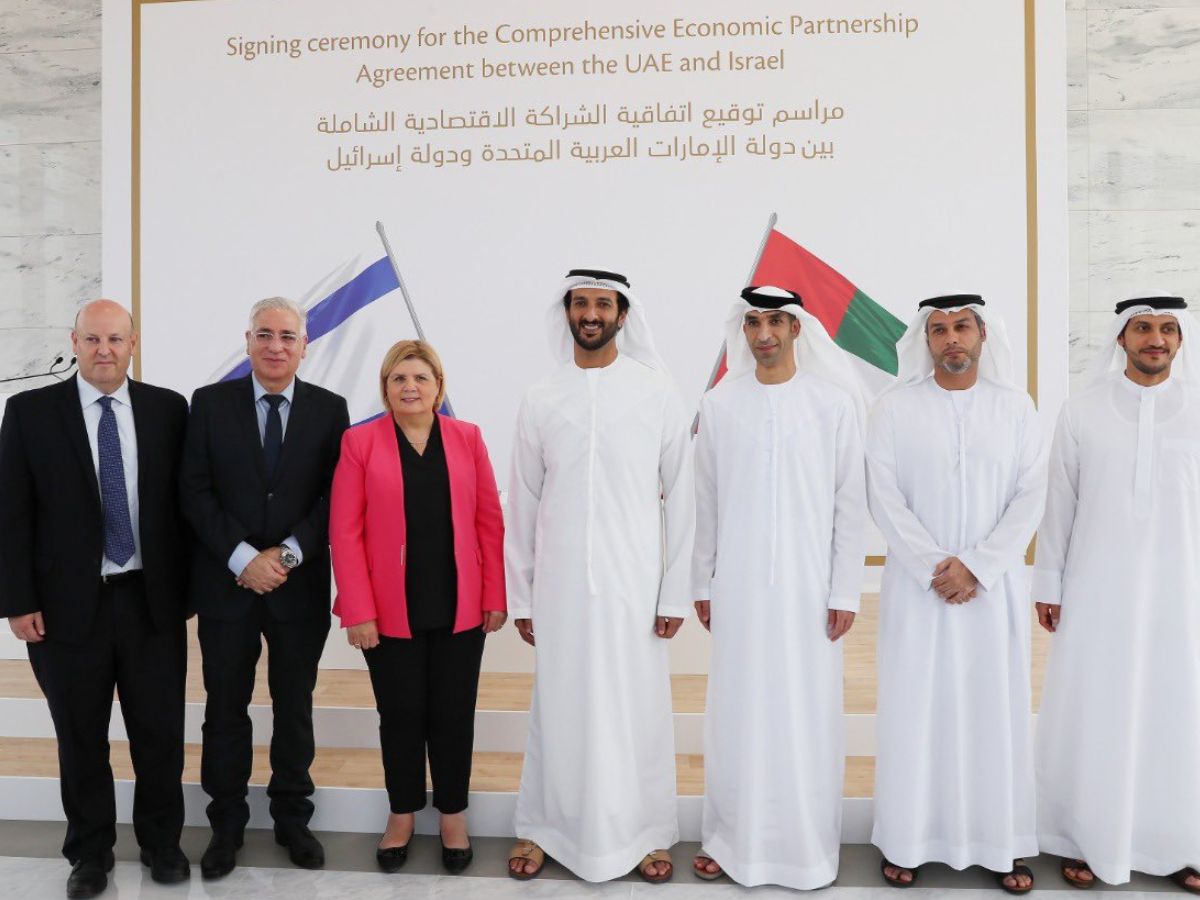
Israel–UAE Free Trade Agreement
According to Reuters, trade between Israel and the UAE alone totalled $2.5 billion in 2022 and reached $1.85 billion in the first seven months of 2023.
In March 2023, a free trade agreement between the two countries came into effect, eliminating tariffs on about 96 percent of traded goods. The deal aims to boost bilateral trade to over $10 billion within five years.
Also Read: Israeli Military Recovers Two Hostage Bodies as Gaza City Declared Combat Zone
Zubair Amin is a Senior Journalist at NewsX with over seven years of experience in reporting and editorial work. He has written for leading national and international publications, including Foreign Policy Magazine, Al Jazeera, The Economic Times, The Indian Express, The Wire, Article 14, Mongabay, News9, among others. His primary focus is on international affairs, with a strong interest in US politics and policy. He also writes on West Asia, Indian polity, and constitutional issues. Zubair tweets at zubaiyr.amin




