
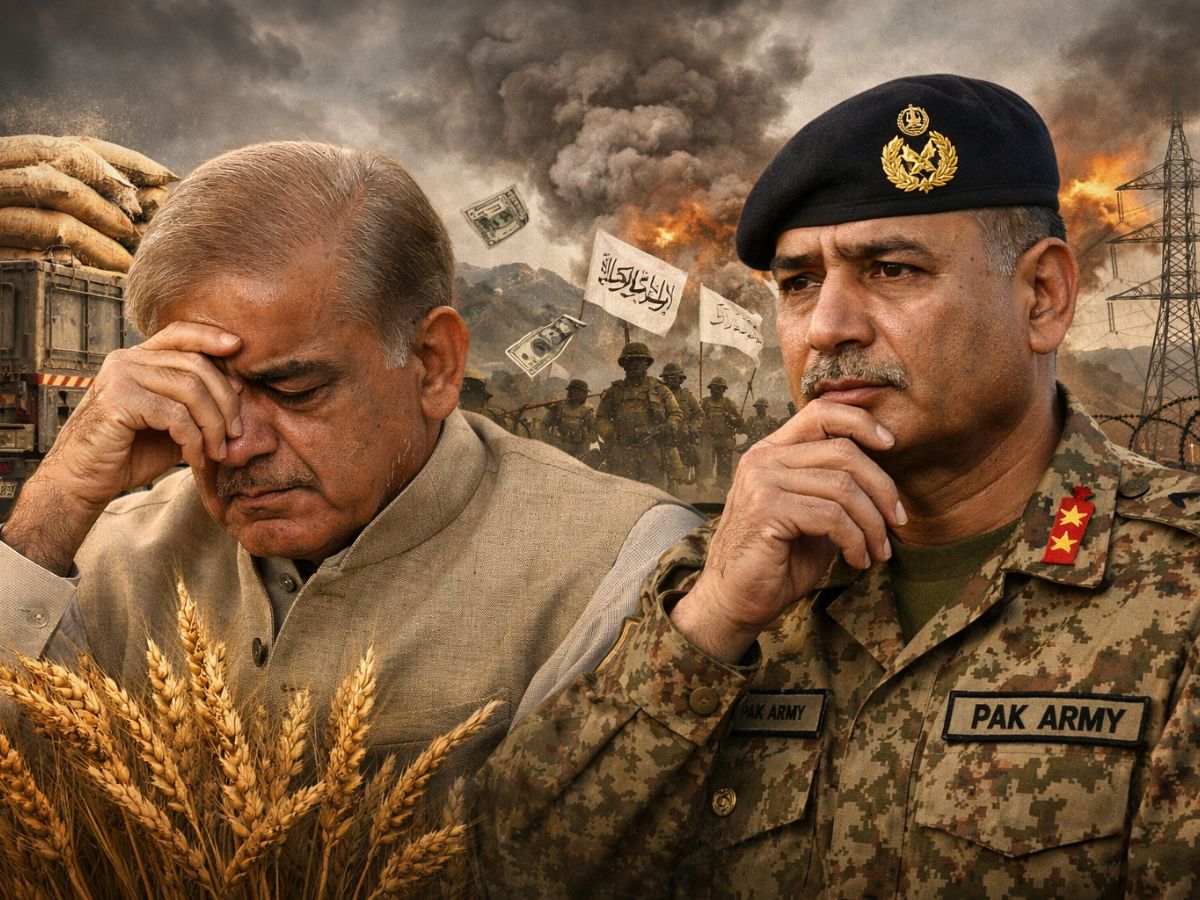

Pakistan may witness a severe shortage of wheat in the coming months, raising serious food security concerns amid the ongoing war with Afghanistan and a severe internal economic situation, a report stated on Friday.
The recent report released by the United States Department of Agriculture (USDA) predicted that Pakistan’s wheat production is expected to decrease by 2 to 2.2 million tonnes compared to last year.
This news has triggered a wave of panic among the common masses in India’s western neighbour, as wheat is the most consumed staple food of the country.
Fears of a large-scale shortage have also alerted the Pakistani establishment, which is already facing severe criticism from the public over issues of corruption, state oppression, and human rights violations.
Wheat As Backbone Of Country’s Fight Against Hunger
Wheat, used in making rotis, bread, naan, and sewai, among other items, is the most important single staple food in Pakistan.
The situation is especially concerning because Pakistan exports large amounts of rice and maize, while its domestic food needs rely mainly on wheat.
A drop in wheat production of more than 2 million tonnes could seriously increase food insecurity in the country.
Geopolitical Instability, War Add To Concerns
The wheat shortage issue comes at a time when Pakistan remains locked in horns with Afghanistan over issues of alleged cross-border terrorism. Both countries have declared open war across the Durand Line, which is expected to only worsen the shortfall in Islamabad’s wheat supply.
Apart from this, the macroeconomic situation of Pakistan also remains in bad shape. The nation is known for seeking IMF bailouts time and again.
Why Pakistan’s Wheat Production Has Stumbled
One of the main reasons is a prolonged drought, especially in rain-fed areas. Due to low rainfall, the area under wheat cultivation has fallen from 10.37 million hectares in 2025–26 to 9.1 million hectares.
According to the Pakistan Meteorological Department, rainfall in early 2025 was 39 percent below normal, with southern and rain-dependent regions hit the hardest.
The shortage of water for irrigation has made it difficult for farmers to protect their crops, directly reducing production and farm incomes.
In addition, the government delayed announcing the support price for wheat for the 2025–26 season. The uncertainty over pricing and procurement left many farmers unsure about sowing, resulting in less planting and lower overall supply.




