

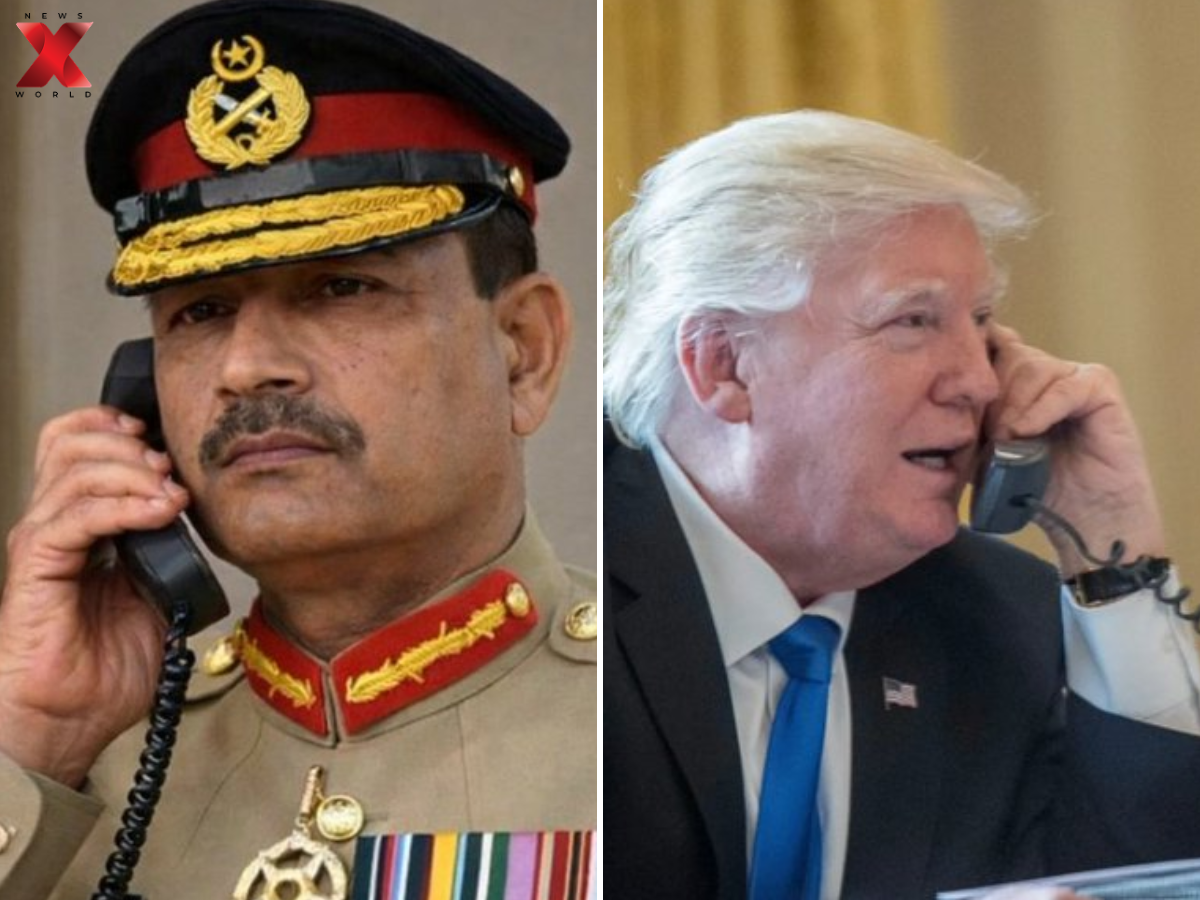
When U.S. President Donald Trump spoke with Pakistan’s army chief, Asim Munir, Munir didn’t hold back. He told Trump straight up: if the U.S. keeps blocking Iran’s ports, there’s no real chance for progress in peace talks with Iran. Trump listened and said he’d think it over, according to a Pakistani security source. Right now, the whole effort to kickstart new talks between the U.S. and Iran has hit a wall.
What did Asim Munir tell Trump?
Asim Munir, who Trump reportedly trusts more than most, jumped in to highlight what he saw as the main problem: the U.S. blockade is making any second round of talks in Islamabad nearly impossible.
Munir’s warning to Trump came at a tough time. The next round of negotiations in Islamabad looked shaky already. After Iran signalled it wouldn’t show up, hope for extending the Middle East ceasefire started slipping away.
This wasn’t Munir’s first move. He’d just wrapped up a three-day trip to Tehran, where he met Iran’s top leaders—president, foreign minister, military brass, the whole lineup. Pakistan described the visit as a push to calm things down and get everyone talking again. Still, for now, the path forward looks uncertain.
Ceasefire at risk after US seizes Iranian ship
A ceasefire between the United States and Iran appeared in jeopardy on Monday after the U.S. said it had seized an Iranian cargo ship that tried to run its blockade and Tehran vowed to retaliate, refusing for now to join new peace talks.
Iranian Foreign Ministry spokesman Esmaeil Baghaei said Washington has shown it was “not serious” about pursuing the diplomatic process and Tehran would not change its clearly stated demands, adding that it did not believe in deadlines or ultimatums when safeguarding national interests.
The U.S. had hoped to start negotiations in Pakistan shortly before the two-week ceasefire expires, with sweeping security preparations underway in Islamabad, but Baghaei said the U.S. was “insisting on some unreasonable and unrealistic positions”.
A senior Iranian source told Reuters the continuation of the U.S. blockade on Iranian ports was undermining the prospect of peace talks, and Tehran’s “defensive capabilities”, including its missile programme, were not open to negotiation.
A Pakistani security source said Pakistan’s key mediator, Field Marshal Asim Munir, had told U.S. President Donald Trump the blockade was an obstacle to talks, and that Trump had replied that he would consider the advice.
(With Inputs From Reuters)
With 13 years on the line, Ashish Kumar Singh loves everything when it comes to movies, music, travel and pop culture. Formerly employed at ANI, Pinkvilla, India Today and HT, Ashish has interviewed some of the top celebrities of India, including Shah Rukh Khan, Aamir Khan, Ranveer Singh, Ranbir Kapoor and Hrithik Roshan, among others. Breaking news excites him and deadlines are what he chases. Interviewing comes naturally to him. Hit him up at ashish.kumar02singh@gmail.com.





