
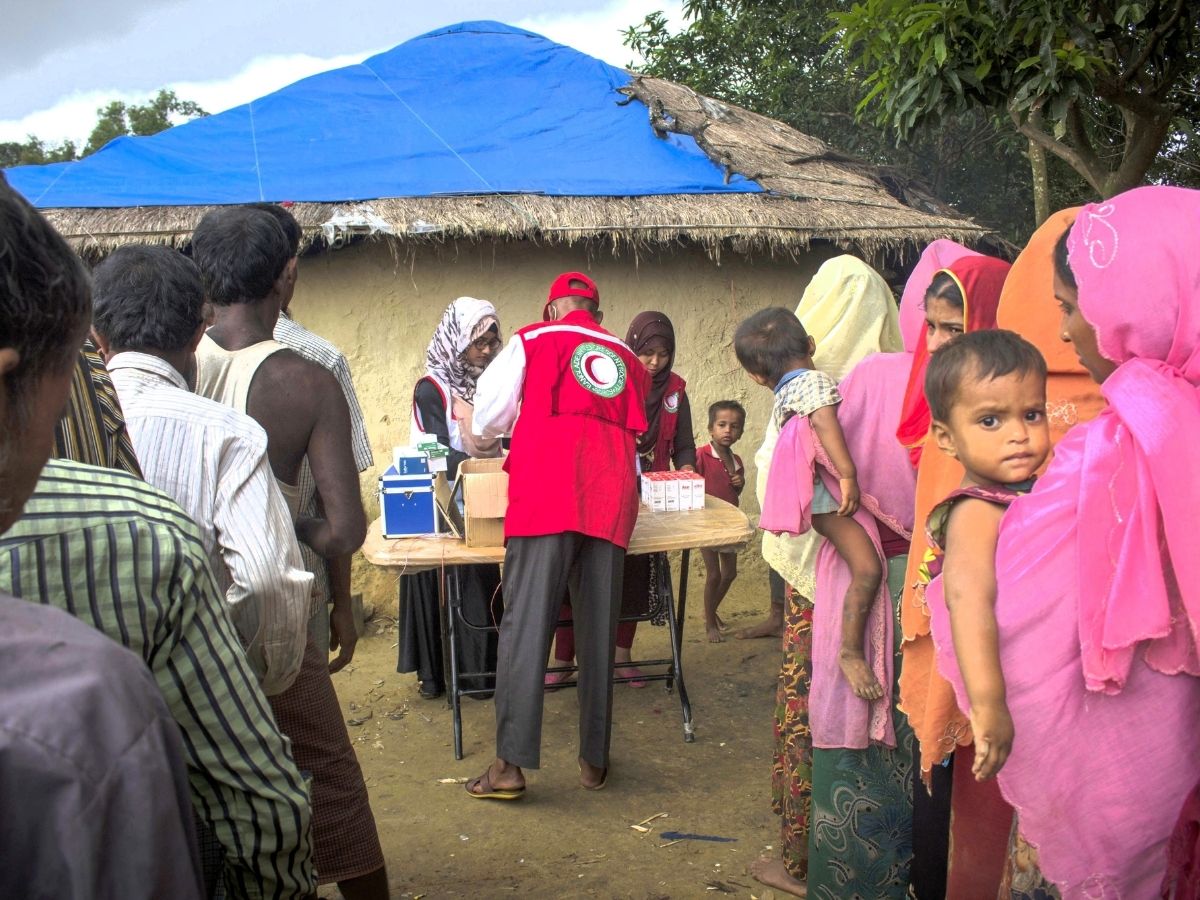

Tens of thousands of Rohingya refugees gathered in Bangladesh on Monday to commemorate the eighth anniversary of their mass exodus from Myanmar, calling for a safe repatriation to their homes in Rakhine state as they waved banners and signs that read “No more refugee life” and “Repatriation the ultimate solution,” according to The Associated Press.
Marking the day as ‘Rohingya Genocide Remembrance Day,’ the refugees gathered in an open ground at Kutupalong camp, which is one of the biggest among more than 30 camps in Cox’s Bazar district, it added.
Conference in Cox’s Bazar Focuses on Refugee Support and Repatriation
A three-day international conference began in Cox’s Bazar on Sunday, as representatives of the United Nations, diplomats, international officials, and Bangladesh’s caretaker government convened to debate aid assistance, including food and core services, and a plan to speed up the repatriation of Rohingya refugees to Myanmar.
Bangladesh’s caretaker leader Muhammad Yunus was to speak at the conference on Monday.
Despite extensive efforts to provide secure repatriation to more than a million Rohingya, conditions in Myanmar remain unstable — particularly in Rakhine state, where fighting persists between Myanmar military and the Arakan Army insurgent group.
Rohingya Refugees Recount 2017 Exodus Amid Uncertainty
The exodus began on 25 August 2017 as Myanmar’s army opened fire on Rohingya after the attacks on border guard posts in Rakhine state. Rohingya fled shelling, killings and other acts of violence, usually on foot and by boat, to arrive in Bangladesh.
A 19-year-old Rohingya refugee at Kutupalong told AP, “We are here today because the Myanmar military and the Arakan army committed genocide against our community. We are here today to remember the people who lost their lives and who sacrificed their lives for being Muslim.”
“We want to go back to our country with equal rights like other ethnic groups in Myanmar, the refugee further told the news agency, while adding, “The rights they are enjoying in Myanmar as citizens of the country, we too want to enjoy the same rights.”
Bangladesh’s Role and Calls for International Pressure
During the crisis, then Prime Minister Sheikh Hasina-led government in Bangladesh had opened its border to take in over 700,000 refugees, adding to over 300,000 Rohingyas already residing in Bangladesh due to previous cases of reported violence.
ALSO READ: Bangladesh Demands Pakistan for Formal Apology Over 1971 Genocide




