
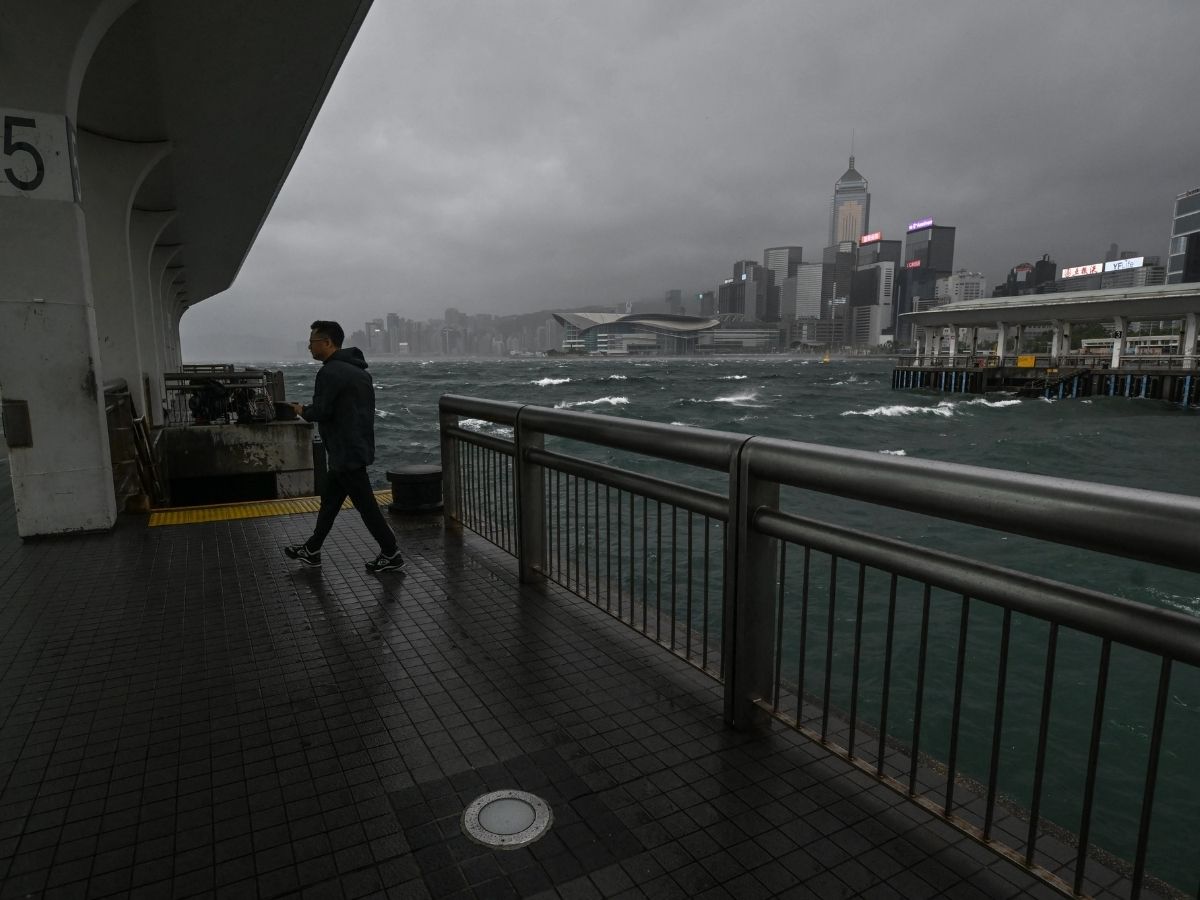

Typhoon Wipha swept along the southern coast of China on Sunday, bringing life to a standstill across Hong Kong, Shenzhen, Zhuhai and Macao, according to a report published by The Associated Press on Sunday. The storm forced airports in these cities to cancel or delay all daytime flights, and high-speed train services were also suspended, the report said.
Wipha Triggers T10 Warning and Travel Chaos
The Hong Kong Observatory raised the rare Hurricane Signal No. 10 – its highest storm alert – at 9:20 a.m. on Sunday, marking the first time since September 2023 that a T10 warning was issued, Hong Kong Free Press reported.
“The intense rainbands of Wipha are bringing frequent heavy squally showers to Hong Kong. Seas will be phenomenal with swells,” the Observatory reportedly said as it warned the public to remain on high alert and keep distance from the shoreline.
By afternoon, the T10 was downgraded to a T8 signal as Wipha moved inland, the report further said, adding that winds at Ngong Ping reached sustained speeds of 171 km/h, with gusts exceeding 234 km/h, according to the Observatory.
Hong Kong Shuts Down Amid Severe Weather
The storm, the HKFP report said, also forced closures of popular tourist attractions including Hong Kong Disneyland and led to the cancellation of the annual Hong Kong Book Fair. Local media reports suggest ferry services and hundreds of flights were suspended, while MTR train services were limited.
According to HKFP, local administration officials confirmed that 34 temporary shelters were opened, housing 242 people by 2 pm. The ‘1823 hotline’ had received about 117 reports of fallen trees, and the Fire Services Department responded to 246 calls, the publication further stated. At least 21 people sought medical treatment at public hospitals during the typhoon.
Earlier Impact in the Philippines
Before reaching China, Wipha intensified monsoon rains in the Philippines, where one person drowned in northern Cagayan province, thr AP reported. An estimated total of over 370,000 people were affected, with 43,000 displaced due to flooding and landslides, even as more than 400 homes were damaged, as reported by The Associated Press.
A Storm Fueled by Warming Seas
Typhoon Wipha, named by Thailand, is a notable example of tropical cyclones becoming more powerful due to climate change. NASA estimmates over 90% of excess atmospheric heat is being absorbed by the oceans, strengthening storms like Wipha.
ALSO READ: Northern Iran Hit By 5.6-Magnitude Earthquake: 4.0 Quake Felt In Tajikistan




