
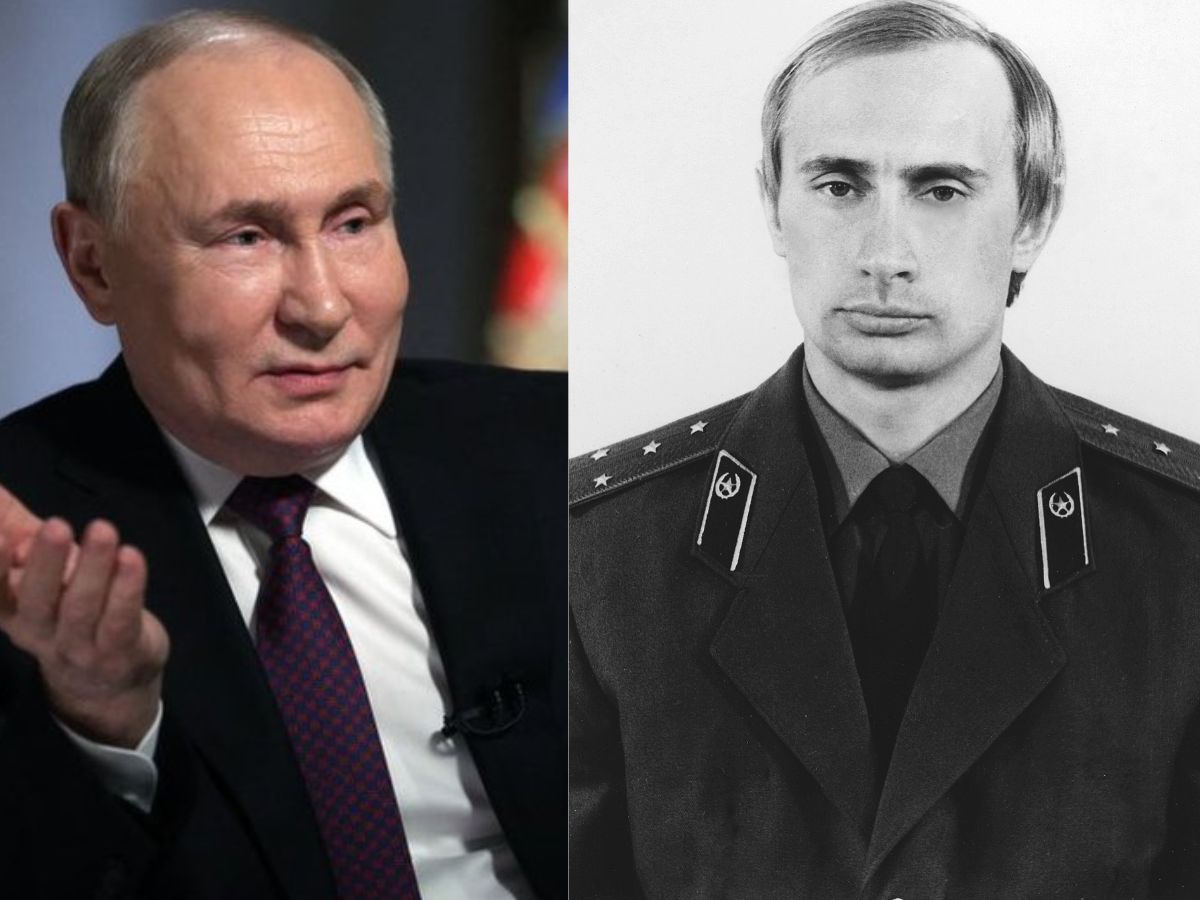

In Alaska, President Vladimir Putin and US President Donald Trump met on a red carpet. The two supposedly most powerful leaders exchanged handshakes and smiles during a summit watched closely by the world. Following the meeting, Trump praised the relationship with Russia, calling it “a big power … No. 2 in the world,” while acknowledging that no agreement had been reached to end the war in Ukraine.
Putin Emerges More Powerful After Alaska Summit
By the next day, Trump appeared to have shifted from advocating a ceasefire to pursuing a full-fledged “Peace Agreement” to end the conflict, aligning with a longstanding Kremlin objective. The “severe consequences” he had previously threatened against Moscow for continuing hostilities were notably absent. Meanwhile, on Ukraine’s battlefields, Russian forces continued their advance, leveraging time as an ally.
Also Read: Trump Slips Up On Hot Mic While Whispering To Macron, Reveals What Putin Really Wants
The hastily arranged summit, according to experts, put Putin back on the world stage, who has been the president of Russia for over two decades. The political circles around the globe are again talking about how tough politician Putin is, his KGB career, and his rise to power. Here is his story.
Vladimir Putin: Early Life of Russian President
If not the most powerful global leader, Vladimir Putin, for decades has been one of the most influential leaders in global politics. He has the second-longest serving Russian president, second only to Joseph Stalin.
Putin was born on October 7, 1952, in Leningrad (now Saint Petersburg) and grew up in post-World War II Soviet Russia. He came from a politically and militarily connected family. His father, Vladimir Spiridonovich Putin, was a Soviet Navy conscript who served in the submarine fleet before joining an NKVD destruction battalion during the Nazi invasion. His grandfather, Spiridon Putin, served as a personal cook to Vladimir Lenin and Joseph Stalin.
In his childhood, Putin focused on learning German while he attended School No. 193 and later Saint Petersburg High School 281.
He was only 12 when he developed an interest in judo and sambo. Early in his teens, he started reading the works of Marx, Engels, and Lenin.
He then went on to study law at Leningrad State University (1970–1975). He completed a thesis on international trade law and later earned an economics degree from Saint Petersburg Mining University in 1997. However, the Russian president faces the charges that he plagiarized his thesis.
Putin and His KGB Career
Soon after graduating in 1975, Putin joined the Soviet intelligence service, the KGB, training at the 401st KGB School.
At first, he worked in counterintelligence and then monitored foreigners in Leningrad. From 1985 to 1990, he was in Dresden, East Germany. Here he was working undercover as a translator and liaising with the Stasi.
After this, he was promoted to the rank of lieutenant colonel.
Putin returned to Leningrad in 1990 after the fall of the Berlin Wall. He joined the KGB’s “active reserves,” recruiting for the agency while working at his university.
Putin made one of the consequential decisions of his life in 1991. That year, he resigned from the KGB, opposing the coup against Mikhail Gorbachev, and briefly worked as a taxi driver.
In a conversation with The Washington Post in 2000, he reflected on his KGB career, saying, “I was driven by high motives. I thought I would be able to use my skills to the best for society.”
The RIse Of Putin And His Political Career
Just after resigning from the KGB, the trajectory of his career took a quick turn. In 1990, Putin became an advisor on international affairs to Leningrad Mayor Anatoly Sobchak. Here he was heading the Mayor’s Committee for External Relations.
During this time, Putin faced investigations over underreporting prices and permitting the export of metals valued at $93 million. However, these controversies did not stop him from moving up the ladder. By 1994, he had risen to first deputy chairman of Saint Petersburg’s government.
In 1996, he moved from Leningrad to Moscow. Here, he joined President Boris Yeltsin’s administration in various roles/
Putin eventually became head of the Federal Security Service (FSB), the KGB’s successor. In 1999, all of a sudden, he was appointed acting prime minister and became acting president following Yeltsin’s resignation on December 31, 1999.
Till this time, Putin was relatively unknown. But now he gained popularity after responding to the September 1999 apartment bombings and leading the Second Chechen War.
Putin won the presidential election in March 2000 with 53% of the vote while aligning with the newly formed Unity Party. After this, he never looked back and cemented his position as the strongest leader of the country in decades.
Putin has been elected as the president five times. He was re-elected in 2004. However, term limits led him to serve as prime minister under Dmitry Medvedev from 2008 to 2012.
He was again elected in 2012 and won re-election in 2018 and 2024.
Also Read: Mid-Meeting Shock: Trump Pauses Talks With EU Leaders, Zelensky – Phones Putin
Zubair Amin is a Senior Journalist at NewsX with over seven years of experience in reporting and editorial work. He has written for leading national and international publications, including Foreign Policy Magazine, Al Jazeera, The Economic Times, The Indian Express, The Wire, Article 14, Mongabay, News9, among others. His primary focus is on international affairs, with a strong interest in US politics and policy. He also writes on West Asia, Indian polity, and constitutional issues. Zubair tweets at zubaiyr.amin




