
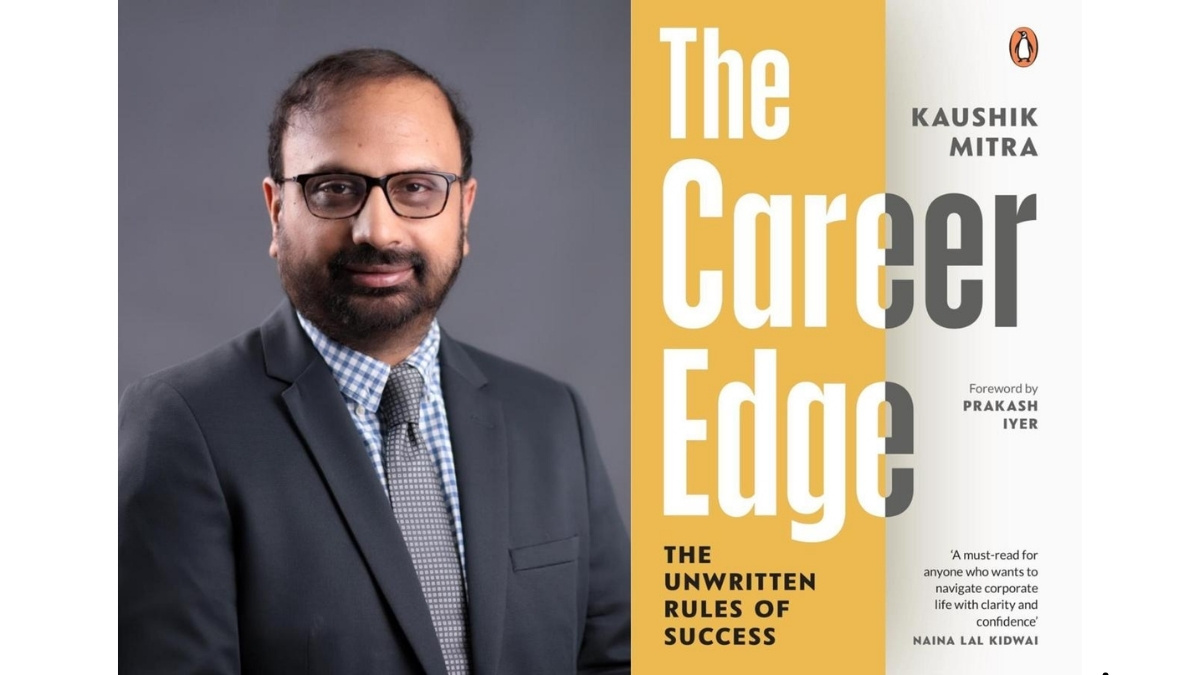

Kaushik Mitra is the Vice President and CFO at PepsiCo India. A Chartered Accountant and IIM-Kolkata alumnus, he brings over 30 years of global leadership experience from the Tata Group, GE, and Reckitt Benckiser. In his book, The Career Edge: The Unwritten Rules of Success published by Penguin Random House (India), he writes about the importance of trust.
Trust is not merely a soft skill; it is the bedrock of every successful relationship, whether personal or professional. Over three decades in the workforce, I have witnessed the stark contrast between high-trust environments that operate with seamless efficiency and dysfunctional teams where even minor tasks get bogged down in endless email chains. In the former, a quick call solves complex problems; in the latter, progress is stifled by bureaucracy.
Building genuine trust requires both time and intent. I view this process through the lens of a “trust account.” Every new role—often in a new location—begins with a ninety-day period focused on understanding stakeholders. You make deposits over time, and if done consistently, the interest compounds.
So, what does it take to build this trust?
Authenticity and Transparency
In any business culture, authenticity is invaluable. Leaders who show genuine intent build stronger bonds. Authenticity does not mean bluntness; it requires a balanced approach—direct in intent but mindful in delivery. It involves not just addressing project issues but genuinely listening to the personal and professional challenges team members face. This creates a foundation of trust that is difficult to replace.
Trust Has to Be Earned
Trust is rarely given freely; it must be earned. This foundation of reliability goes beyond meeting basic expectations. In a high-performing team, each member’s dependability is crucial. A team is only as strong as its weakest link. Consider a soccer team with excellent defenders and strikers but unreliable midfielders. Without consistent contributions from every member, the team falters.
In business, reliability is essential. Colleagues need to know they can depend on one another to meet shared goals consistently. Trust is forged through steady performance. Sporadic successes may impress momentarily, but consistency breeds real confidence. However, trust is fragile—hard to earn and easy to shatter.
Author Q&A
What pivotal early experiences in Kolkata or your initial roles shaped your entry into corporate finance?
I learnt two things from my parents early on which have become my fundamental guiding principles for life. From my mother I learnt the importance of “Being Good” and my father the relevance of “Doing Well”. These have shaped my choices in personal and professional life and also made me the person and leader I am today. Later I went to a boarding school in the hills of the Himalayas and there as a boarder along with 300 other students, I learnt two more important lessons in life, that of Discipline and Teamwork. Later I gathered knowledge and some qualifications but if I look back at what I have learnt from my formal education is really English and Maths. I always loved English but chose a career Juggling numbers. I always wanted to work in Organisations which valued both Performance and Purpose with Equal measure and my choice of Organisations align with the same principles of being good and doing well.
How did transitioning between giants like Tata Group, GE, and Reckitt Benckiser influence your leadership style?
One common thread across all these Organisations was a strong focus on Values, Ethics and Integrity. For me that is the oxygen we breathe and for me Integrity is 100% or nothing. The Cultures were different in these Organisations but I learnt to adapt and I leant to be resilient. More importantly I learnt to work with diverse stakeholders. Adaptability, Resilience and Inclusion are leadership qualities I learnt in these Organizations which I have covered in detail in my book The Career Edge. I also learnt the MNC culture and how it is different from the Culture in Indian Companies. I picked up the good points on both sides.
Can you share a key lesson from your time leading finance for PepsiCo’s Foods and Beverages in India and neighboring regions?
I have always used a “Shareholder/Owner” lens as a CFO in my professional role. In every meeting and to take decisions, I have imagined if there was a Shareholder in the room what would that person’s point of view. This fundamental owner like mindset has acted as a compass for me in professional life and guided me in the toughest of times by giving me the courage of conviction which comes from being the owner where the ‘buck stops with you’. We often fall prey to what I call “the boss is always right” syndrome and I did the same initially but as I transitioned into mid-management and C-Suite, I made an intentional shift towards the Ownership mindset. That has been my North Star.




