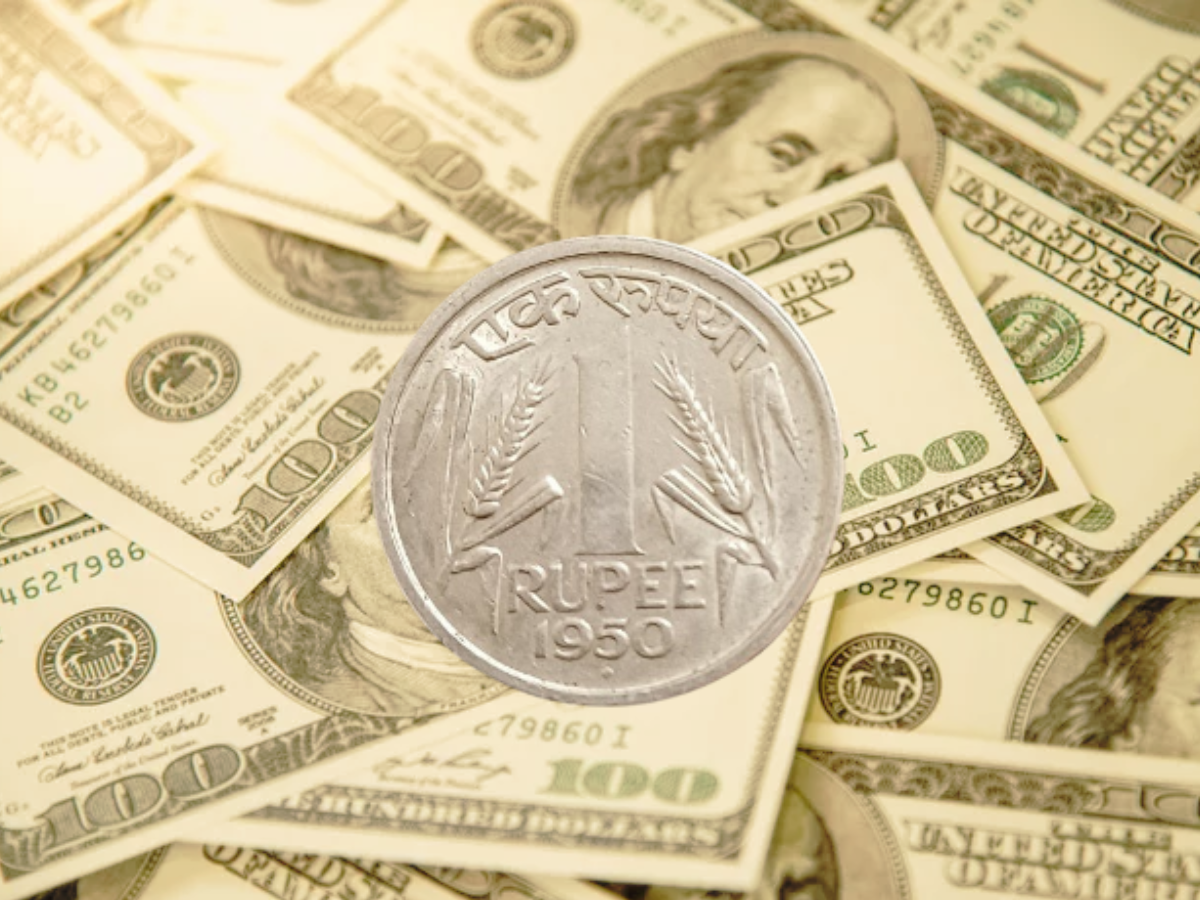

Rupee Remains Stable as RBI Keeps a Close Watch
The Indian rupee has been on a stable run on Thursday, with little variation observed because the Reserve Bank of India (RBI) is closely monitoring the currency’s movement.
The rupee stood at 88.78 against the U.S. dollar, nearly unchanged from the previous day, at 11:28 a.m. in Mumbai. This calm is due to the RBI proactively trying to control the rupee’s value and ensure it does not fluctuate drastically.
Thanks to the central bank’s efforts, the rupee has remained stable despite broader market uncertainties and global currency influences.
RBI Defends The 88.80 Level Threshold Of Rupee
The 88.80 point has now become an important level that the Reserve Bank of India (RBI) is keen to protect. Bankers indicate that the central bank has been aggressively selling dollars whenever the USD/INR exchange rate nears this mark.
This intervention helps ensure that the rupee does not depreciate further and that the currency pair does not move above this level. The RBI aims to keep the foreign exchange market stable and curb excessive volatility by intervening whenever the rupee approaches 88.80, preventing a sharp fall against the U.S. dollar.
Rupee’s Calm vs. Regional Volatility
- The rupee has traded within a tight four-paisa band, showing very little movement.
- Meanwhile, the broader foreign exchange market has experienced more volatility.
- The dollar index has risen sharply, supported by a steep decline in the Japanese yen.
- Most Asian currencies have shown choppy and unpredictable movements.
- The rupee’s muted response highlights the impact of RBI’s steady intervention.
- RBI’s actions have reduced the rupee’s sensitivity to regional currency trends and the strength of the U.S. dollar.
The Strategy Of Central Bank: Controlled Depreciation
Although the dollar index has been strong and money is being withdrawn by foreign investors, the rupee has not weakened significantly. Why? The reason is that the Reserve Bank of India (RBI) is intervening on a regular basis to ensure things are held together.
The RBI appears to be handling a gradual and moderate depreciation instead of a sharp one caused by the fall of the rupee. Consider it to be a soft push of the rupee to the ground, as opposed to pushing it off a cliff.
This will prevent the occurrence of shocks in the marketplace. What say you, good move by RBI or overcautious?
(With Inputs From Reuters)
Aishwarya is a journalism graduate with over three years of experience thriving in the buzzing corporate media world. She’s got a knack for decoding business news, tracking the twists and turns of the stock market, covering the masala of the entertainment world, and sometimes her stories come with just the right sprinkle of political commentary. She has worked with several organizations, interned at ZEE and gained professional skills at TV9 and News24, And now is learning and writing at NewsX, she’s no stranger to the newsroom hustle. Her storytelling style is fast-paced, creative, and perfectly tailored to connect with both the platform and its audience. Moto: Approaching every story from the reader’s point of view, backing up her insights with solid facts.
Always bold with her opinions, she also never misses the chance to weave in expert voices, keeping things balanced and insightful. In short, Aishwarya brings a fresh, sharp, and fact-driven voice to every story she touches.