
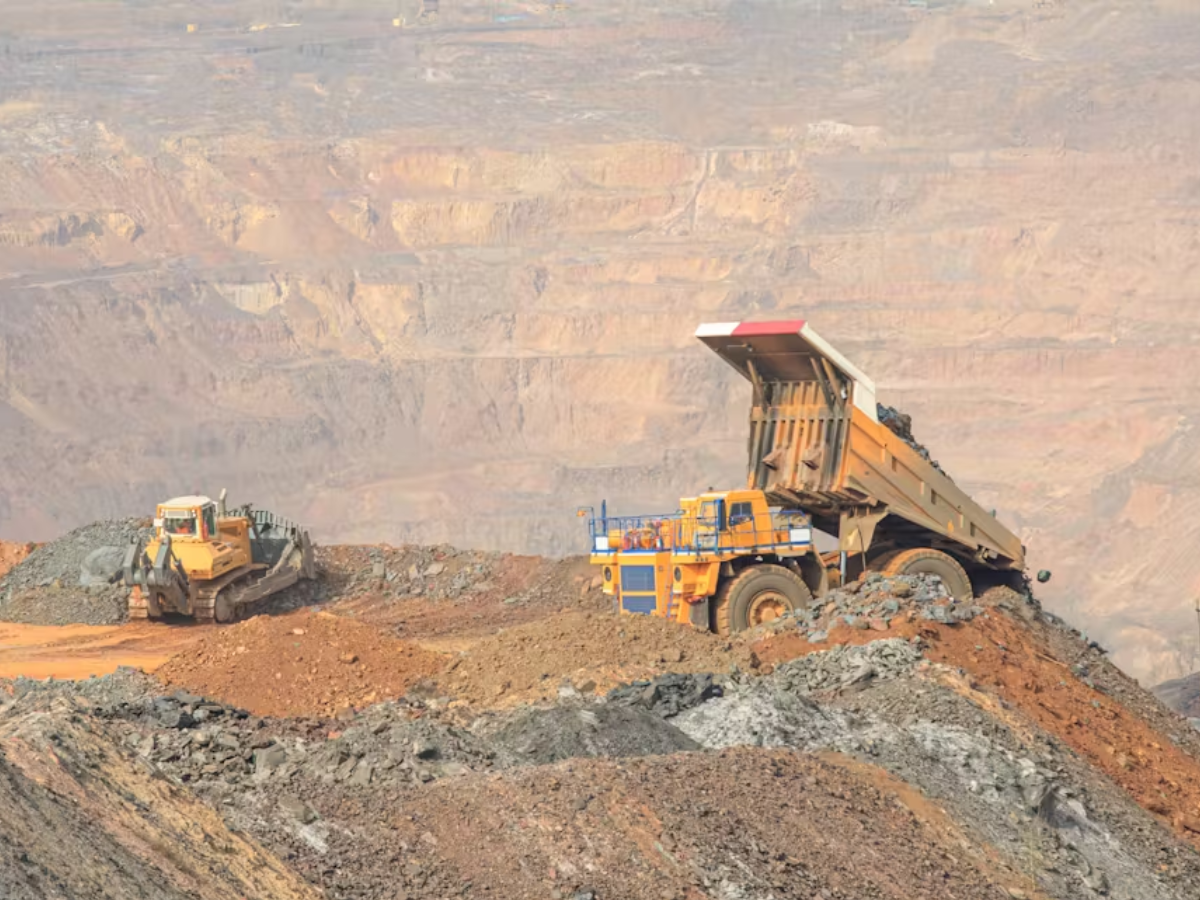

Lok Sabha Passes Mining Bill 2025, Paving Way for Critical Mineral Revolution
The Lok Sabha passed the Mines and Minerals (Development and Regulation) Amendment Bill, 2025 on Tuesday, aiming to reshape India’s mineral sector. The bill introduces a simplified regime to support zero waste mining, promote deep-seated mineral exploration, and boost domestic production of critical and strategic minerals. Union Coal and Mines Minister G Kishan Reddy highlighted the growing dependence on these minerals, noting that sectors like defence, medical equipment, solar, and space are heavily reliant on them. “We are moving in the right direction,” Reddy said. The bill supports the National Critical Mineral Mission (NCMM), launched in 2025, and empowers the Geological Survey of India to conduct 1,200 mineral exploration projects by 2031. Despite opposition protests over unrelated issues, the bill passed smoothly. The last amendment to the original 1957 Act came in 2023, focusing on boosting exploration and production through a revised list of 24 critical minerals.
Mining Market Gets Makeover: Exchange, Transparency, And Trade
The bill introduces mineral exchanges, aiming to bring transparency and dynamic pricing into the market. According to the official statement, “Setting up of mineral exchanges will help miners and end-users of minerals in determining fair and transparent market prices.” This mechanism will stabilise mineral markets, promote budgeting and planning, and improve investor confidence. The bill also removes the sale limit on captive mines, allowing producers to sell minerals beyond their plant requirements upon paying an additional fee. Additionally, miners can now sell old dumps, previously unused, helping reduce environmental impact and increasing market supply, while generating additional state revenue.
Mining Investment Set To Rise With New Leases, Rights
For investors, the bill spells fresh opportunity. It allows a one-time extension of the area under a mining lease or composite licence to include a contiguous area of 10-30%, enabling extraction from economically tricky but geologically promising zones. By permitting inclusion of new minerals in existing leases, the government opens up high-stakes opportunities in small-quantity critical minerals—without extra fees for strategic minerals. The renaming of the National Mineral Exploration Trust to include “Development” reflects its widened scope, with lessee contributions increasing from 2% to 3% of royalty payable. These changes aim to unlock greater value for investors and encourage long-term mining ventures.
Offshore Mining, Global Reach & Exploration Fund Boosted
The bill empowers the Centre to promote mineral trading and development, including offshore mining and exploration outside India. The National Mineral Exploration Trust can now allocate its funds for projects beyond national territory. This move strengthens India’s presence in global critical mineral supply chains, especially relevant amid rising geopolitical tensions and resource nationalism. Prime Minister Modi’s diplomatic efforts have also focused on forging global mineral cooperation, supporting India’s self-reliance goals. With increased fund allocation and extended exploration rights, the amendment aims to transform India’s resource acquisition and production strategy, positioning the country as a serious player in the global mineral economy.
What It Means For Investors In India
The bill creates a more investor-friendly landscape. By liberalising captive mining, investors gain improved revenue potential beyond their plant needs. The mineral exchange fosters a transparent pricing environment, aiding accurate forecasting and risk management. Extension rights for contiguous areas and flexible inclusion of new minerals improve asset scalability. Higher royalty contributions reflect better-funded regulatory mechanisms, which could improve operational ease and infrastructure. The bill’s support for offshore exploration and processing also broadens the investment canvas for multinational partnerships. For startups and major players alike, the changes lower entry barriers and offer long-term certainty in mining ventures.
Tariffs And Trade: Impact on Mineral Economics
Let’s zoom out and look at what this bill signals on the global trade radar. If you’re tracking mineral imports and exports, you’ll want to keep your models ready for recalibration. With India ramping up domestic production of critical minerals, we could soon see import duties relax on resources that are now locally sourced. This could boost downstream manufacturing in sectors like EVs, electronics, and green tech.
But here’s the flip side — exports of strategic minerals? Those might start facing tighter controls or tariff barriers, especially if domestic demand surges. The government’s new stance encourages fair pricing through mineral exchanges, which could shift benchmarks used in international contracts. Watch for signals that tariff alignments or trade agreements are evolving.
According to experts, we can see this as a pivot. If you’re dealing in futures, hedging in mineral-linked industries, or tracking macro trade flows — keep your eyes on policy bulletins, export regulations, and strategic stockpiles. India’s signalling that minerals are no longer just a resource—they’re an economic weapon.
(With Inputs From ANI)
Also Read: Tariff Trouble Ahead: Will US Spare Korea’s Finished Tech Products?
Aishwarya is a journalism graduate with over three years of experience thriving in the buzzing corporate media world. She’s got a knack for decoding business news, tracking the twists and turns of the stock market, covering the masala of the entertainment world, and sometimes her stories come with just the right sprinkle of political commentary. She has worked with several organizations, interned at ZEE and gained professional skills at TV9 and News24, And now is learning and writing at NewsX, she’s no stranger to the newsroom hustle. Her storytelling style is fast-paced, creative, and perfectly tailored to connect with both the platform and its audience. Moto: Approaching every story from the reader’s point of view, backing up her insights with solid facts.
Always bold with her opinions, she also never misses the chance to weave in expert voices, keeping things balanced and insightful. In short, Aishwarya brings a fresh, sharp, and fact-driven voice to every story she touches.




